African Black Soap for Natural Hair: Benefits, Honest Limits & How to Use It
 Maya Thompson
📅 October 1, 2026
⏱ 16 min read
African black soap for natural hair is having a moment — and honestly, it’s one of the few viral trends with real history behind it. Long before it showed up in TikTok wash-day videos, it was being made by hand in Ghana and Nigeria from plantain skins, cocoa pods, and palm oil. But does it actually work as a shampoo for coily, curly, and textured hair? The honest answer: it can be an excellent cleanser — and it can also dry your hair out badly if you use it wrong. There are no clinical trials showing it grows hair faster, and it will never replace a good conditioner. Here’s what the evidence (and the experience of people who actually use it) really says, plus exactly how to use it safely.
What Is African Black Soap, Exactly?
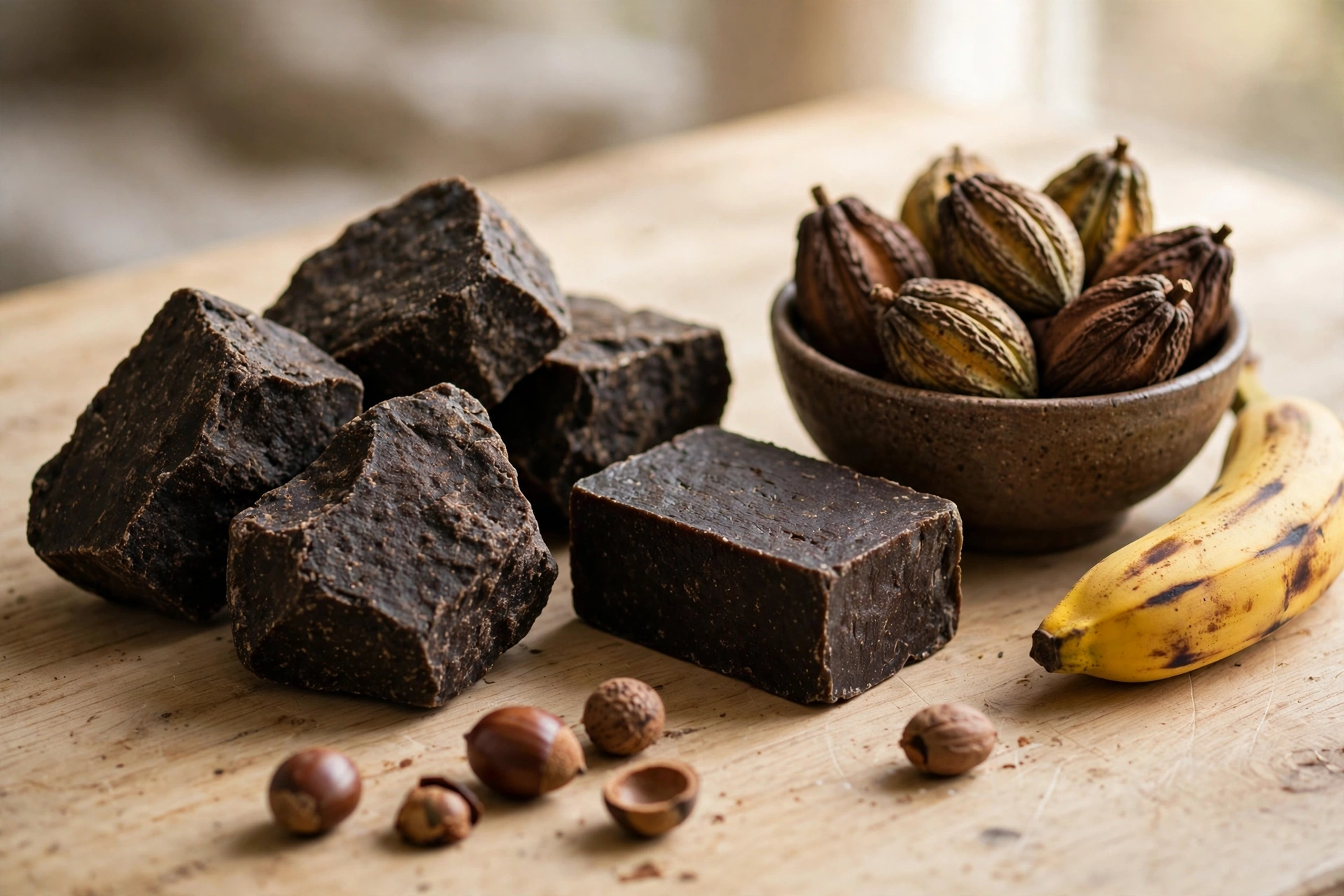
African black soap is a traditional soap made in West Africa — most famously in Ghana and Nigeria, where it’s known as ose dudu (literally “black soap”). The classic recipe starts with plantain peels, cocoa pod ash, or palm-tree leaves, which are sun-dried and then burned to create ash. That ash is combined with palm oil, coconut oil, shea butter, and water, then cooked and cured by hand over several days.
The ash is what makes it soap: it contains potassium hydroxide, a natural alkali that reacts with the oils in a process called saponification. That’s the same chemistry behind every bar soap — the difference is that black soap is made from plant ashes rather than manufactured lye, and it’s loaded with unrefined oils and vitamins.
Here’s a fact that surprises most people: real African black soap isn’t black. It’s dark brown. And it doesn’t look like the smooth, hard bars in the drugstore — it’s soft, crumbly, and uneven, because it’s handmade. If your “African black soap” is jet black, hard as a rock, and smells like perfume, it probably has added dyes and fragrance, and you’re not getting the traditional product.
What African Black Soap Can Actually Do for Your Hair
Let’s start with the genuine benefits — the things black soap really does well, based on its chemistry and on consistent reports from people with natural hair who use it regularly.
1. It cleans buildup thoroughly
This is black soap’s single biggest strength. The ash-based cleansing action cuts through product buildup — silicones, heavy butters, gels, and edge control — very effectively. Many people with natural hair use it as a clarifying wash, the occasional deep-cleanse step you do every few weeks when your scalp feels weighed down. For oily scalps that get greasy fast, it can leave the scalp feeling genuinely clean in a way some sulfate-free shampoos don’t.
2. It may calm a stressed, itchy scalp
African black soap has documented antibacterial and antifungal properties. A 2012 study published in the Journal of Microbiology and Biotechnology Research found it effective against several bacteria and fungi — including species linked to athlete’s foot and toenail fungus. While that study wasn’t about hair, the same properties are why many people report that their itchy, irritated scalp feels calmer after washing with it. Healthline’s overview of African black soap benefits notes its antibacterial, moisturizing, and anti-inflammatory properties, which line up with these reports.
One important honesty note: this is anecdotal for hair specifically. No published clinical trial has tested African black soap on the human scalp. So “it helps my itchy scalp” is a widely reported experience, not a proven medical effect.
3. No sulfates, no synthetic fragrance
Traditional black soap contains no sulfates, parabens, or synthetic fragrance — which is exactly why people with sensitive or fragrance-reactive scalps gravitate toward it. Many commercial shampoos irritate sensitive scalps through their fragrance and preservative systems, not their cleansing agents. If your scalp reacts to everything, a plain traditional bar (no added fragrance) removes a whole category of potential irritants at once.
4. Vitamins A and E plus shea butter nourish the scalp
The plantain skins, cocoa pods, and shea butter in authentic black soap are naturally rich in vitamins A and E — both antioxidants — and shea’s fatty acids. These feed the scalp, which is living skin. But here’s the honest caveat the top-ranking articles don’t mention: your hair strands are dead keratin. A cleanser can’t “nourish” strands the way a leave-in or deep conditioner can. Vitamins in a rinse-off soap give your scalp some antioxidant support and don’t hurt — but they are not a substitute for actual conditioning. Anyone telling you black soap “moisturizes hair strands” is confusing scalp care with hair care.
What It Can’t Do: The Honest Limits
PickHonestly means being honest about what products can’t do, and black soap needs this section badly — because the internet is full of inflated claims about it. Here are the five limits you should know before you buy a bar.
1. It will not make your hair grow faster
No clinical trial has ever studied African black soap and hair growth. None. The “it promotes hair growth” claim you see on every brand blog comes from a chain of weak logic: clean scalp → healthy environment → hair can grow. A clean scalp is good for hair retention (hair that breaks less looks like it’s growing faster), but the soap itself does not stimulate follicles or speed up the growth rate. Be skeptical of any product page that promises faster growth.
2. It will not cure dandruff
This one is nuanced. Because of its antimicrobial properties, black soap can help some people whose flakes are caused by simple buildup or mild irritation. But true dandruff is most commonly driven by Malassezia, a yeast that lives on the scalp — and managing that properly requires antifungal actives, which plain black soap doesn’t have. If your dandruff is persistent, severe, or comes with redness and thick scaling, no soap is the right fix — see a dermatologist. Also note: overusing any strong cleanser can dry the scalp, which mimics dandruff flakes and makes things worse.
3. It’s alkaline — and that matters for hair
This is the fact almost no brand blog will tell you: soap is alkaline, typically around pH 9. Your hair and scalp are mildly acidic, around pH 4.5–5.5. Alkaline cleansers lift the hair cuticle, which can mean more friction, more tangling, and more roughness after washing — especially on already dry or porous hair. This isn’t a reason to never use it; it’s the reason the usage method below matters so much (dilution, scalp-only application, immediate deep conditioning, and optionally an acidic rinse after).
4. It can dry your strands out
The most common complaint from natural-hair users who tried black soap is dryness. Strong cleansing + alkaline pH is a drying combination, and coily hair — which is already the driest hair type because sebum can’t travel down its twists and turns — feels it first. People with high-porosity or color-treated hair report the worst dryness. This is manageable (see the method below), but go in with your eyes open: every black soap wash needs to be followed by real conditioning.
5. Quality is completely unregulated
There’s no standard recipe and no certification for African black soap. One bar might be a traditional Ghanaian recipe with real plantain ash; the next might be a factory bar with black dye and fragrance labeled “African black soap” for export. The effects can vary wildly between bars — which is exactly why the real-vs-fake section at the end of this article exists.
How to Use African Black Soap on Natural Hair
Used correctly, black soap is a genuinely good clarifying cleanser. Used like a normal shampoo bar, it can wreck your wash day. Here’s the method that actually works:
Step 1: Never rub the bar directly on your hair
The bar is rough and crumbly — dragging it across your strands causes friction and tangles. Wet the bar, rub it between wet palms until you have a good lather, and work with the lather only. Even better: dissolve a small piece in warm water first and use the liquid (see the DIY recipe below).
Step 2: Apply lather to the scalp only, in sections
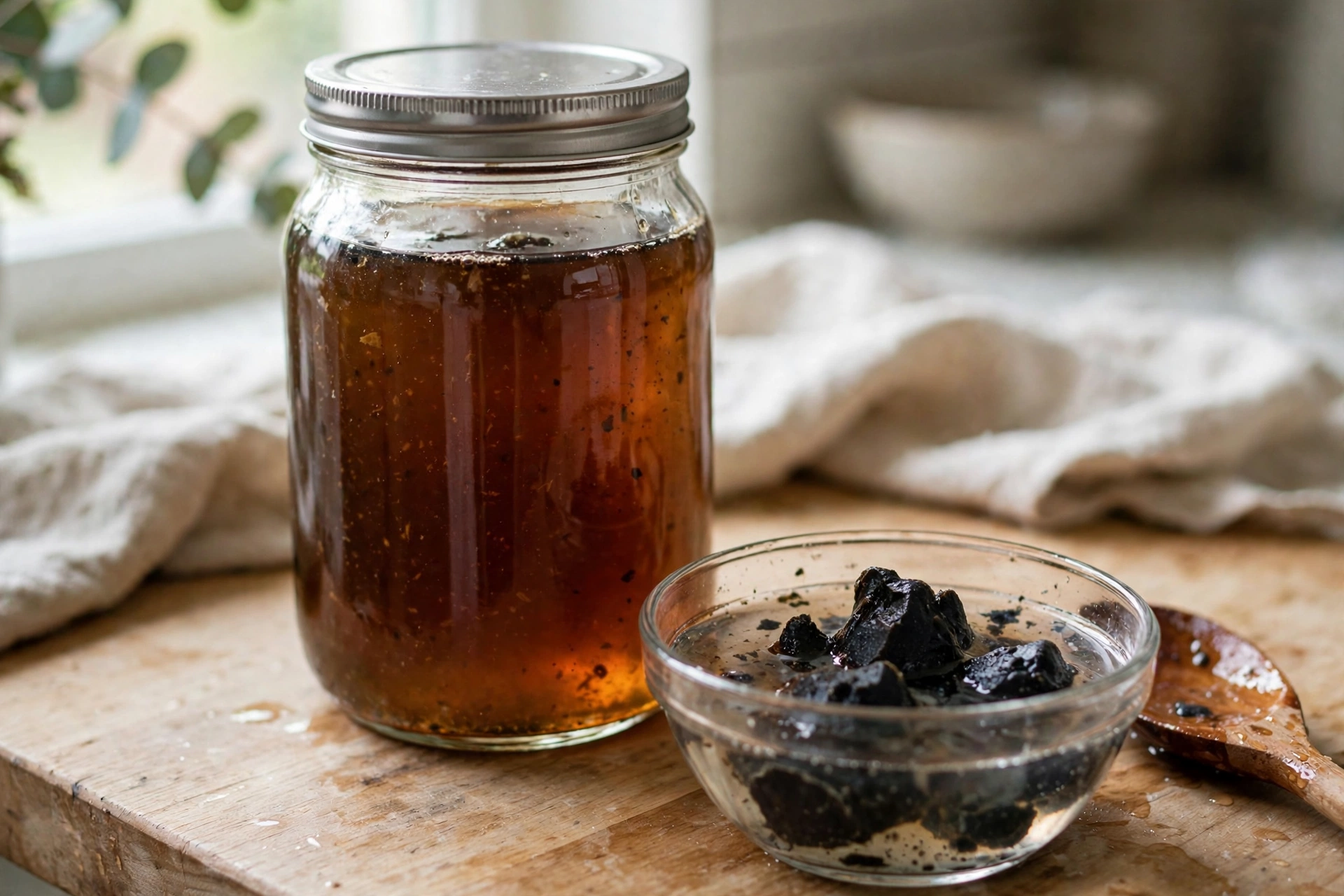
Part your hair into 4–6 sections. Work the lather into your scalp with your fingertips — not down the lengths. The runoff when you rinse will clean the strands; they don’t need direct soap contact. Scalp-only application is the single biggest difference between people who love black soap and people who say it destroyed their hair.
Step 3: Massage for 2–3 minutes
Use your fingertips (never nails) in slow circular motions. This gives the cleanser time to dissolve buildup and gives you the scalp-massage benefits everyone talks about. Rinse thoroughly with lukewarm water — residue is the enemy here, because leftover soap is alkaline film on your hair.
Step 4: Consider an acidic rinse
Because soap is alkaline, many natural-hair users follow with a diluted apple cider vinegar rinse (about 1–2 tablespoons of ACV in a cup of water, poured over the hair and rinsed out). This helps the cuticle lie flat again and reduces the rough, tangly feeling. It’s optional, but if your hair feels squeaky after black soap, this step fixes it.
Step 5: Deep condition immediately — no exceptions
Every black soap wash must end with a moisture-rich conditioner or deep conditioner from mid-length to ends. This is non-negotiable. If you only take one rule from this article, take this one: black soap cleanses; your conditioner does the moisturizing. If you want to know more about keeping moisture in textured hair between washes, our guide on how to moisturize natural hair covers the full routine.
DIY Liquid African Black Soap Shampoo (Recipe)
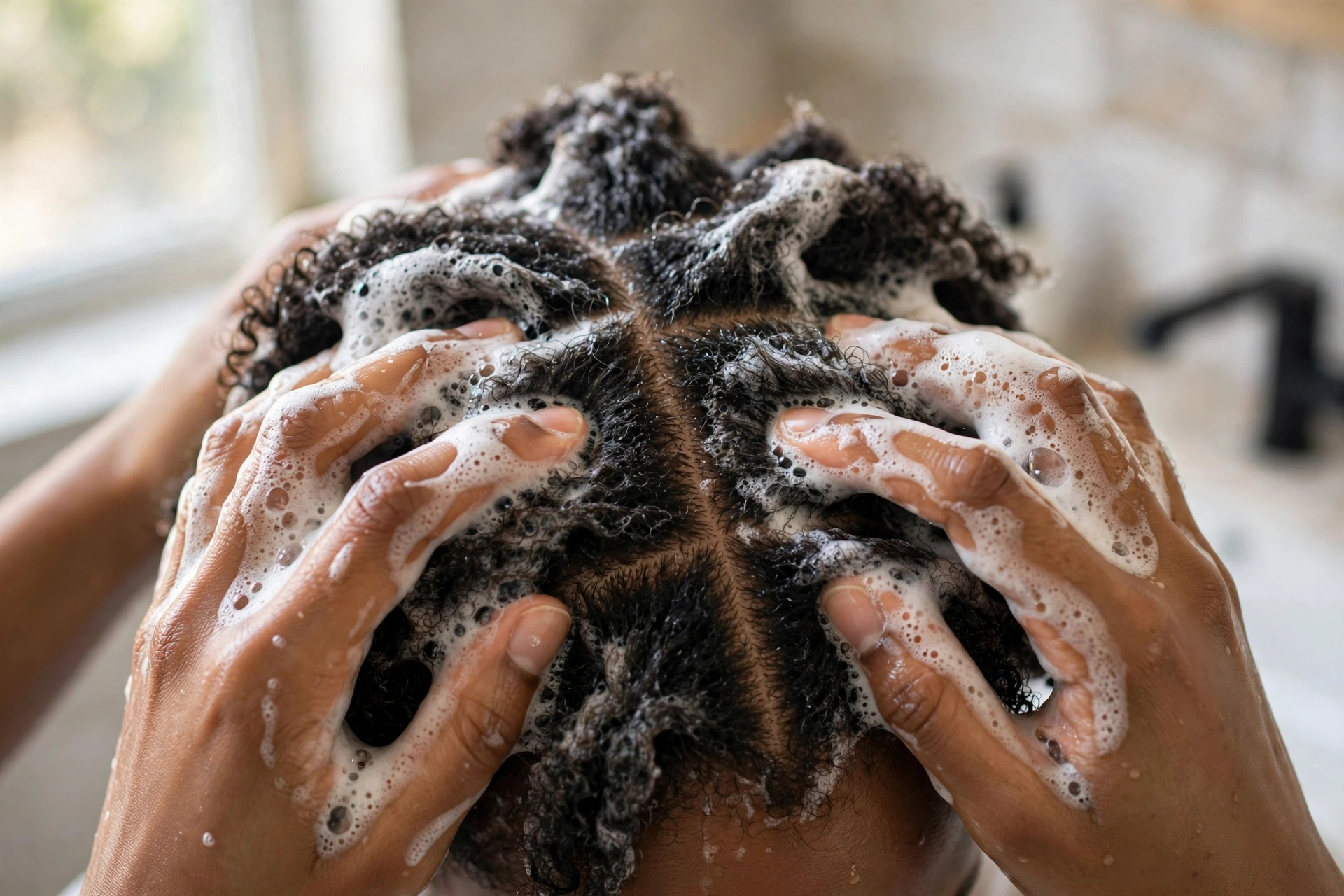
The raw bar is awkward to use on hair — it crumbles, it’s rough, and it’s hard to control the amount. Dissolving it into a liquid shampoo solves all three problems and lets you add nourishing ingredients. Here’s a simple, honest recipe:
Step 1: Cut and dissolve
Cut about 30–40 grams of authentic black soap (roughly a quarter of a bar) into small shavings and place them in a clean jar. Pour in 250 ml of warm (not boiling) distilled or filtered water and stir. Let it sit for 1–2 hours, stirring occasionally, until fully dissolved. The mixture will be a dark brown liquid.
Step 2: Add your oils
Stir in 1 teaspoon of a carrier oil (jojoba, sweet almond, or olive oil all work) and, if you like, 2–3 drops of rosemary or tea tree essential oil. The carrier oil takes the edge off the cleansing strength; the essential oil is optional and just for scent and scalp feel.
Step 3: Add a humectant (optional but smart)
Half a teaspoon of vegetable glycerin or a teaspoon of aloe vera juice helps the mixture feel less stripping. This is the step most online recipes skip — and it’s the one that makes the biggest difference for dry, coily hair.
Step 4: Bottle and store
Pour into a squeeze bottle or pump bottle. Store in a cool place and use within 2–3 weeks — there are no preservatives in this, so it won’t keep like a store-bought shampoo. Shake gently before each use.
Step 5: Use like a normal shampoo
Apply a small amount to wet scalp in sections, massage, rinse thoroughly, and follow with your conditioner. Start with less than you think you need — the dissolved version is more concentrated than it looks.
How Often Should You Use It?
Black soap is a strong cleanser, so frequency matters. Here’s a practical guide by hair type:
| Hair type / situation | Suggested frequency | Notes |
|---|---|---|
| Oily scalp, heavy product use | Once a week | Works well as your regular wash-day cleanser |
| Normal to dry coily/curly hair | Every 2–3 weeks | Use as a clarifying wash; use a gentler shampoo between |
| High-porosity or color-treated hair | Once a month or less | Highest dryness risk; deep condition generously after |
| Sensitive, reactive scalp | Patch test first, then weekly if tolerated | Stick to plain, fragrance-free bars |
Daily use? Don’t. Even people with oily scalps will find daily soap use too harsh over time. If your scalp gets oily fast, alternate black soap with one of the best sulfate-free shampoos for natural hair instead of increasing black soap frequency.
One more tip: if you don’t know your hair’s porosity, test your hair’s porosity before deciding how often to clarify — low-porosity hair builds up product fast but also resists moisture, while high-porosity hair soaks up everything including harsh cleansers.
African Black Soap vs. Regular Shampoo: Honest Comparison
| African black soap | Sulfate shampoo | Sulfate-free shampoo | |
|---|---|---|---|
| Cleansing strength | Strong | Very strong | Mild to moderate |
| pH | Alkaline (~9) | Varies, usually ~5–6 | Usually ~5–5.5 |
| Synthetic fragrance/preservatives | None (traditional bars) | Usually present | Often present |
| Scalp antimicrobial reports | Yes (anecdotal + one lab study) | No | No |
| Risk of dryness on coily hair | Moderate to high | Low to moderate | Low |
| Hair-growth evidence | None | None | None |
| Consistency between batches | Low (handmade, unregulated) | High | High |
The honest summary: black soap sits between a sulfate shampoo and a gentle sulfate-free shampoo in strength, but with an alkaline pH and more batch-to-batch variation. It’s best treated as a specialist tool (clarifying, sensitive-scalp cleansing) rather than an everyday shampoo.
Is African Black Soap Good for 4C Hair?
4C hair is the tightest, most fragile curl pattern — and the one most likely to feel black soap’s drying side. But it can still work if you adjust the method:
- Always pre-poo. Coat your strands in oil or a light conditioner before the black soap wash, so the lengths have a buffer. (Traditional African hair care has other protective ingredients too — chebe powder is another West African staple worth knowing about.)
- Work in more sections. 6–8 twists or braids, washing the scalp at each parting, keeps tangling under control.
- Dilute more than you think. For 4C hair, the DIY liquid version at half-strength is kinder than the raw bar lather.
- Deep condition with heat. After a black soap wash, a deep conditioner under a shower cap or heat cap for 20–30 minutes replaces what the alkaline cleanse took out.
- Watch the frequency. For most 4C heads, black soap every 2–4 weeks as a clarifier beats weekly use — the hair simply can’t afford weekly strong cleansing without extra protein and moisture support.
Real vs. Fake: How to Spot Authentic African Black Soap
Because the market is flooded with imitations, here’s how to tell the real thing from a factory knockoff:
- Color: real black soap is dark brown, not jet black. Jet black usually means added dye.
- Texture: authentic bars are soft, rough, and crumbly — easy to break apart with your fingers. A hard, smooth, uniform bar is a red flag.
- Smell: it should smell earthy and natural, not perfumed. Strong fragrance means additives.
- Ingredients: the label (if there is one) should list plantain ash, cocoa pod ash, palm oil, shea butter, coconut oil — not “sodium lauryl sulfate” or “fragrance.”
- Source: buying from Ghanaian or Nigerian sellers and fair-trade cooperatives supports the women who actually make it — and is your best guarantee of authenticity.
Many articles skip this entirely, but it matters: the “benefits” of black soap only apply to the traditional product. A dyed, fragranced factory bar gives you all the alkaline drawbacks with none of the traditional advantages.
Frequently Asked Questions
Is African black soap good for natural hair?
It can be — as a periodic clarifying cleanser, not an everyday shampoo. It cleans buildup thoroughly and many people find it calms an itchy scalp, but it’s alkaline (around pH 9) and can dry out coily strands if you don’t dilute it, apply it to the scalp only, and deep condition after every use. Follow the method above and most natural hair types can use it safely.
Does African black soap grow hair?
There is no scientific evidence that African black soap speeds up hair growth. No clinical trial has studied it for this. What it can do is keep the scalp clean and free of buildup, which supports retention — hair that breaks less looks longer over time. Treat any “hair growth” marketing claim as hype.
Can African black soap help with dandruff?
Sometimes, if your flakes are from buildup or mild irritation — the soap’s antimicrobial properties and deep cleansing can help. But if your dandruff is persistent or severe, it’s likely a Malassezia yeast issue that needs proper antifungal treatment. The American Academy of Dermatology’s guidance on caring for Black hair is a good starting point for scalp concerns, and a dermatologist is the right call for anything stubborn.
Can I use African black soap every day?
No. It’s too strong for daily use on any hair type, and especially on natural hair. Most people do best using it once a week at most — or every few weeks as a clarifier. If your scalp gets oily quickly, alternate with a gentler sulfate-free shampoo rather than using black soap more often.
Will African black soap dry out my hair?
It can, yes — that’s its most common downside. The combination of strong cleansing and alkaline pH strips more natural oil than mild shampoos. The fix: dilute it (or use the liquid DIY version), apply lather to the scalp only, rinse thoroughly, consider an apple cider vinegar rinse, and deep condition immediately after. High-porosity and color-treated hair should use it least often.
Is African black soap safe for color-treated hair?
Use it with caution. Any alkaline cleanser can fade color faster and roughen the cuticle on color-treated hair. If you do use it, dilute well, keep it to the scalp, and don’t use it the week right after coloring. Many colorists would steer you toward a gentle sulfate-free shampoo instead.
Should I follow black soap with an apple cider vinegar rinse?
It’s a sensible optional step. A diluted ACV rinse (1–2 tablespoons per cup of water) helps rebalance pH after the alkaline soap and makes hair feel smoother. Rinse it out after a minute or two. Skip it if your scalp is broken, irritated, or very sensitive — vinegar on broken skin stings.
Can I mix African black soap with other products?
In the DIY liquid version, yes — a teaspoon of carrier oil and a humectant like glycerin or aloe vera juice make it gentler. Don’t mix raw soap chunks into your conditioner bottle, though: the alkaline soap can destabilize the conditioner’s formula. Keep cleansing and conditioning as separate steps.
The Honest Verdict
African black soap for natural hair is a genuinely useful product with genuinely overstated marketing. Used as an occasional clarifying wash — diluted, scalp-only, followed by deep conditioning — it’s one of the best natural buildup removers you can buy, and many sensitive scalps love it. Used carelessly, it’s a fast track to dry, tangled hair. Respect the pH, buy the real thing, and let your conditioner do the moisturizing.
Disclaimer: This article is for general information only and isn’t medical advice. If you have a persistent scalp condition, hair loss, or irritation that doesn’t improve, the AAD’s advice on seeing a dermatologist for hair loss applies to scalp concerns too — get professional help rather than experimenting.
