Batana Oil Benefits for Hair: What the Evidence Actually Says
 Maya Thompson
📅 September 30, 2026
⏱ 14 min read
Batana oil benefits for hair are some of the most hyped claims on hair TikTok right now. Regrow your edges in 30 days. Reverse gray hair. Wake up dormant follicles. If you’ve watched enough reels, you’d think a jar of this smoky Honduran butter is a hair transplant in a jar.
So what does the evidence actually say? This guide separates what’s genuinely supported from what’s plausible but unproven, from what’s simply not true — because with an oil this expensive, you deserve honesty, not marketing.
The short version: there are no controlled human studies showing batana oil grows new hair, regrows balding areas, or reverses gray hair. What it can do is what good oils do: deeply moisturize, reduce breakage, and help you keep the length you already grow. That matters more than it sounds — especially for natural and coily hair.
What Is Batana Oil?
Batana oil is extracted from the nuts of the American palm tree (Elaeis oleifera), which grows wild in the rainforests of La Moskitia, Honduras. It has been used for generations by the Indigenous Miskito people — known as the Tawira, or “People of the Beautiful Hair” — who traditionally extract it by hand through a slow, labor-intensive process of boiling and skimming the nuts.
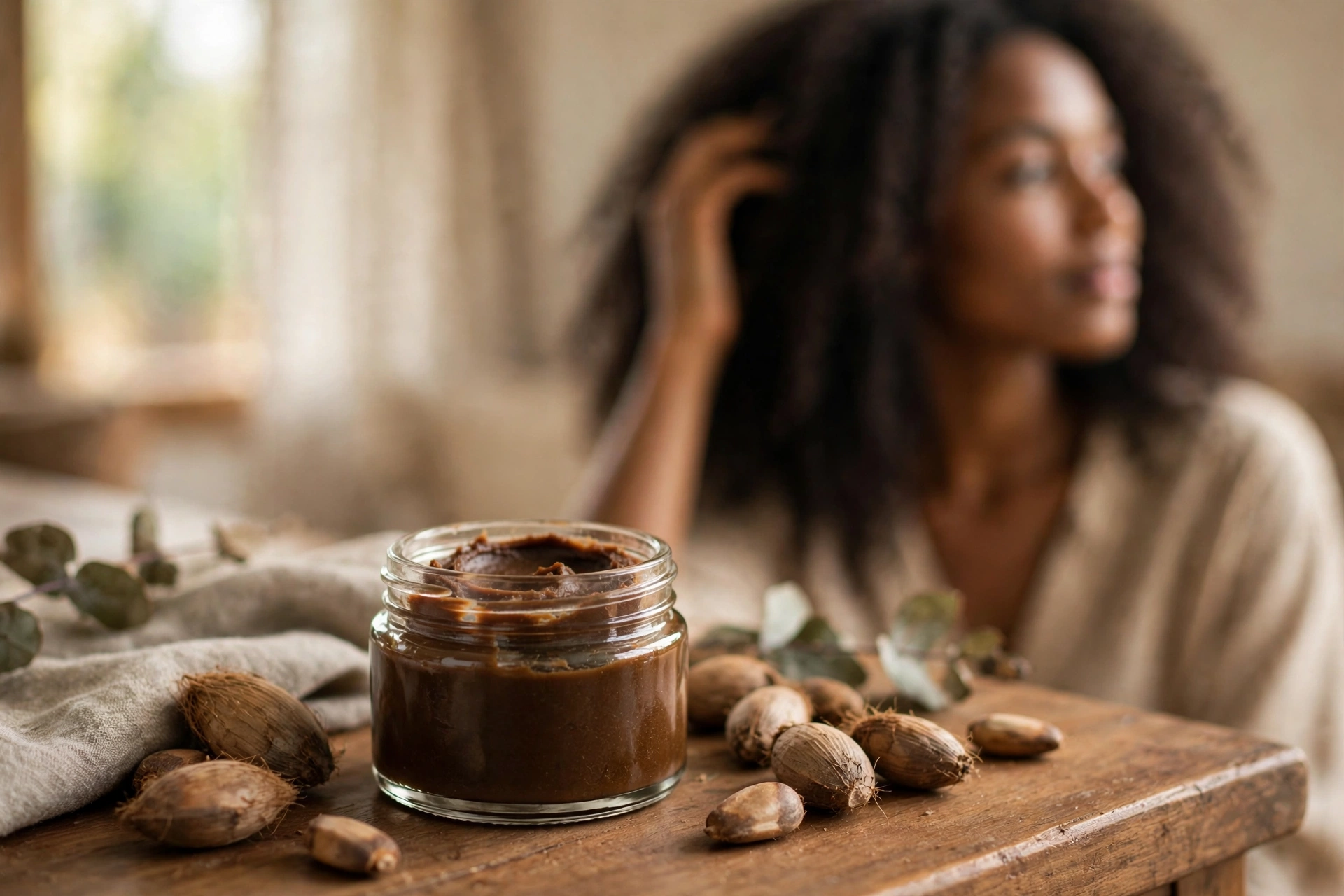
Real, unrefined batana oil doesn’t look or smell like the light golden oils you’re used to. It’s typically a deep brown, thick and buttery at room temperature, with a strong earthy, smoky, almost roasted-coffee scent. That unusual appearance and smell are actually important — they’re one of your main defenses against fakes, which we’ll cover below.
What’s Actually in Batana Oil?
Composition studies have identified oleic acid, palmitic acid, linoleic acid, and stearic acid in batana oil, along with antioxidant compounds including tocopherols and tocotrienols (forms of vitamin E) and carotenoids such as alpha- and beta-carotene.
That sounds impressive — and it is, nutritionally speaking. But here’s the honest catch that trichologists keep repeating: identifying beneficial compounds in an oil does not prove the finished product does anything to your follicles. Olive oil is also full of oleic acid. That doesn’t make it a hair-growth treatment. The composition tells us what the oil is, not what it does.
Composition also varies. Traditional, hand-extracted oil from different batches and makers won’t have identical profiles, and refined or blended versions may have far less of the antioxidant content. Keep that in mind when reading any “science” cited on a seller’s page.
Batana Oil Benefits for Hair: An Honest Evidence Rating
Instead of a generic list of miracle claims, here’s every major claimed benefit, graded by what the evidence actually supports. This is the part most articles won’t give you.
What “evidence level” means here
- Plausible — consistent with how hair oils are known to work (supported by broader hair-cosmetics research), even if batana itself hasn’t been studied for this specific outcome.
- Unsupported — no controlled human studies exist for this claim.
- The one real study — a genuine randomized trial, but of oral tocotrienol capsules, not topical batana oil. Details below.
1. Deep moisture for dry hair — PLAUSIBLE
This is batana oil’s strongest suit and the benefit with the least controversy. Its dense fatty-acid content makes it a rich emollient: it coats the hair shaft, smooths the cuticle, and helps slow moisture loss from dry, porous strands. A published review of hair cosmetics in the International Journal of Trichology describes how oils condition hair by lubricating the shaft and reducing friction — the mechanism behind this benefit is well understood even if batana itself hasn’t been trialed head-to-head against other oils.
For dry natural and coily hair, which loses moisture faster than straighter textures, a heavy oil like batana can make a genuine difference to how hair feels after wash day. See our guide on how to use batana oil for natural hair for routine placement.
2. Less breakage, better length retention — PLAUSIBLE
Here is the benefit behind most of the “my hair grew!” testimonials. Less breakage means you keep more of the hair you grow — and since the average head of hair grows roughly half an inch a month regardless of what you apply, retaining that growth looks and feels like “faster growth.” Over months, reduced breakage genuinely produces longer, fuller-looking hair. That is improved length retention, not accelerated growth — and it is real.
3. A calmer, more comfortable scalp — PLAUSIBLE
As an emollient, batana oil can soften a dry, flaky scalp and make it feel more comfortable. One caveat worth hearing: trichologists point out that when brands tell you to massage the oil into your scalp, the massage itself improves circulation and reduces scalp tightness — so some of the “scalp benefit” may come from your fingertips, not the oil. That’s still a real benefit of the ritual. Just don’t credit the oil alone.
4. Shine and frizz control — PLAUSIBLE
Smoothing the outer layer of the hair shaft reduces frizz and flyaways and reflects more light — that is what “shine” is. Batana oil does this the way other rich oils do. Users who prefer oil-based finishing to silicone serums often like the natural gloss it gives. Use it sparingly on the lengths for this purpose; too much on fine hair will look greasy rather than glossy.
5. “Stimulates new hair growth / wakes up dormant follicles” — UNSUPPORTED
This is the claim that sells the most jars, and it has the least behind it. Trichologists are blunt about this: there are currently no controlled human studies showing batana oil stimulates the follicle, extends the hair’s growth phase, or treats hair loss in a clinically meaningful way. When people report “more growth,” the honest explanations are usually normal monthly growth becoming more noticeable, less breakage at the ends, improved shine, the scalp massage itself, or the resolution of whatever was causing shedding in the first place. All real — none of it the oil creating new follicular activity.
WebMD’s overview of batana oil states the same conclusion: while the oil contains nutrients linked to scalp and hair health, there is no scientific evidence supporting its use for hair loss, and dermatologists consider hair loss a medical condition that needs medical diagnosis and treatment.
6. Reverses gray hair — UNSUPPORTED
You’ll find this claim in comment sections, not in studies. Graying is driven by genetics, oxidative stress, and autoimmune factors, and batana oil has not been studied for gray-hair reversal at all. Anecdotes about “miraculous” gray reduction have no controlled evidence behind them. If anyone sells you batana oil as a gray-reversal treatment, that is a red flag about the seller, not a benefit of the oil.
7. Blocks DHT — UNSUPPORTED
Some sellers cite lab research on isolated fatty acids — linoleic acid has been studied for effects on pathways involved in androgen-related hair loss, including the enzyme that converts testosterone to DHT. But research on isolated fatty acids in a lab is very different from rubbing a botanical oil on your scalp. There is no direct clinical evidence that batana oil blocks DHT, reverses miniaturization, or regrows lost hair.
The One Real Study Everyone Cites — Read Carefully
You will sometimes see batana sellers cite a 2010 randomized trial as “proof” batana oil grows hair. Here is what the study actually tested.
Researchers randomly assigned 38 volunteers with hair loss to receive either 100 mg of mixed tocotrienols daily or a placebo — as oral capsules, swallowed, for 8 months. At the end, the tocotrienol group’s hair count in a measured scalp area had increased by an average of 34.5%, versus a 0.1% decrease in the placebo group. The researchers attributed this to the antioxidant activity of tocotrienols reducing oxidative stress in the scalp. You can read the full trial here: Effects of Tocotrienol Supplementation on Hair Growth in Human Volunteers (PMC3819075).
That is a real, peer-reviewed, randomized trial — and it does not prove anything about rubbing batana oil on your head. It tested swallowed tocotrienol capsules, not topical oil. It was also small (38 people), and the total weight of hair clippings barely changed between groups. It is fair to say the tocotrienols in batana oil are interesting compounds; it is not fair to say this study proves batana oil grows hair. Honest sellers won’t make that leap. Watch out for the ones that do.
Batana Oil vs. Other Hair Oils: Evidence Comparison
How does batana stack up against the oils you might already own? Here is the honest comparison — including which alternatives actually have clinical evidence behind them.
| Oil | Texture | Best for | Hair-growth evidence |
|---|---|---|---|
| Batana oil | Thick, buttery; smoky scent | Deep moisture, breakage reduction, length retention | None — no controlled human studies on topical use |
| Rosemary oil | Light essential oil (must dilute) | Scalp stimulation routines | One randomized trial (Panahi et al., 2015) found it comparable to 2% minoxidil for androgenetic alopecia over 6 months |
| Castor oil | Very thick, sticky | Sealing moisture, edges (cosmetic) | Anecdotal only; notoriously hard to wash out |
| Coconut oil | Solid at room temp, melts fast | Pre-wash protection, reducing protein loss | Lab studies on protein loss; no growth trials |
| Argan oil | Light, fast-absorbing | Frizz control, finishing shine | Cosmetic evidence only; no growth trials |
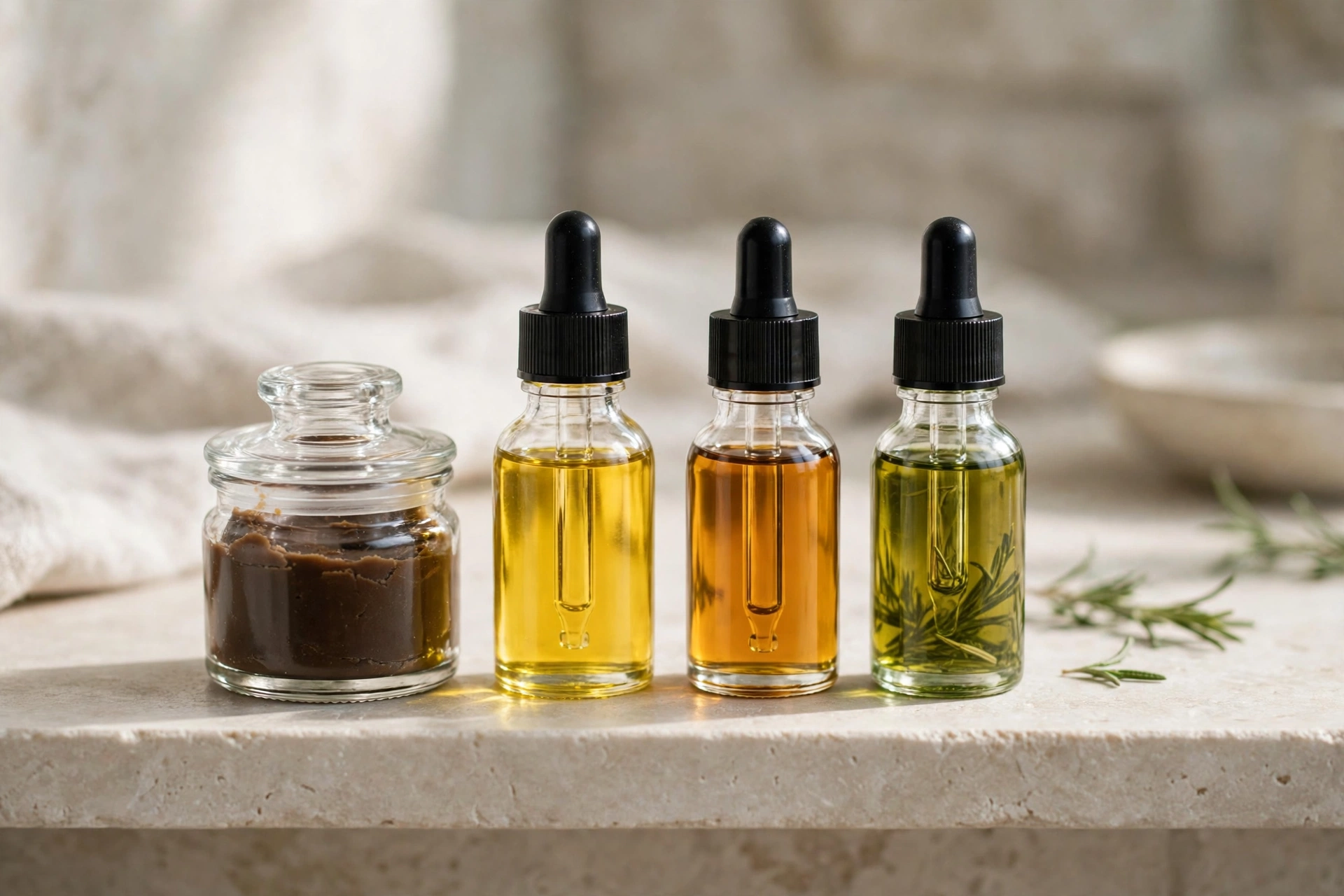
The takeaway: if your goal is moisture and length retention, batana is a legitimate heavy-duty option. If your goal is clinically supported help with thinning or hair loss, rosemary oil has the one real trial — and minoxidil has decades of them. See a dermatologist for actual hair loss rather than hoping an oil will reverse it.
How to Tell Real Batana Oil from Fakes
Batana oil’s popularity has flooded the market with diluted and counterfeit products — pale, perfumed, or suspiciously cheap “batana” that is mostly carrier oil. Since appearance alone can’t prove authenticity, use this full checklist:
- Color: authentic unrefined batana oil is deep brown to dark caramel — never pale yellow or clear.
- Texture: thick, buttery, sometimes slightly grainy at room temperature; melts with body heat. Thin and watery is a red flag.
- Scent: strong, earthy, smoky, like roasted coffee or cocoa. Perfume-like or odorless means refined, diluted, or fake.
- Ingredient list: should name Elaeis oleifera oil. If five cheaper oils appear before it, you’re buying a blend, not pure batana.
- Origin: authentic batana comes from Honduras (La Moskitia region). Vague sourcing is a warning sign.
- Price: real batana is labor-intensive to produce. Huge jars at bargain prices are almost certainly not the real thing.
- Claims: treat “100% raw,” “100% pure,” and “miracle growth” labels with skepticism. As WebMD notes, terms like “raw” and “unrefined” aren’t regulated, so makers can print them without proof. Paradoxically, the most trustworthy sellers make the least dramatic claims.
How to Use Batana Oil for Hair (Step by Step)
Batana oil works best as a pre-wash treatment rather than a daily leave-in — it’s heavy. Here is the routine that gets the benefits without the buildup:
Step 1: Warm a small amount
Scoop a pea- to dime-sized amount (start small — you can add more) and rub it between your palms until it melts into an oil.
Step 2: Apply to dry hair, mid-lengths to ends first
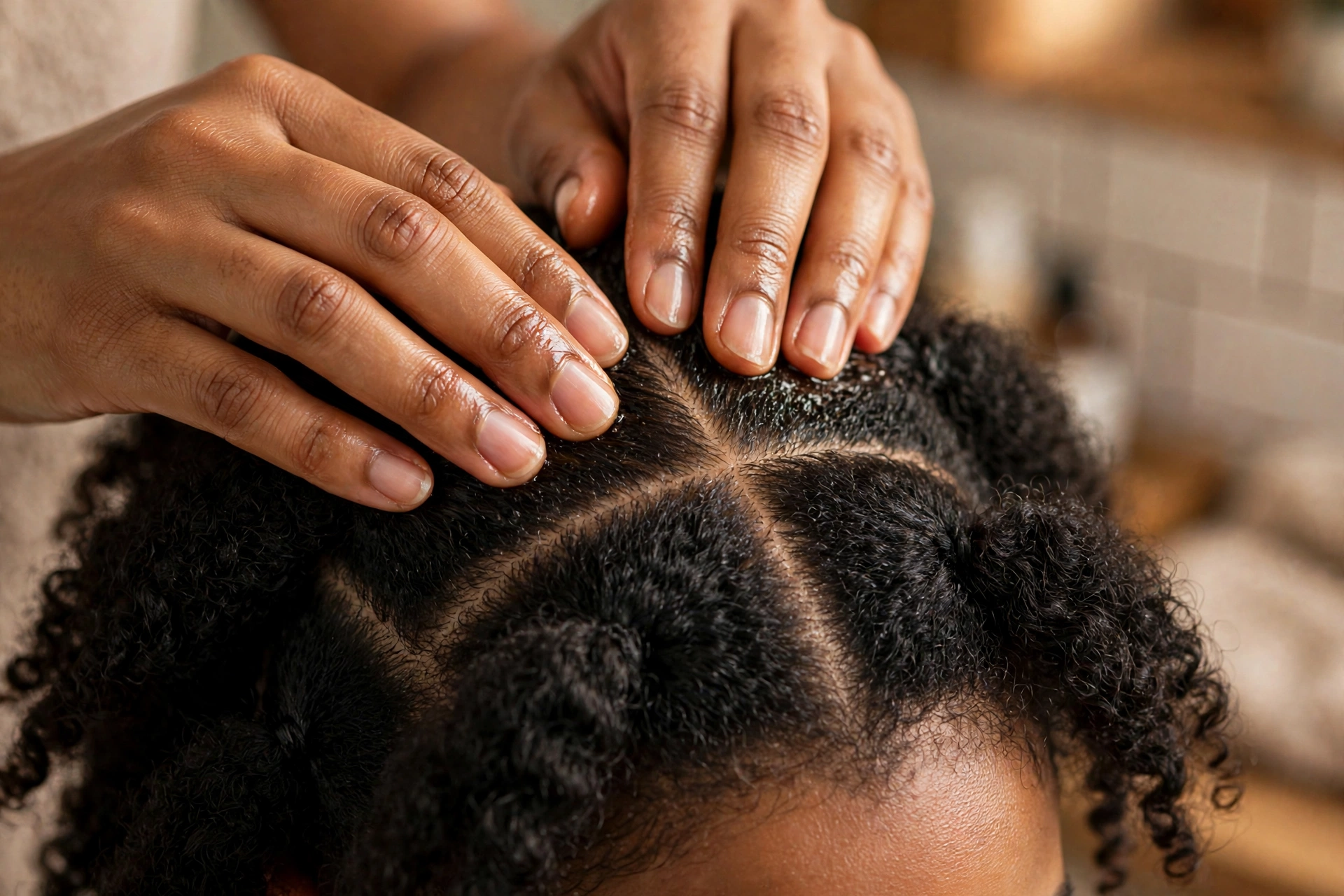
Work it through the driest areas first, then use the residue on your hands for the scalp. Massaging the scalp for a few minutes is part of the benefit — remember, the massage itself helps.
Step 3: Leave it on 30 minutes to overnight
Thirty minutes gives a solid conditioning treatment; overnight under a shower cap or bonnet gives a deep treatment. Protect your pillowcase — botanical oils stain, and rancid oil stains are extremely hard to wash out.
Step 4: Shampoo — possibly twice
Wash thoroughly with a gentle shampoo; a second shampoo is often needed to fully remove a heavy oil. Follow with your regular conditioner. Clarifying shampoo once in a while prevents buildup, but don’t clarify every wash.
Step 5: Use 1–2 times per week
Consistency beats quantity. Once or twice weekly is the sweet spot most people report; daily use is unnecessary and invites buildup, especially on finer textures.
For a full routine built around natural hair, see our complete batana oil guide for natural hair and our roundup of the best hair oils for natural hair.
Side Effects and Who Should Be Careful
Batana oil is generally well tolerated, but “natural” doesn’t mean “risk-free for everyone”:
- Allergies: it comes from palm nuts. Anyone with nut allergies should be cautious — do a patch test on your inner elbow and wait 24 hours before full use.
- Scalp irritation: any cosmetic can irritate sensitive skin. Stop if you develop burning, rash, significant itching, or redness.
- Too heavy for fine hair: rich oils can weigh down fine or low-density hair. Start with a tiny amount or skip it.
- Hairline breakouts: heavy oils migrating onto acne-prone facial skin can trigger breakouts. Keep it on the hair and scalp, not the forehead.
- Buildup: oil layered over oil, butter, and gel eventually demands a proper wash day. Clarify as needed.
- Staining: it can stain pillowcases and clothing — use a bonnet for overnight treatments.
Who Should Try Batana Oil — and Who Should Skip It
Try it if: your hair is dry, brittle, or breakage-prone; you want a heavy pre-wash treatment for natural or coily 4c hair; you like rich, traditional oils and don’t mind the smoky scent.
Skip it (or see a professional first) if: you have active hair loss or thinning — see a dermatologist, because hair loss is a medical condition with medical treatments; you have a nut allergy; your hair is fine and easily weighed down; or you’re buying it mainly for the “regrow my edges in 30 days” promise, because no oil does that.
Frequently Asked Questions
Does batana oil really grow hair?
There is no controlled human evidence that batana oil grows new hair or speeds up growth. What it reliably does is reduce breakage, which helps you retain the length you grow — and retained length looks like growth over time.
How long does batana oil take to work?
Moisture and softness improve from the first use. Reduced breakage becomes noticeable after a few weeks of consistent use. Meaningful length retention takes 2–3 months of regular use — hair only grows about half an inch a month no matter what you apply.
Can batana oil regrow thinning edges?
There is no clinical evidence it regrows lost hair at the edges or anywhere else. If edges are thinning, the honest move is a dermatologist visit to find the cause — traction, hormones, or a scalp condition — rather than relying on an oil.
Does batana oil reverse gray hair?
No. It has never been studied for gray-hair reversal, and graying is driven by genetics and oxidative stress that an oil can’t undo. Treat this claim as a seller red flag.
What are the side effects of batana oil?
The main risks are allergic reaction (it’s a palm-nut oil — patch test first), scalp irritation in sensitive people, greasiness and buildup from overuse, breakouts if it migrates to facial skin, and stained pillowcases. It’s generally safe otherwise.
How do I know if my batana oil is real?
Real unrefined batana oil is deep brown, thick and buttery at room temperature, smells earthy and smoky (like roasted coffee), lists Elaeis oleifera on the label, and comes from Honduras. Pale, thin, perfumed, or suspiciously cheap “batana” is likely fake or heavily diluted.
Can I use batana oil every day?
You can, but there’s little reason to. One to two treatments per week is enough for the conditioning benefits; daily use mostly adds buildup risk, especially on fine hair.
Is batana oil better than castor oil?
They’re different tools. Batana is buttery with a smoky scent and absorbs better into damp hair; castor is stickier, sits more on the surface, and is notoriously hard to wash out. Neither has clinical evidence for growing hair. Choose based on texture preference and how your hair responds.
The Honest Bottom Line
Batana oil is a genuinely good heavy oil with centuries of traditional use behind it — and a marketing machine in front of it. It moisturizes deeply, reduces breakage, calms dry scalps, and adds shine. It does not grow new hair, reverse gray, block DHT, or wake up dormant follicles, and anyone telling you otherwise is selling something.
Buy it for what it is: a rich, traditional conditioning treatment. Buy it authentic, use it consistently, and judge it on breakage and moisture — not on miracles.
Disclaimer: This article is for informational purposes only and is not medical advice. Hair loss can have medical causes — if you’re experiencing significant shedding or thinning, consult a dermatologist. Always patch-test new products, especially if you have nut allergies.
