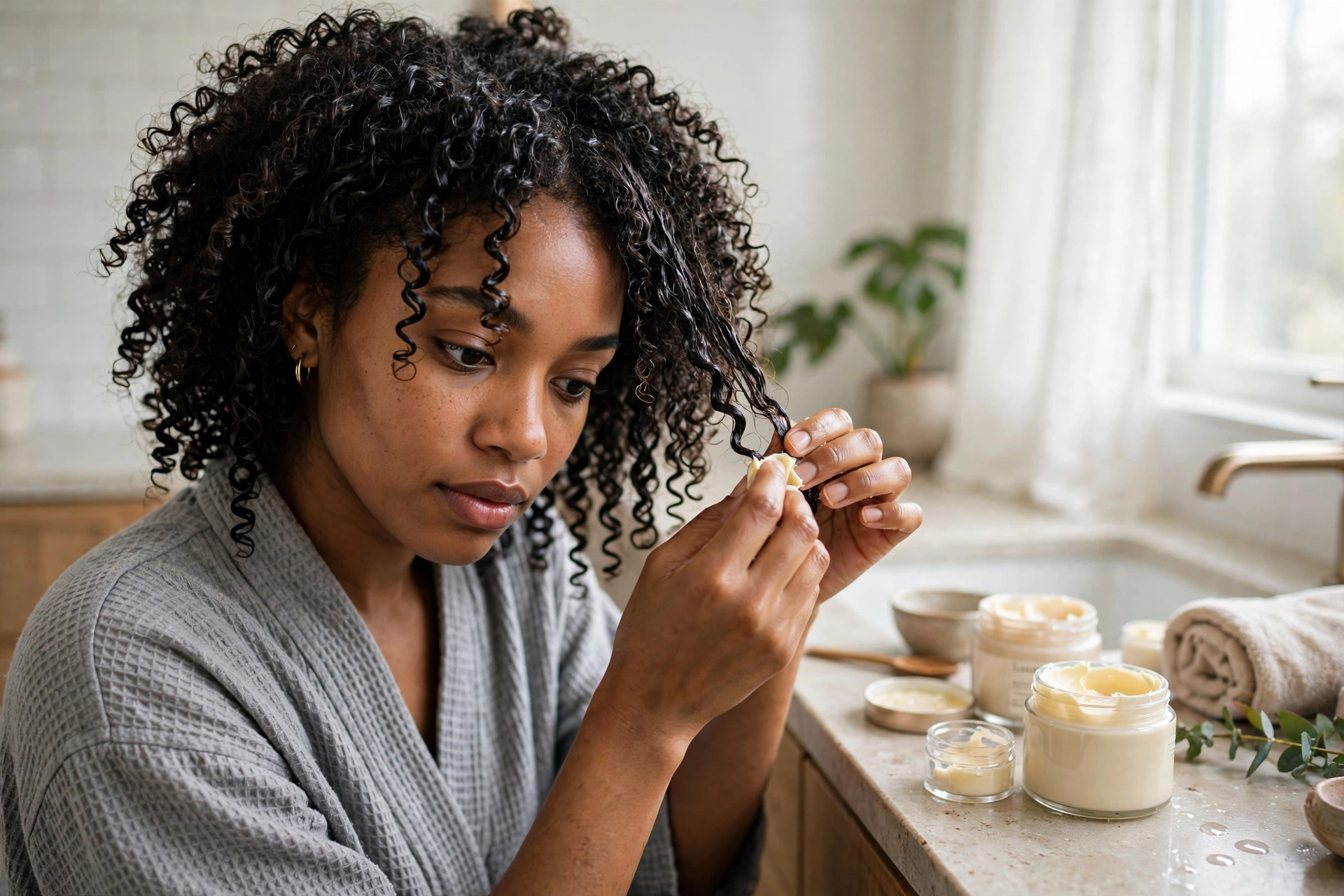
How to Care for High Porosity Natural Hair: Seal It In, Don’t Just Wet It
 Maya Thompson
📅 November 3, 2026
⏱ 14 min read
Here is the paradox that defines high porosity hair: it drinks. Put it under the shower and it saturates in seconds, soaks up conditioner like it has been waiting all week, and then — by lunch — feels dry again. Anyone watching only the shower would conclude this hair needs more water. It does not. Learning how to care for high porosity natural hair means solving a retention problem, not an intake problem. The cuticle layer that should lie flat and guard the strand is raised, chipped or gapped, so moisture walks in through an open door and straight back out again. Most guides respond to that with a shopping list: heavier butter, another oil, a new mask. This guide takes a different shape. It gives you a retention system — fill, seal, protect — then shows how wash day, protein, drying and colour decisions all serve that system, and what to do when the system stops working. PickHonestly is a research-based site: this draws on dermatology guidance and published hair-science reviews, not on lab tests we ran ourselves.
First, is it really high porosity?
Before rebuilding a routine around porosity, make sure porosity is actually the diagnosis, because “dry hair” and “high porosity hair” are not the same thing. Hair can be dry from infrequent washing, harsh shampoo, low humidity or damaged ends without having a highly porous cuticle, and treating normal-porosity hair with heavy sealants just leaves it weighed down and greasy. The signs that point specifically to high porosity cluster together: hair that saturates almost instantly in the shower, dries unusually fast without heat, feels rough or straw-like when you run a single strand between your fingers, frizzes quickly in humidity, and tangles easily because raised cuticles catch on each other. Colour or chemical treatments also take faster and sometimes unevenly on highly porous hair, because the same gaps that let water in let dye in too.
Be sceptical of the famous float test, where a clean strand is dropped into a glass of water and its sinking is read as a verdict. It is the test every blog repeats, and it is the least reliable one in the house. Product residue, oils, the strand’s thickness and even how it lands on the surface all change whether it floats or sinks, and a single strand cannot speak for a whole head — roots are often far less porous than ends that have weathered years of styling. Better evidence comes from combining three observations over a week: how fast the hair saturates and dries, how it feels strand by strand, and its history of colour, heat and chemical processing. If all three point the same way, you have a working diagnosis. Also remember porosity is not always uniform or permanent in the way a curl pattern is: some people are born with more open cuticles, but for many, high porosity is acquired — heat, bleach, relaxers and rough handling raise the cuticle over time. Acquired porosity can be managed and improved, but no product permanently glues a chipped cuticle shut again, and any guide promising to “fix” or “close” it for good is overselling. Management, not miracle repair, is the honest goal.
The retention system: fill, seal, protect
Every recommendation in this guide hangs on three steps in this order. Skip one and the others underperform, which is why a routine can contain all the right products and still fail.
Fill. Start with water itself, then a water-based leave-in or conditioner that carries humectants and conditioning agents into the strand. This is the step most people already do well — highly porous hair accepts moisture eagerly. The refinement is in the humectants: ingredients such as glycerin and hyaluronic acid draw water toward the hair, which helps in humid air but can backfire in dry winter air, where there is little moisture to draw and the humectant can pull water out of the strand instead. Our guide to humectants for natural hair explains that seasonal swing in detail; the short version is to lean on humectants when the air is humid and lean on creams and sealants when it is dry.
Seal. This is the step high porosity routines most often underdo. Once moisture is in, it must be trapped with an oil, a cream or a butter layered over it before it evaporates. The well-known LOC method — liquid, oil, cream — and its sibling LCO — liquid, cream, oil — are both versions of this step, and the right order is the one that leaves your hair feeling coated but not greasy after an hour. Weight matters more than brand here, and it depends on density, not just porosity. Thick, dense high-porosity hair can usually carry shea butter or castor oil without looking weighed down; fine high-porosity hair often does better with grapeseed, sweet almond or jojoba oil and a lighter cream, because a heavy butter flattens it and invites buildup. If you use shea, our guide to shea butter for natural hair covers how to apply it without the waxy, coated feeling that puts many people off. Judge the seal by the one-hour test: if the hair feels dry again within the hour, the seal was too light or missing; if it feels coated and limp, it was too heavy for your density.
Protect. Everything that lifts the cuticle further works against the first two steps: high heat without protection, tight styles that strain fragile strands, rough towel-drying, and sleeping unprotected on cotton, which rubs the cuticle all night. Protection is not a separate “extra” section of a routine; it is what keeps the fill and seal from being undone between wash days. Loose styles, satin or silk at night, gentle handling and lower heat settings are the unglamorous habits that make the expensive products actually work.

How to care for high porosity natural hair on wash day
Wash day for high porosity hair is not a different universe from a normal wash day — it is the same day with the retention system applied deliberately at each stage. The order below assumes a weekly wash; adjust the frequency to your scalp using our guide to how often to wash natural hair, since overwashing strips the very moisture you are trying to keep.
Step 1: Pre-poo only if the hair is tangled or very dry
Work a light oil or conditioner through the hair before shampooing if it is tangled, or if shampoo usually leaves it feeling stripped. This is optional, not mandatory — on a good week, skip it and save the step for when the hair actually needs the buffer.
Step 2: Cleanse gently, and less often than you think
Use a sulfate-free, moisturising shampoo and focus it on the scalp, letting the suds run down the lengths rather than scrubbing the lengths themselves. Highly porous hair does not need a deep-cleaning shampoo every wash; frequent clarifying strips the cuticle further and resets your retention work to zero. Reserve clarifying washes for genuine buildup, and follow them immediately with deep conditioning.
Step 3: Deep condition with heat, every wash if needed
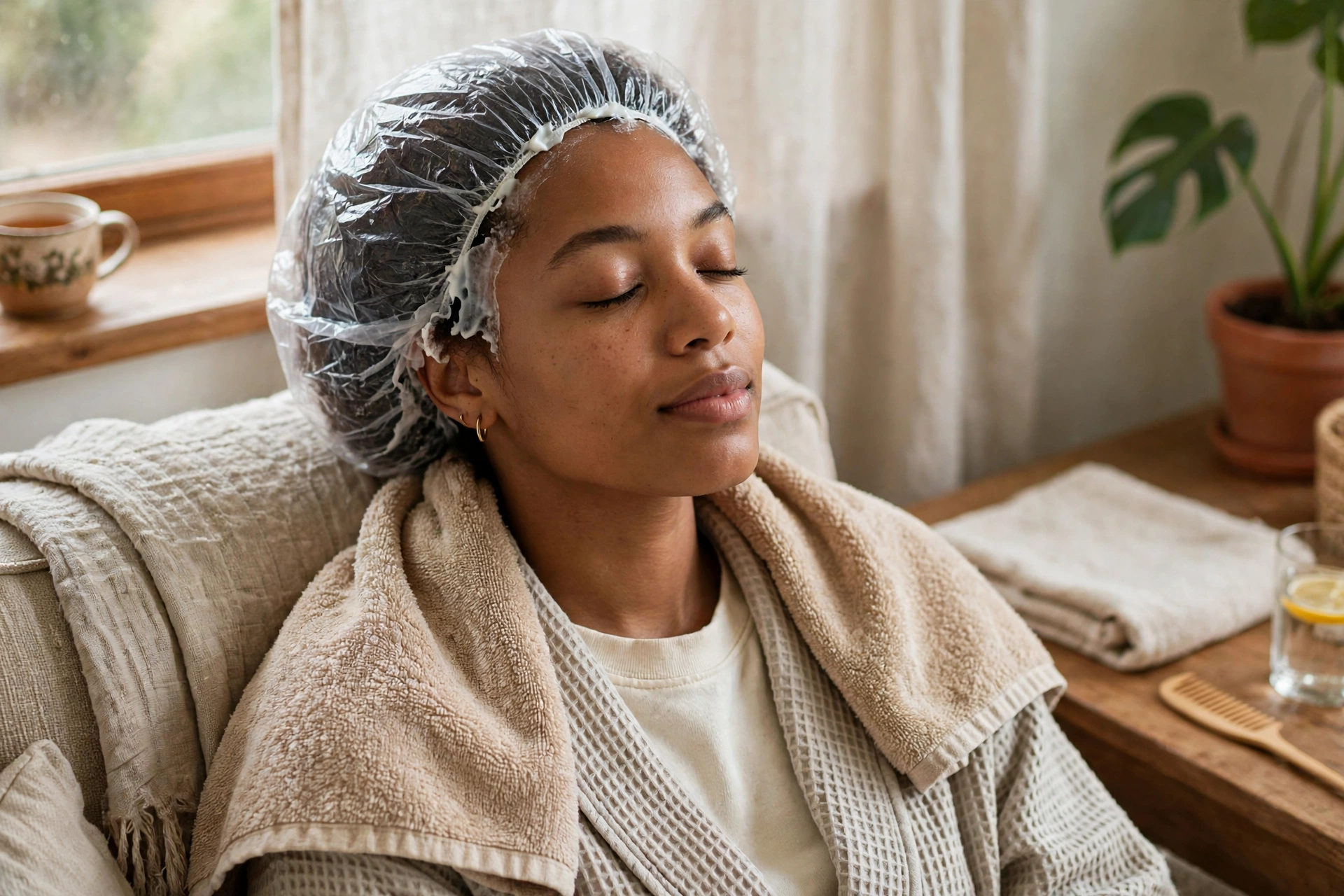
Apply a thick deep conditioner generously, cover with a plastic cap, and add gentle heat — a hooded dryer, a heat cap, or a warm towel — for 15–30 minutes. Heat matters here for a practical reason: it helps the conditioner penetrate rather than sitting on the surface, and for porous hair that surface-sitting is exactly the failure mode. Rinse with lukewarm, not hot, water; hot water lifts the cuticle further and sends moisture straight back out.
Step 4: Leave-in, then seal, while the hair is still damp
Do not wait until the hair is half dry. Apply a water-based leave-in to damp hair, then your oil, then your cream — or cream then oil, whichever passed your one-hour test. Work in sections so the back of the head gets the same treatment as the front, and pay extra attention to the ends, which are the oldest, most porous part of every strand.
Step 5: Style loose, and dry deliberately
Choose loose twists, braids or a wash-and-go over tight ponytails or buns that strain fragile strands. If you diffuse, use low heat with a protectant; if you air-dry, remember that fast drying is a symptom, not a convenience, for this hair type — the section on drying below explains why a little controlled heat during conditioning beats a fast, unsealed air-dry.
Step 6: Refresh between washes by re-sealing, not re-wetting alone
On non-wash days, misting with water alone and walking away repeats the original paradox: wet now, dry in an hour. Mist lightly, then reapply a little leave-in and sealant to the driest sections, especially the ends. That small second seal is what carries moisture from one wash day to the next.
Protein: the patch, not the cure
Protein earns its reputation in high porosity care for a specific, limited reason: hydrolysed proteins can temporarily fill gaps in a damaged cuticle, making the strand feel smoother and stronger and reducing breakage while the patch lasts. Think of it the way one trichology guide puts it — like patching a tyre. The patch helps, it is not a new tyre, and it washes out over time. That framing also explains the dosing. A heavier protein treatment once a month suits many people with highly porous hair, with lighter protein conditioners every few weeks in between if the hair still feels weak. Our guide to protein treatment for natural hair covers the treatment types and the balance with moisture in full.
Calibration is where most people go wrong, in both directions. Too little protein and the hair stays mushy, over-stretches when wet and breaks from weakness. Too much and it turns stiff, straw-like and snappy — protein overload feels like dryness, which tricks people into adding more protein when the hair actually needs moisture and a break from protein. The check is simple: wet a single strand and stretch it gently. If it snaps immediately with almost no stretch, it likely needs moisture and possibly less protein. If it stretches and stretches without springing back, it likely needs protein. If it stretches a little and returns, the balance is roughly right. Protein is not a moisturiser, and it should never be treated as one — a protein treatment without a moisturising deep conditioner afterwards leaves the hair stronger and drier at the same time, which is not a win.
Drying is part of the treatment
Competitor guides treat drying as an afterthought. For high porosity hair it is a retention decision. Because the cuticle is open, water leaves fast — which is why this hair type air-dries in a fraction of the time low porosity hair takes. That speed looks convenient, but unsealed fast drying is moisture escaping, not moisture managed. Two adjustments change the outcome. First, use gentle heat where it helps: during deep conditioning, as above, heat drives the treatment in. Second, do not go to bed with soaking-wet hair or leave it to dry completely unsealed; seal first, then dry, and protect it overnight. Healthline’s guide to home remedies for dry hair notes research finding that leaving hair wet for long periods can damage it comparably to blow-drying, and that heat styling should be kept at a distance with lower settings — both points land harder for porous hair, whose cuticle is already compromised. The American Academy of Dermatology’s healthy hair tips make the same general case for gentle handling: avoid tugging, let hair air-dry when you can, and use a wide-tooth comb carefully rather than yanking through wet hair.
Colour, heat and chemicals absorb faster
The same open cuticle that loses moisture also takes in colour, relaxers and heat damage faster than a closed one — which means processing times and temperatures that are safe for someone else can overshoot on highly porous hair. Colour often grabs darker or more unevenly, especially at the porous ends, and chemical treatments process more quickly. The practical consequences are unglamorous but real: always strand-test colour before a full application, tell a stylist the hair is highly porous before any chemical service rather than after, keep heat tools at lower temperatures with a protectant, and space out chemical services further than the box suggests. A review of hair cosmetics in the International Journal of Trichology, published via PubMed Central, documents how repeated chemical treatment, grooming friction and environmental exposure progressively weather the shaft from root to tip — weathering that shows up as tangling and frizz long before it shows up as visible breakage. For porous hair, that weathering is already advanced, so each new chemical or heat exposure costs more than it would on intact hair.
Five habits that undo the routine
First, baking soda rinses and other harsh alkaline treatments: they lift the cuticle further, which is the opposite of what this hair needs, and no amount of sealing afterwards fully compensates. Second, clarifying too often: a monthly clarifying wash for buildup is reasonable, but a weekly one strips the lipids that help the cuticle lie flat. Third, very hot water: it feels thorough and it opens the cuticle, so finish with lukewarm water instead. Fourth, high heat without a protectant, especially flat-ironing on hair that is already porous — if heat styling is part of your look, lower the temperature and keep it infrequent. Fifth, skipping the sealant on wash day because the hair “felt fine” when wet: wet is not sealed, and the dryness that arrives by the afternoon is the bill for that skipped step. None of these requires buying anything new. They are all subtractions, which is part of why they are easy to miss.
A 4-week reset plan
If the routine above feels like a lot to adopt at once, run it as a four-week reset instead of changing everything on day one. Week 1: switch to gentle cleansing and add the seal step after every wash — liquid, oil, cream — without changing anything else, so you can see what sealing alone does. Week 2: add a deep conditioning session with heat on wash day and a lukewarm final rinse. Week 3: introduce protein — a light protein conditioner first, and only move to a heavier monthly treatment if the stretch test suggests the hair still needs strength. Week 4: audit the habits — heat settings, water temperature, clarifying frequency, night protection — and keep only the changes that survived contact with real life. At the end of the month, judge by retention, not by shine on wash day: does the hair still feel moisturised on day three? Do the ends still feel coated rather than crispy? If yes, the system is working. If the hair still dries out within hours despite a proper seal, the likelier causes are buildup blocking absorption, ends that need trimming, or a scalp or health issue worth a dermatologist’s opinion rather than another product.
Frequently Asked Questions
Can high porosity hair ever become low porosity?
Not in the sense of permanently closing the cuticle. Care can smooth the cuticle, patch gaps with protein, reduce further damage and make the hair behave much better, and new growth will reflect gentler handling — but a chipped cuticle does not regrow its original structure. Judge progress by retention and breakage over weeks, not by a single float test.
Is the LOC or LCO method better for high porosity hair?
Whichever leaves your hair moisturised an hour later without feeling greasy. LOC (liquid, oil, cream) suits many people because the cream locks the oil in; LCO (liquid, cream, oil) suits others, especially when a heavier cream needs an oil on top to stop it rubbing off. Test one order for two wash days, then the other, and keep the winner.
How often should high porosity hair be washed?
Usually once a week, sometimes twice if the scalp needs it, and less often if washing strips the hair. The deciding factor is the scalp: wash when the scalp needs cleansing, and make every wash count with deep conditioning and sealing, rather than washing more often with a weaker routine.
Does high porosity hair need heavy butters?
Not necessarily. Thick, dense hair often does well with shea butter or castor oil, but fine high-porosity hair can be weighed down by the same products and do better with lighter oils such as grapeseed or jojoba plus a light cream. Match the sealant weight to your density, not just to your porosity.
Disclaimer: This article is general hair-care information, not medical advice. If you notice hair coming out in clumps, bald patches, persistent scalp pain, or sudden changes in shedding or texture, see a board-certified dermatologist rather than trying a new product. Individual results vary with hair type, health and routine.
