How Long Does Batana Oil Take to Grow Hair? The Honest Timeline
 Maya Thompson
📅 October 20, 2026
⏱ 15 min read
The short answer: you’re asking about two different clocks
One brand’s page promises “noticeable filling-in” in 6+ weeks. Another site says results take 1 to 4 weeks. A third says 3 to 4 months. A fourth says up to 6 months. They can’t all be right — and the reason they disagree is that they’re measuring different things and calling it all “results.”
Here’s the honest split nobody selling you the oil wants to lead with:
- Clock one — cosmetic change: softer hair, more shine, a calmer scalp, less breakage. This starts within 1 to 4 weeks of consistent use, and it’s real. Oils condition; that’s what they do.
- Clock two — new growth: hairs that didn’t exist before, visibly filling in thin spots or edges. This takes 3 to 6 months, because it runs on your hair’s biological growth cycle, which no oil can speed up.
Most of the timeline confusion online comes from mixing these two clocks together. When a review says “it worked in 3 weeks,” it almost always means clock one. When someone says “my edges finally filled in at month 4,” that’s clock two. Both can be true at once. What follows is the month-by-month version — what you’ll actually notice, when, and the biology that sets the schedule.
Why every timeline you find online disagrees
Before the timeline, it’s worth understanding why the internet can’t agree, because the same confusion will keep following you otherwise. Three things are going on:
1. Brands compress the timeline. The pages ranking for this question are mostly oil sellers. A brand page promising “fine hairs in 3-4 weeks” isn’t lying about what one customer reported — it’s just presenting the fastest anecdote as the expectation. One popular seller’s own comparison table quietly admits visible new growth takes 6 to 12 weeks while its headline numbers look much faster. Read the fine print, always.
2. “Less breakage” gets counted as “growth.” This is the big one. If your hair was breaking off at the ends faster than it grew, it looked like it wasn’t growing at all. An oil that reduces breakage lets you keep the length your follicles were already producing — and that retained length looks and feels like growth within weeks. It isn’t new growth. It’s the hair you already had, finally surviving. The distinction matters because breakage control works fast and growth doesn’t.
3. Nobody cites evidence. Go looking for a clinical trial of batana oil for hair growth and you will find exactly zero. The entire timeline discourse — every number in this niche — is built on customer anecdotes, brand claims, and borrowed biology. That doesn’t mean the oil does nothing (more on what it plausibly does below), but it means any site stating timelines as settled fact is overstating what anyone actually knows. This guide will say “reported” where it’s reported and “measured” where it’s measured.
The honest month-by-month timeline
Assume consistent use: 2 to 3 times a week, massaged into the scalp, left on for hours or overnight. Sporadic use stretches every phase below.
Weeks 1–2: softness, shine, a calmer scalp
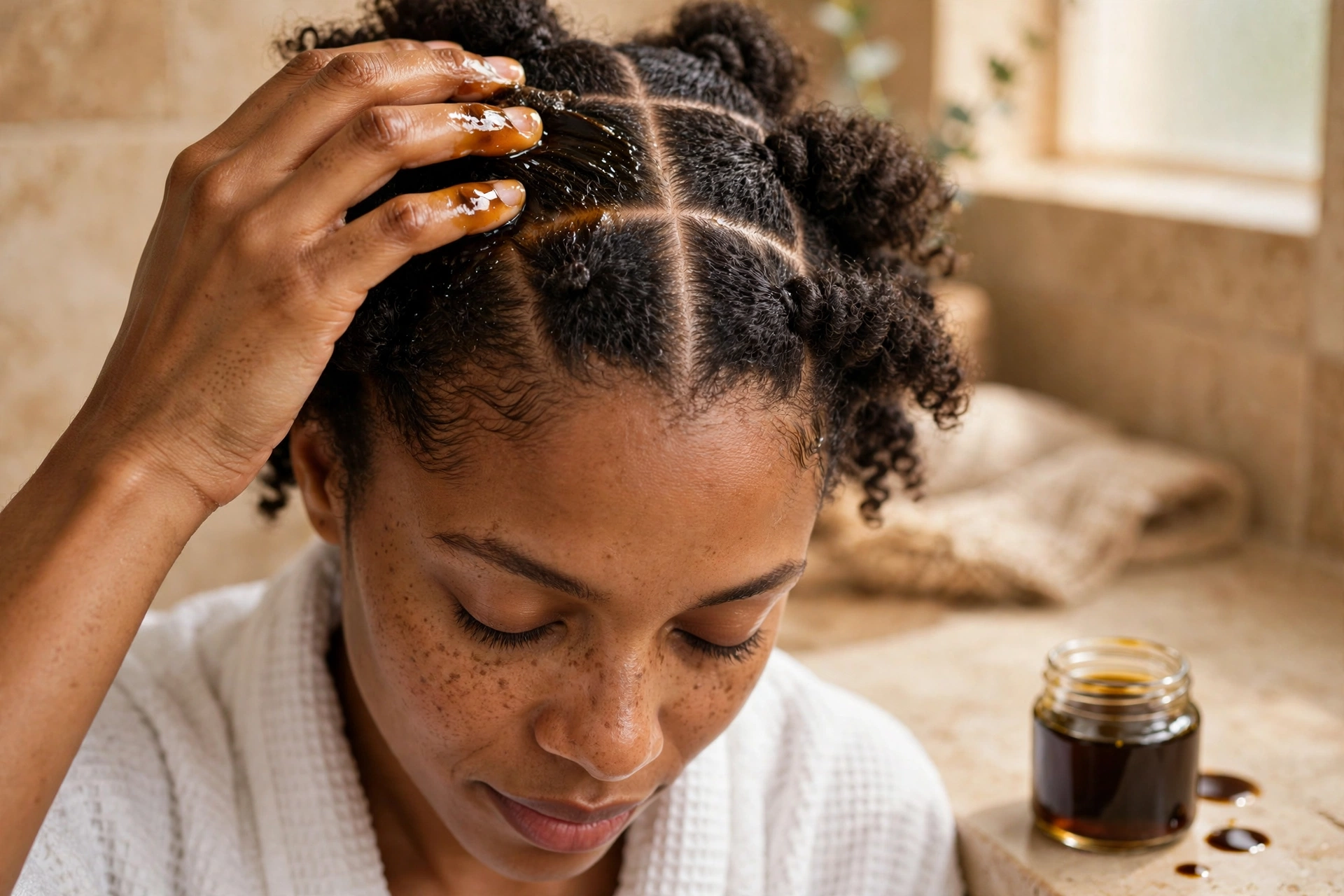
This is the fastest and most reliable part. Batana oil is a heavy, nutrient-dense oil, and heavy oils are good at two immediate jobs: coating the hair shaft so it feels smoother and reflects more light, and calming a dry, itchy scalp. If your scalp was tight and flaky from dryness, expect that to ease first. None of this is growth — but it is real, and it’s why most first-time users become believers. Belief is fine; just don’t mistake the honeymoon for the marriage.
Weeks 3–6: less breakage, less shedding in the shower
By the second month, conditioned hair breaks less. You’ll notice fewer snapped pieces on your shirt, less hair in the comb, smoother ends. For many naturals, this is the phase where hair looks like it’s growing faster — it isn’t; it’s breaking less, so length accumulates. This is clock one doing its best work, and honestly, for people whose main problem was breakage rather than slow growth, this phase alone can be transformative.
Months 2–3: the first real signs of fill-in
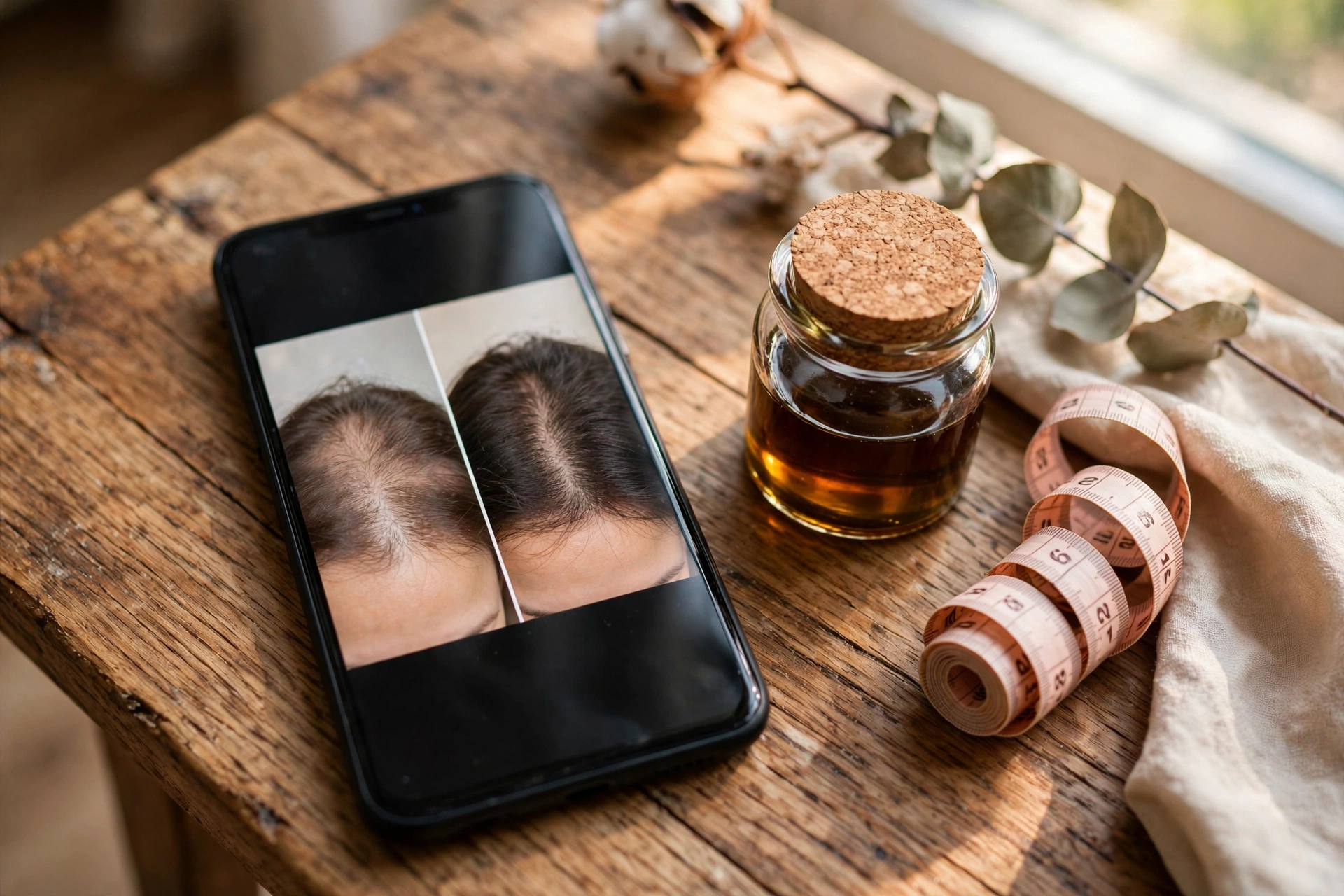
This is where clock two starts ticking audibly. Short, fine baby hairs along the hairline or in thin spots are the earliest visible sign of new growth responding to better scalp conditions. They’re subtle — you’ll spot them in good bathroom lighting before anyone else does. If you’re treating edges, this is the window where patience either pays off or starts to crack. Take your first comparison photo here (more on tracking below); your memory of “how thin it was” is unreliable, and photos don’t flatter or lie.
Months 3–6: measurable new growth
Here’s the biology: Healthline notes that hair grows about half an inch per month, and that nothing can make it grow faster than your genetics allow. So the absolute ceiling for new length in 6 months is roughly 3 inches — and that’s if everything goes perfectly. What batana oil can plausibly do in this window is keep follicles in a healthier state so more of your hairs stay in the growing phase and fewer shed early. Visible thickening and real length gains that survive a length check live here. If you’ve been consistent for 4+ months with zero change in photos, that’s data — see the troubleshooting section.
Month 6 and beyond: reassess, don’t just continue
Six months of consistent use is a complete trial. If your photos show improvement, you’ve found something that works for your hair — shift to maintenance (1 to 2 times a week) and keep the routine. If they show nothing, more of the same is unlikely to change the story. That isn’t failure; it’s an answer. The “when to quit” section below walks through what to do with it.
| Timeframe | What you’ll actually notice | Which clock |
|---|---|---|
| Weeks 1–2 | Softer hair, more shine, calmer scalp | Cosmetic |
| Weeks 3–6 | Less breakage, less shedding, length starts accumulating | Cosmetic / retention |
| Months 2–3 | Baby hairs along hairline and thin spots | Early new growth |
| Months 3–6 | Visible thickening, measurable length (up to ~3 inches max) | New growth |
| Month 6+ | Full assessment: maintain, adjust, or stop | Verdict |
Why it takes this long: your hair’s biological speed limit
Hair doesn’t grow continuously like a plant. Each follicle cycles through phases: a long growing phase (anagen, lasting years), a short transition (catagen), a resting phase (telogen), and shedding (exogen). At any moment, about 90% of your scalp hair is in the growing phase. An oil applied to the scalp can’t recruit a resting follicle into the growing phase on demand, and it can’t make a growing hair elongate faster than its cellular machinery allows — roughly half an inch a month.
What scalp care can influence is the environment around the follicle: less inflammation, less dryness, better blood flow from massage, fewer hairs snapped off before they reach their full length. That’s meaningful — it’s the difference between keeping 6 inches a year and keeping 3 — but it’s support work, not acceleration. Anyone promising to “speed up” your growth rate is selling against biology.
The 4C problem: shrinkage hides your results
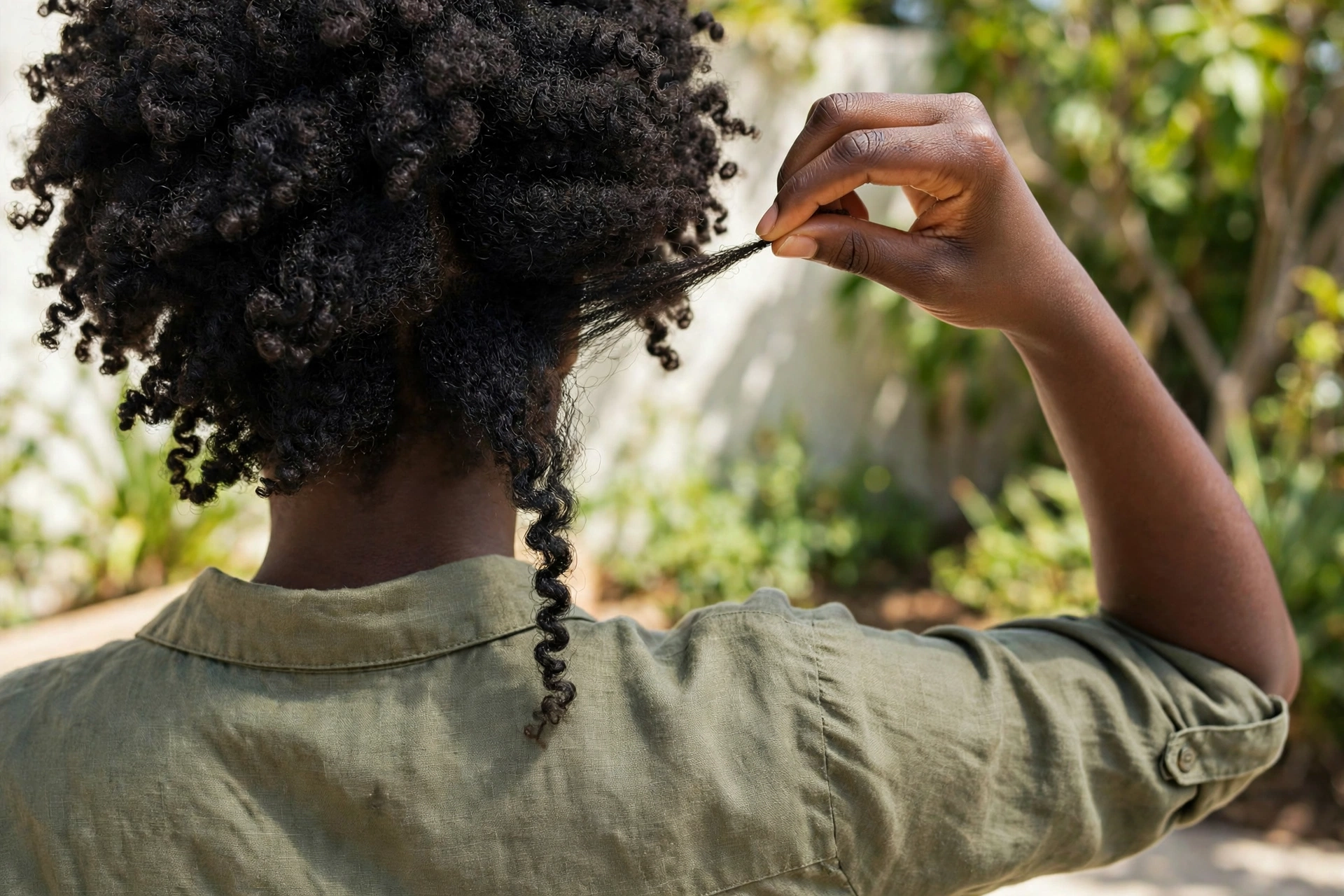
Here’s the gap none of the timeline pages mention: if you have coily 4C hair, your shrinkage can hide up to 75% of your actual length. That means real, measurable growth can be happening for months while your hair looks exactly the same in the mirror. This is the single biggest reason naturals conclude “it’s not working” at week 8 and quit right before the payoff window.
The fix is to never judge progress on shrunken hair. Once a month, on wash day, gently stretch one section and note where it falls — against your ear, your chin, your collarbone. Same section, same stretch, every month. Or take a photo of the stretched section next to a ruler. Unstretched mirror checks are not data; they’re mood readings.
There’s a second 4C-specific wrinkle: coily hair is the most breakage-prone hair type there is, which means clock one (breakage reduction) often delivers the most dramatic visible change for naturals — not because the oil grows 4C hair faster, but because 4C hair had the most length to stop losing.
What batana oil actually does on this timeline (and what it doesn’t)
Straight talk on the evidence, because this is where honesty matters most:
- No clinical trials of batana oil for hair growth exist. Not small ones, not animal ones — none that are published and findable. Every growth claim is anecdotal or extrapolated from its composition (oleic and linoleic acids, vitamin E, antioxidants).
- The scalp-massage evidence is real but borrowed. A small 2016 study found that standardized daily scalp massage increased hair thickness in 9 men over 24 weeks — but the study used massage alone, no oil. Since batana oil is always applied with massage, some of the reported benefit may be the massage, not the oil. Honest sellers don’t mention this; we just did.
- What it plausibly does: conditions the shaft (less breakage), moisturizes a dry scalp (less itch-flaking mistaken for dandruff), and delivers antioxidants to the scalp environment. A review of hair cosmetics in the International Journal of Trichology describes how oils generally protect the shaft and reduce protein loss from washing — the mechanism behind the retention effect.
- What it can’t do: revive dead follicles (nothing topical can), change your genetic growth rate, or fix hair loss driven by hormones, thyroid issues, or autoimmune conditions. Those need a dermatologist, not a jar.
For the full breakdown of each claimed benefit with its evidence level, see our batana oil benefits guide: what the evidence actually says — this timeline assumes you’ve read the honest version, not the marketing one.
How to use it for the fastest honest results
The timeline above assumes you’re actually giving the oil a fair trial. The short version: 2 to 3 times a week, massage a small amount into the scalp for 5 to 10 minutes, leave it on at least 2 hours or overnight, and wash out with a gentle shampoo. More oil doesn’t mean faster results — a clogged, buildup-coated scalp absorbs less, not more. If you want the complete method (amounts, overnight vs pre-wash, what to mix it with), our batana oil for natural hair guide covers it step by step. Don’t re-read the basics here; the only timeline-relevant points are consistency beats quantity, and massage is half the treatment.
Track it properly, or you’ll never know if it worked
Memory is a terrible measuring tool for slow change. Set up this simple system on day one — it takes five minutes a month:
- Monthly photos, same conditions: same bathroom, same lighting, same angle, hair in the same style. Take one shrunken and one stretched-length photo. Date them.
- The stretched-length check: pick one section (say, the crown), stretch it gently, and note the landmark it reaches. Write it down: “Oct: chin. Nov: below chin.” Landmarks beat inches for coily hair.
- The shed count: for one wash day a month, loosely collect the shed hairs and compare the pile size month to month. A shrinking pile is clock one working, and it’s measurable within weeks.
- Don’t measure more often than monthly. Weekly checks just manufacture disappointment — the biological change in 7 days is under 2 millimeters, invisible to the eye and the camera.
Month 3 and nothing? Troubleshoot before you quit
Three months of consistent use with no change in photos deserves investigation, not just more patience. Run this checklist:
- Is your oil real? The market is flooded with diluted and fake batana oil — pale, odorless, suspiciously cheap. A fake oil gives you a fake trial. Run through our guide to telling real batana oil from fake before concluding anything.
- Were you actually consistent? “2 to 3 times a week” means 2 to 3 times a week, for 12 weeks. Twice in January and a burst in March isn’t a trial.
- Is buildup blocking absorption? Heavy oil on an unwashed scalp forms a film that keeps everything — including the oil — from reaching the skin. If your scalp feels waxy or your hair looks dull despite oiling, clarify once and reset.
- Is something medical going on? Sudden shedding, widening parts, bald patches, or hair coming out in clumps are not “slow growth” — they’re symptoms. The American Academy of Dermatology’s overview of hair loss lists the common causes and when to see a doctor. No oil fixes thyroid, hormonal, or autoimmune hair loss.
- Were your expectations the problem? If you were waiting to see 3 new inches on shrunken 4C hair at month 3, re-check with the stretched-length method before declaring failure.
When to stop: honest exit criteria
Not every product works for every head, and there’s no prize for loyalty to a jar. Stop and reassess if:
- You’ve used it consistently for 6 months with zero change in monthly photos. That’s a complete trial with a clear answer.
- Your scalp reacts — persistent itching, redness, pimples along the hairline, or increased shedding after starting. Patch-test any new oil, and believe your skin over the reviews.
- You’re dreading the routine. A treatment you resent is a treatment you’ll do sporadically, and sporadic use doesn’t work — better to switch to something sustainable.
Stopping doesn’t have to mean quitting hair growth efforts entirely. It means this particular oil wasn’t your answer, and the money and shelf space go to the next hypothesis — ideally one discussed with a dermatologist if loss is significant. For general growth habits that support any routine, our guide to growing natural hair faster covers the retention fundamentals that matter more than any single product.
Batana oil vs the alternatives: an honest comparison
ShunSalon and others compare batana to minoxidil and rosemary oil, but their tables skip the column that matters most: evidence level. Here’s the version with it included.
| Treatment | Typical timeline for visible results | Evidence level | Honest caveat |
|---|---|---|---|
| Batana oil | 1–4 weeks (conditioning); 3–6 months (possible new growth) | Anecdotal; no clinical trials | May be the massage doing half the work |
| Minoxidil (2–5%) | 3–6 months | Multiple randomized trials | Works only while you keep using it; scalp irritation common |
| Castor oil | Weeks (shine, less breakage); growth unproven | Anecdotal | Extremely thick; buildup risk on coily scalps |
The pattern: everything honest takes months, and the only option with real trial data is the pharmaceutical one. Natural oils compete on gentleness, cost, and conditioning — not on proven regrowth power. Anyone telling you otherwise is selling something.
Frequently asked questions
Can I use batana oil every day to get faster results?
No — daily use doesn’t speed up the biological clock, and it increases the risk of scalp buildup, which can actually slow your visible progress by clogging follicles. Two to three times a week is the sweet spot most consistent users report. More is not more here.
How long should I leave batana oil in my hair?
At least 2 hours for a treatment session, or overnight for deeper conditioning — then wash it out. Leaving it in for days doesn’t add benefit; it adds buildup. If you’re using a small amount as a daily scalp moisturizer (not a treatment), that stays in, but keep it light.
Can I mix batana oil with castor oil or rosemary oil?
Yes, and it’s a common combination — castor oil adds thickness for edges, rosemary adds a light scent and its own (limited) evidence base. But don’t expect mixing to shorten the timeline. It changes the feel and the nutrient mix, not the speed of your follicles.
Will batana oil regrow completely bald spots?
If the follicles are dead (smooth, shiny skin with no pores visible), no topical product will regrow hair there — that’s true of batana, minoxidil, and everything else. If the follicles are dormant but alive (thinning areas, edges with fine hairs), that’s where 3 to 6 months of consistent care has its best shot. A dermatologist can tell the difference with a scalp exam.
Does the timeline differ for 4C hair?
The biology is the same, but the visibility lags because of shrinkage — you may need the full 3 to 6 months before stretched-length checks show what shrunken hair hides. On the upside, 4C hair usually shows the fastest cosmetic improvement, because breakage reduction is most dramatic on the most fragile hair type.
What happens when I stop using batana oil?
The conditioning benefits fade over a few washes — hair gradually returns to its unoiled state. Any new growth you kept is yours to keep; the oil didn’t create a dependency. But if breakage was your main problem, stopping the protection usually means breakage creeps back. Think of it like moisturizer for skin: maintenance, not cure.
Are there side effects?
It’s generally well tolerated, but patch-test first — nut and seed oils can trigger allergies. The most common issues are scalp buildup from overuse and pimples along the hairline from heavy application. If shedding increases after starting, stop and reassess rather than pushing through.
Why do some people see results in weeks while others wait months?
Almost always, the “weeks” people are seeing clock one: less breakage, better conditioning, calmer scalp. That’s genuinely fast. The “months” people are waiting on clock two: new follicle output. Both are real results — they’re just different phenomena, and the confusion between them is the entire reason this article exists.
Disclaimer: This article is for informational purposes only and isn’t medical advice. We have no clinical trials to cite for batana oil and hair growth — everything here is built from user reports, borrowed biology, and the limited studies noted above. If you’re experiencing significant hair loss, see a dermatologist; early diagnosis matters more than any oil.
