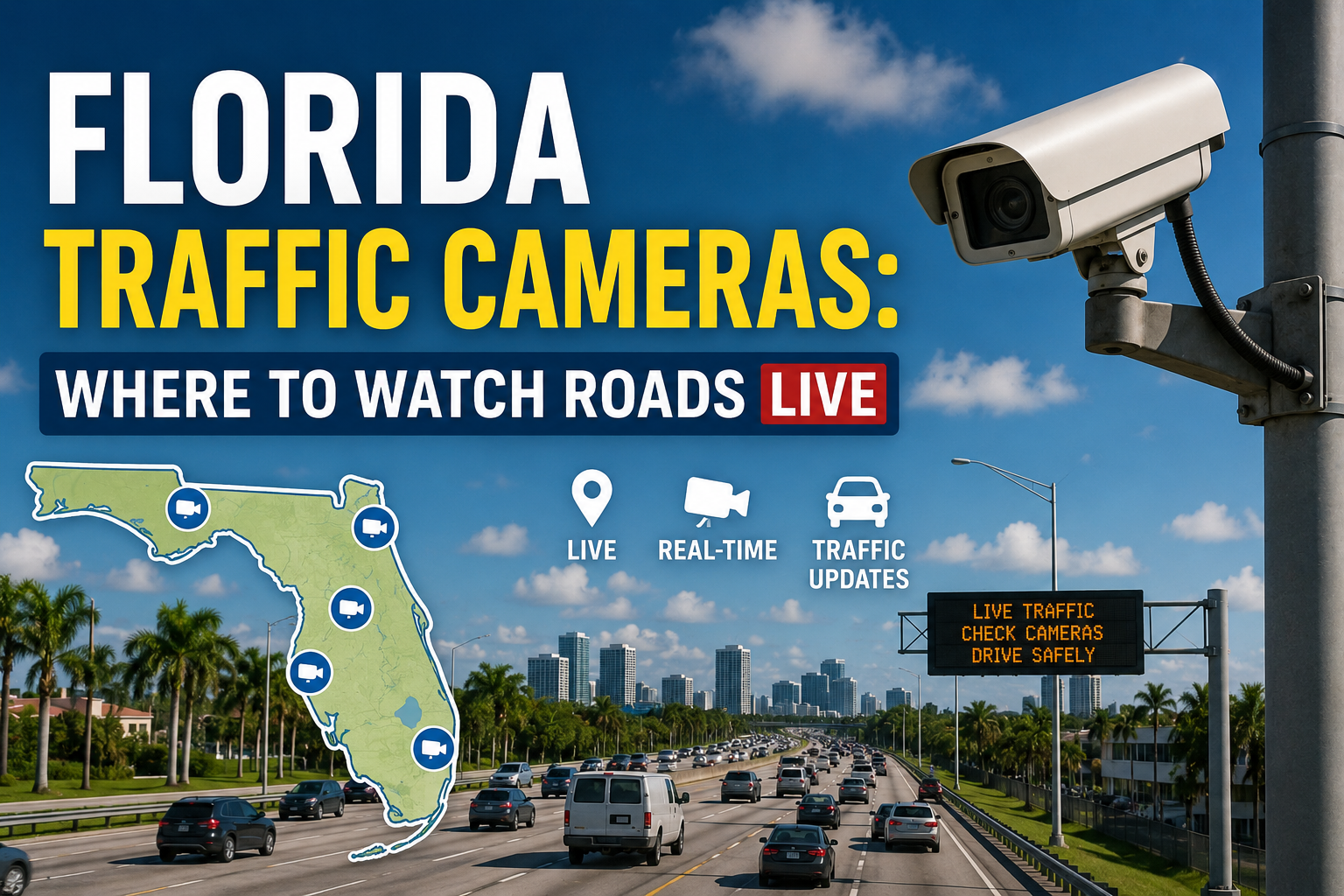
Florida Traffic Cameras: Where to Watch Roads Live
You’re about to leave the house, and you just want to know one thing: is the road bad right now? That’s the whole reason Florida traffic cameras exist. They let you see the road before you’re stuck on it.
I check these more than I’d like to admit. Before a long drive, before I pick someone up from the airport, even just to see if it’s raining three towns over. It takes ten seconds, and it saves a lot of headaches.
What Are Florida Traffic Cameras, Really?
A traffic camera is just a small camera set up on a pole near a road. It’s not there to catch you speeding. Its whole job is to let traffic centers, and regular people like you, see what’s happening on the road right now.
Most of these cameras update every few seconds. Some show a still picture that refreshes. A few show a short live video loop. Either way, you get a real look at the road, not a guess.
Who Actually Runs These Cameras?
In Florida, most of them are run by the state’s own Department of Transportation, often shortened to FDOT. This is the government group in charge of roads and bridges across the state.
The main hub for this is FL511, Florida’s official traffic information site. It pulls together Florida DOT traffic cameras from all over the state into one map you can click through.
Why People Check Florida Traffic Cameras Before They Drive
Here’s the honest reason: nobody wants to sit in traffic for no reason. A quick look at live traffic cameras Florida drivers rely on can tell you if a road is clear, jammed, or flooded, before you ever start your car.
This matters even more during storm season. Florida gets sudden rain, and sometimes worse. Some readers might remember the traffic camera that caught a tornado crossing a Florida intersection. That clip went viral, but it also shows exactly why these cameras matter beyond just checking for slow traffic.
So what does this actually mean for you? It means five minutes with a camera map can save you an hour stuck on the highway.
Everyday Uses People Don’t Think Of
Most people think of traffic cameras only for rush hour. But there’s more to it than that.
- Checking if a bridge is backed up before a trip, so you’re not stuck waiting on it.
- Looking at Florida interstate cameras before a long road trip, to plan rest stops around slow spots.
- Watching road conditions during a storm, without needing to drive out and see for yourself.
- Parents checking the route before picking up kids, especially during bad weather.
Best Places to Find Florida Live Traffic Cameras
There are a few solid spots to check, and they’re not all the same. Here’s where I’d actually look, depending on what you need.
FL511: The Main Statewide Map
FL511’s camera page is the biggest one. It covers most of the state, and it’s run directly by Florida’s own transportation department, so the feed is as close to official as you can get.
The downside? With so many cameras on one map, it can feel a little cluttered the first time you open it. Give it a minute, and it makes sense.
Local and Regional Options
If you only care about one area, a smaller site can be faster to use. A few good ones:
- FDOT Miami-Dade traffic cameras, built for that region specifically.
- SunGuide’s camera map service, which covers several Florida regions with a cleaner map view.
- Bay County’s traffic management center, useful if you’re around the Panhandle.
- Manatee County’s live traffic camera page, good for local roads in that county.
News Stations Also Carry Live Feeds
Local news channels often run their own traffic camera pages too. Bay News 9’s Tampa traffic cams are a good example. These usually pull from the same public feeds, just laid out a bit differently.
Honestly, it comes down to habit. Once you find a layout you like, you’ll probably stick with it.
How to Actually Use a Florida Traffic Camera Map
This part trips a lot of people up the first time. You open the map, and it’s just full of little dots. Here’s the simple way to use it.
First, zoom in on your area. Most maps start zoomed out to show the whole state, which is too much at once. Second, click a dot near your route, not just near your house. Third, check the time stamp if there is one, so you know how fresh the picture is.
That’s really all there is to it. No app download needed for most of these, since they run right in your browser.
Common Mistakes People Make
A few things catch people off guard the first time they use these.
- Assuming the picture is truly live to the second. Most refresh every few seconds to a minute, not instantly.
- Only checking one camera. Traffic can clear up or get worse a mile down the road, so check more than one spot on longer trips.
- Forgetting that some cameras go dark at night or in heavy fog. That’s normal, not a broken feed.
Are There Downsides to Relying on Traffic Cameras?
Yes, and it’s fair to say so. Traffic cameras won’t tell you about a crash that just happened thirty seconds ago. There’s always a small delay.
They also don’t replace a real weather alert. If it’s a serious storm, check an actual weather service too, not just a camera picture. Think of the camera as one more tool, not the whole answer.
If You’re Also Curious About Camera Gear Itself
Since this whole topic is about cameras, it’s worth a quick mention: the small units bolted to those poles are built completely differently from a camera you’d buy for yourself. If you’re shopping for your own camera instead of a traffic one, our guide on picking a beginner-friendly camera walks through what actually matters for personal use.
And if you already own an older camera body and want to get more use out of it, our piece on adapting lenses on a Nikon D90 is worth a look too.
FAQ
Are Florida traffic cameras free to watch?
Yes. Every official source, including FL511 and the local county sites, is free and open to anyone.
Do Florida traffic cameras record audio?
No. These cameras only show video or still images of the road. There’s no audio involved.
Can I see Florida traffic cameras on my phone?
Yes, most of the map sites work fine in a phone browser. There’s also an official FDOT app if you’d rather use one built for mobile.
Why is a camera showing a black screen?
This usually happens at night in areas without extra lighting, or during heavy fog and rain. It’s a normal limit of the camera, not a sign it’s broken.
Do these cameras cover every road in Florida?
No. They’re mostly placed on highways, interstates, and busier main roads. Smaller side streets usually won’t have one.
Final Thoughts on Florida Traffic Cameras
Florida traffic cameras are one of those simple tools that quietly make daily driving easier. You don’t need to understand how they work to get real use out of them. Just find a map you like, zoom into your area, and check it before you head out the door.