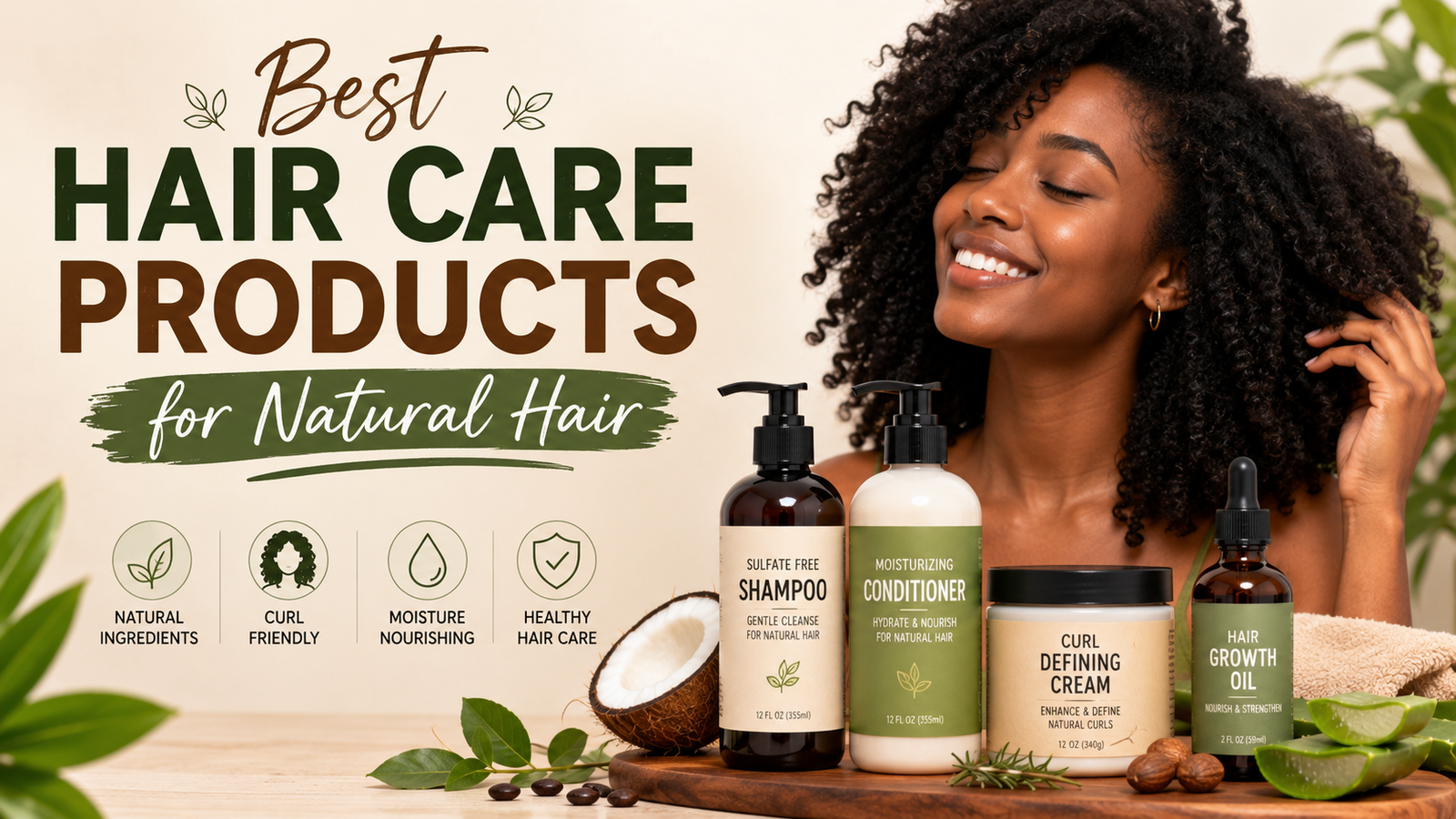
Natural Hair Care Products: The Best Picks for Every Step of Your Routine (2026)
Natural Hair Care Products
The best natural hair care products aren’t one decision. They’re about a hundred small ones. Which shampoo won’t strip your hair. Which leave-in actually holds moisture past Tuesday. Which deep conditioner is worth the wait time, and which one is just expensive water in a fancy jar.
This guide covers a full routine instead of a random product list: shampoo, deep conditioner, protein treatment, repair mask, leave-in detangler, daily moisturizer, curl definer, styling gel, and scalp oil. Nine products, each tied to the step it’s actually meant for, because a “best of” list that skips shampoo isn’t really a routine — it’s half of one. Browse more of our hair care coverage if you want the deeper breakdowns on porosity and protein-moisture balance.
Quick Comparison
| Product | Category | Best For | Price Range |
|---|---|---|---|
| Cantu Sulfate-Free Cleansing Cream Shampoo | Shampoo | Gentle cleansing without stripping | $7–$10 |
| Mielle Organics Babassu Oil & Mint Deep Conditioner | Deep Conditionertd> | Weekly moisture, dry/damaged hair | $10–$16 |
| ApHogee Two-Step Protein Treatment | Protein Treatment | Restoring strength after heat/color damage | $15–$20 |
| Briogeo Don’t Despair, Repair! Deep Conditioning Mask | Repair Mask | Color-treated or chemically processed hair | $36–$42 |
| Kinky Curly Knot Today Leave-In Detangler | Leave-In Detangler | Detangling tight curl patterns | $11–$15 |
| TGIN Butter Cream Daily Moisturizer | Daily Moisturizer | Dry or brittle ends between washes | $10–$14 |
| SheaMoisture Coconut & Hibiscus Curl Enhancing Smoothie | Curl Definer | Definition and frizz control | $12–$15 |
| Eco Style Olive Oil Styling Gel | Styling Gel | Hold, edges, wash-and-go looks | $6–$9 |
| Mielle Rosemary Mint Scalp & Hair Strengthening Oil | Scalp Oil | Scalp health, thinning edges | $9–$12 |
Prices are approximate and change often, so it’s worth double-checking before you buy.
What Makes the Best Natural Hair Care Products
Marketing language in this category is out of control. Moisturizing, nourishing, strengthening — these words get slapped on everything whether or not the formula actually delivers. In practice, three things separate a product that works from one that just smells nice.
Moisture retention matters more than moisture delivery. A product can feel hydrating the second you apply it and leave hair bone-dry by morning. What you actually want is something that seals water into the shaft rather than just coating the outside of it.
Cleansing needs to be gentle. Sulfates clean effectively, but they also strip the natural oils that coily and curly hair already struggles to hold onto. Sulfate-free or low-sulfate shampoos tend to hold up better over the long run.
And ingredients need to match your hair’s porosity. Low-porosity hair needs something lightweight enough to actually get into the shaft. High-porosity hair needs heavier sealants to slow down how fast it loses moisture. This ends up mattering more than brand name or price tag.
Quick porosity and curl pattern guide
| Porosity | What it means | Look for | Examples from this list |
|---|---|---|---|
| Low | Cuticle lies flat, moisture struggles to get in | Lightweight, water-based, absorbs better with heat | Kinky Curly Knot Today, TGIN Butter Cream (light layer) |
| Medium | Balanced absorption and retention | Most formulas work; consistency matters more than formula | Mielle Babassu Deep Conditioner, SheaMoisture Smoothie |
| High | Cuticle is raised or damaged, loses moisture fast | Heavier butters, oils, protein to fill gaps | Briogeo Repair Mask, ApHogee Protein Treatment |
| Curl Pattern | Typical need | Best matches from this list |
|---|---|---|
| 3A–3B | Light definition, minimal weight | Eco Style Gel, Kinky Curly Knot Today |
| 3C–4A | Balanced moisture and definition | SheaMoisture Smoothie, TGIN Butter Cream |
| 4B–4C | Heavier sealants, more frequent moisture | Mielle Babassu Deep Conditioner, Mielle Scalp Oil |
Natural Hair Care Products: The Full Routine
1. Cantu Sulfate-Free Cleansing Cream Shampoo — $7–$10
Most “clarifying” shampoos in this price range still lean on sulfates for lather, which undoes a lot of what the rest of a natural hair routine is trying to accomplish. Cantu’s version cleans the scalp and removes buildup using shea butter as its base instead, so hair doesn’t come out feeling stripped or squeaky. It’s built around shea butter, mango, and sweet almond oils, and it’s sulfate-free without giving up actual cleaning power — a decent everyday shampoo for the price, though it won’t fully cut through heavy silicone buildup on its own. Keep a real clarifying shampoo around for that.
2. Mielle Organics Babassu Oil & Mint Deep Conditioner — $10–$16
Babassu oil penetrates the hair shaft instead of sitting on top of it, and paired with mint for scalp stimulation, this one delivers a softness you notice right after rinsing. It needs heat, or at least 20–30 minutes under a shower cap, to actually work — used once a week that way, it makes a real difference in breakage and elasticity over time. Key ingredients are babassu oil, peppermint oil, honey, and biotin. The jar isn’t huge, so it goes fast on thick or long hair, and coarser textures may need the extra sit time to feel the full effect.
3. ApHogee Two-Step Protein Treatment — $15–$20
This is the product most “best of” lists in this category skip entirely, and it’s a real gap when they do, because natural hair care isn’t only about moisture. Hair that’s overly moisturized without enough protein gets limp, mushy, and prone to snapping when wet — something stylists call hygral fatigue. ApHogee’s two-step system, built on hydrolyzed protein and keratin amino acids, rebuilds that structure in damaged strands. It’s intense, not something to reach for weekly, and it needs to be followed immediately by a deep moisture step or hair will feel stiff and hard. Where it earns its place is heat or color damage — the reduction in single-strand knots and breakage is noticeable.
4. Briogeo Don’t Despair, Repair! Deep Conditioning Mask — $36–$42 (8oz)
Reach for this one when hair is genuinely damaged: over-processed, color-treated, or recovering from heat styling. Rosehip oil, argan oil, and algae extract balance protein and moisture without tipping too far toward either one, and B vitamins round out the formula. It costs considerably more than everything else on this list, but a little goes a long way, and the difference on already-damaged hair is hard to miss. For healthy hair that isn’t struggling, it’s overkill — save it for when you actually need intensive repair.
5. Kinky Curly Knot Today Leave-In Detangler — $11–$15
If wash day dread comes specifically from the detangling part, this changes things. It gives a wide-tooth comb enough slip to move through tightly coiled hair with a lot less resistance, and less resistance means less breakage. Marshmallow root extract does most of the work here. Use it on soaking wet hair right after rinsing conditioner, working through in sections from ends to roots. It’s lightweight enough not to weigh curls down, though on its own it won’t give you any hold or definition — that’s a job for something layered on top.
6. TGIN Butter Cream Daily Moisturizer — $10–$14
Built around shea butter, argan oil, olive oil, and vitamin E, this one is rich without feeling greasy. It works best as a targeted moisturizer on the ends, where moisture loss shows up first, rather than smeared across the whole head. It also doubles well as a refresher on non-wash days. Fine or low-porosity hair should go easy with it since it can feel heavy applied all over, and it won’t give any curl definition on its own — but as an everyday moisture top-up between wash days, it’s one of the more reliable options at this price.
7. SheaMoisture Coconut & Hibiscus Curl Enhancing Smoothie — $12–$15
Coconut oil, silk protein, neem oil, and hibiscus flower extract give this real staying power — curls stay defined without the stiff, crunchy feel most gels leave behind. Apply it to damp hair after a leave-in and it clumps curls together without weighing them down. It runs heavier than some people expect, so fine or low-density hair should start with less than they think they need. Thicker or coarser hair tends to get along with it especially well. Worth clarifying regularly, since it can build up over repeated use.
8. Eco Style Olive Oil Styling Gel — $6–$9
A curl smoothie defines your curls; it doesn’t necessarily hold through humidity or a full day out. This gel, made from olive oil, glycerin, and aloe vera, closes that gap — it’s what you layer on top for laid edges or a wash-and-go that survives more than a couple of hours. It dries with more shine than most drugstore gels and doesn’t flake once it’s fully set. The catch is it needs to dry completely before you touch it, or you’ll end up with frizz instead of hold.
9. Mielle Rosemary Mint Scalp & Hair Strengthening Oil — $9–$12
Most natural hair routines focus entirely on the strand and skip the scalp, even though scalp health is what actually drives growth and retention. This oil blends rosemary, mint, and biotin into something light enough for regular scalp use without clogging it, which is more than can be said for a lot of heavier oils. It’s meant to be massaged directly into the scalp a few times a week, not smoothed down the length of your hair — used that way, it’s especially good for thinning edges, though results take consistent use before you’ll notice anything.
How to Build a Routine From These
Products only work when they’re used in the right order. Two structures dominate natural hair care, and which one fits you depends on your porosity.
LOC — liquid, then oil, then cream — tends to work better for low-to-medium porosity hair. Water-based leave-in first, oil to seal it in, cream on top to lock everything down. LCO — liquid, cream, then oil — is usually better for high-porosity hair, which loses moisture fast: leave-in first, cream for moisture, oil sealed on top as the final barrier.
Put together as a weekly routine using the products above, it looks something like this:
- Shampoo 1–2x a week with a sulfate-free cleanser (Cantu). Washing daily strips oils that curly and coily hair actually needs.
- Deep condition weekly (Mielle Babassu). Apply to damp hair, cover it, leave it on 20+ minutes with heat.
- Protein treat every 4–6 weeks, or after heat or color damage (ApHogee). Always follow it immediately with a moisture step — never leave hair on protein alone.
- Apply leave-in on soaking wet hair right after rinsing (Kinky Curly Knot Today). The wetter the hair, the better moisture seals in.
- Style with a curl definer (SheaMoisture Smoothie), and layer a gel (Eco Style) on top if you want hold that lasts the day.
- Moisturize the ends daily between washes (TGIN Butter Cream) rather than the whole head.
- Massage in scalp oil 2–3x a week (Mielle Rosemary Mint), separately from your styling products.
- Protect it at night with a satin or silk bonnet or pillowcase. Cotton pulls moisture out while you sleep.
Ingredients to Look For — and Avoid
Look for shea butter, coconut oil, argan oil, babassu oil, aloe vera, glycerin, marshmallow root, silk protein, and rosemary oil.
Be a little cautious with heavy silicones like dimethicone and cyclopentasiloxane. They create nice surface slip, but they build up over time and end up blocking moisture — they need a regular clarifying shampoo to actually remove.
And in daily-use products applied close to the scalp, it’s worth avoiding sulfates (sodium lauryl sulfate, sodium laureth sulfate) and drying alcohols specifically — isopropyl alcohol and SD alcohol. That’s different from fatty alcohols like cetyl or stearyl alcohol, which are actually fine and often beneficial despite sounding similar.
Frequently Asked Questions
What are the best natural hair care products for beginners? Start with three things: a sulfate-free shampoo, a deep conditioner, and a leave-in detangler. Cantu’s shampoo, Mielle’s Babassu Deep Conditioner, and Kinky Curly Knot Today cover the basics across most textures. Get those working consistently before adding anything else.
What natural hair products aren’t too expensive? Cantu, SheaMoisture, TGIN, and Eco Style are the most consistent value picks here — all under $15 and easy to find at drugstores.
How often should I deep condition natural hair? Once a week is the usual starting point. Very dry or damaged hair might need it twice weekly. Fine or low-porosity hair sometimes only needs it every two weeks. If hair starts feeling limp and weak, that’s often a sign of over-moisturizing rather than under-moisturizing — cut back and consider a protein treatment instead.
Do these products work for all curl types? Most work across 3A to 4C, but weight matters more than the label does. Heavier products like the SheaMoisture Smoothie or Mielle Deep Conditioner suit 4B–4C better; lighter ones like Kinky Curly or the Eco Style Gel suit 3A–3C better. Match the product’s weight to your density, not just your curl pattern.
Can I mix brands in one routine? Yes. The idea that you need one brand’s full line is mostly marketing. What actually matters is formula compatibility — don’t layer a heavy silicone product under a water-based leave-in, since the silicone blocks penetration. Beyond that, mixing brands is completely fine.
Are natural hair products safe to use during pregnancy? Most of what’s listed here are common cosmetic formulations without known pregnancy-specific risks, but this isn’t medical advice — check with your OB/GYN or a dermatologist, especially around anything with a higher concentration of active ingredients, like a protein treatment.
What’s the realistic monthly cost of a routine like this? Shampoo, deep conditioner, leave-in, and daily moisturizer typically last 4–8 weeks each depending on hair length, so a full rotation runs somewhere around $15–$25 a month once you’ve made the initial purchases. Protein and repair treatments are occasional costs, not monthly ones.
Why does natural hair take so long to respond to new products? Because the changes you’re actually after — less breakage, better moisture retention, sharper curl definition — happen gradually. Give a new product or routine 4–6 weeks of consistent use before deciding whether it’s working. One application isn’t enough data to judge anything by.
Final Thoughts
The best natural hair care products aren’t the most expensive ones, or the ones with the longest ingredient lists. They’re the ones matched to your hair’s actual porosity and density, used in the right order, consistently. Start with a shampoo, a deep conditioner, and a leave-in. Get those three right before adding protein treatments, stylers, or scalp oils — a nine-step routine doesn’t mean much if the first three steps aren’t right for your hair in the first place.
For more honest, no-filler reviews, head back to the PickHonestly homepage.
Prices are accurate as of publication and may change, so it’s always worth checking the current price before buying.