Hair Steaming for Natural Hair: What It Actually Does (and the Hype to Skip)
 Maya Thompson
📅 October 21, 2026
⏱ 13 min read
The myth that needs to die first: steam does not grow hair
Somewhere along the way, hair steaming got sold as a growth treatment, a damage reversal, and a small miracle you can buy for the price of a hooded dryer. It is none of those things. It is something smaller, more honest, and genuinely useful: a way to make the deep conditioner you already own perform better on hair that resists absorbing it.
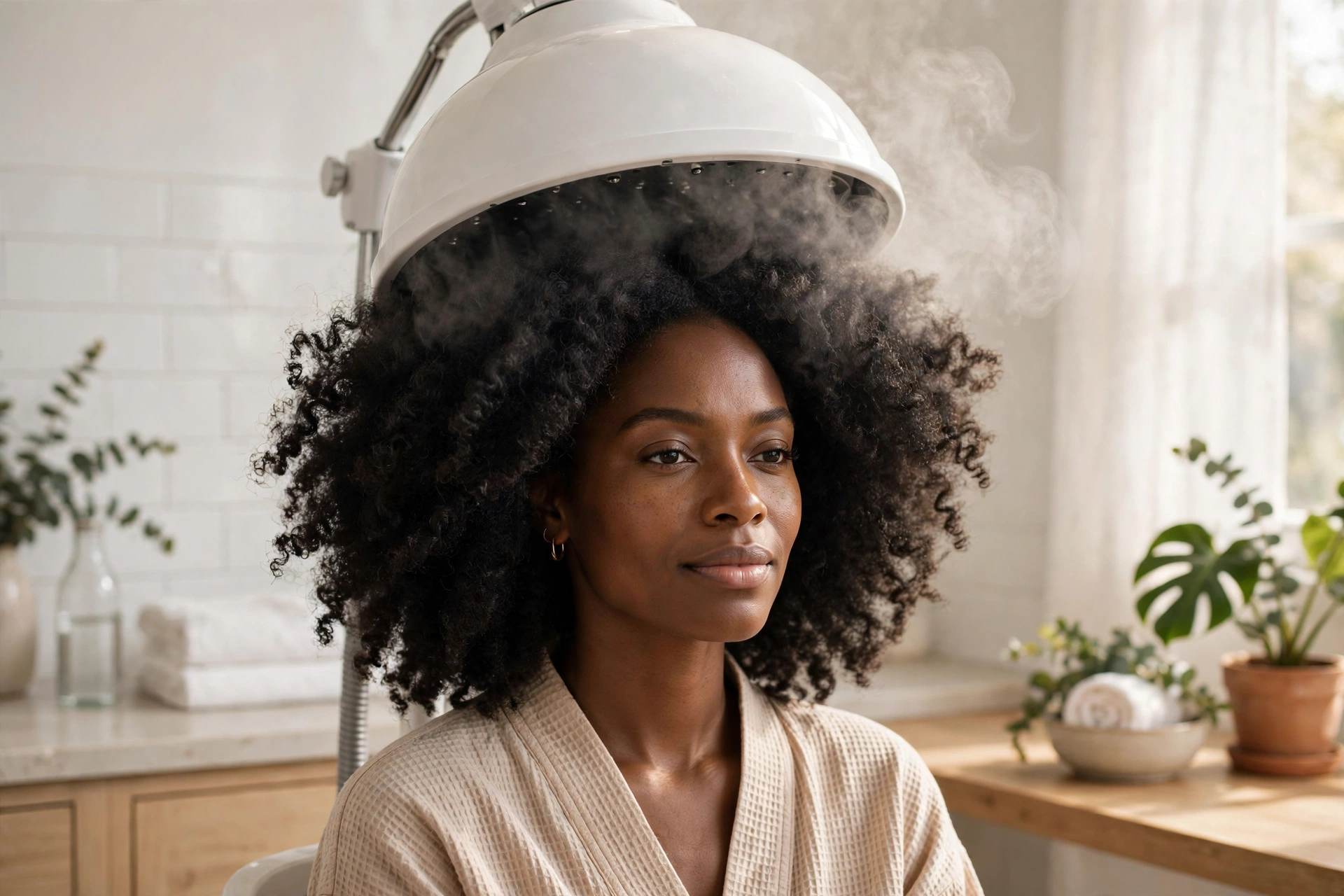
That is the entire job description of steam. Warm, moist air softens the hair’s outer layer and gives the conditioning ingredients sitting on top of it a better shot at getting inside. Stylists have said for years that the heat from a steam treatment improves how well a conditioner’s active ingredients reach the hair shaft and cuticle — and that lines up with how hair physically behaves around warm moisture. What steam cannot do is create new hair, repair a split end, or replace protein your hair has lost. None of that happens from the outside in twenty minutes.
So why write a whole guide about something so modest? Because once you strip away the hype, steaming is one of the few genuinely practical tools for the most common complaint in natural hair: a conditioner that sits on top of your strands and rinses off like it was never there. If that sentence describes your wash days, keep reading. If your hair drinks up conditioner happily already, steaming will bore you, and this guide will tell you so.
What steam actually does — and why the results feel dramatic
Hair is a fiber that responds to its environment. Warm, humid air makes the outermost layer of each strand swell slightly and become more flexible, the way a wooden door swells in summer. That temporary softening is the whole trick: a deep conditioner applied before or during steaming gets a wider doorway into the strand than it would at room temperature.
This is why the most common steaming review sounds like a conversion story. People with low-porosity hair — the type whose strands seem to repel water and take forever to get fully wet — often report that their first steam session is the first time a deep conditioner seemed to “work.” The conditioner didn’t change. The access did.
A few honest notes on what that means in practice:
- The effect is temporary. The cuticle settles back as hair cools and dries. Steaming is a wash-day technique, not a permanent fix for anything. What lasts is the better-conditioned state of the hair, not the steam itself.
- Steam amplifies a good conditioner; it cannot save a bad one. Steam over a lightweight, watery conditioner gives you warm, wet, unimproved hair. The product does the work; steam just holds the door open. If you’re not sure which deep conditioners are worth the effort, start with a genuinely rich rinse-out formula — a solid roundup of deep conditioners for 4C hair covers what “rich enough” looks like on a label.
- Twenty minutes is the useful window. Longer sessions don’t compound the benefit. Once the hair is warm, saturated, and the conditioner has done its penetrating, you’re just sitting in humidity. Extended soaking is where the downside begins (more on that below).
What steaming can’t fix: the honest list
This is the section most steaming guides skip, because it doesn’t sell steamers. But PickHonestly doesn’t sell steamers, so here it is.
- It can’t make hair grow faster. Growth happens in the follicle, under the skin, on a timeline set by genetics, hormones, and nutrition. Steam never reaches the follicle’s programming. What good conditioning can do is help you keep the length you grow — softer, less tangled hair snaps less during detangling, so more of your growth survives to be seen. That is length retention, and it is real. It is just not growth.
- It can’t repair split ends or heat damage. A split end is a structural failure. No amount of warm vapor fuses it back together; the only fix is a trim. Severely compromised hair — from bleach, relaxers, or flat-iron damage — needs strengthening treatments and eventually cutting, not longer steam sessions.
- It can’t fix a protein-moisture imbalance by itself. If your hair is mushy, gummy, and stretches without springing back, that’s a protein problem, and steaming a moisture mask onto it makes it worse. (More on pairing steam with protein below.)
- It can’t dissolve product buildup or hard-water minerals. Steam can actually make buildup feel worse by warming it into a film. If your hair feels coated or waxy, you need cleansing first — steaming is a step that happens after clean hair, never instead of it.
- It can’t treat dandruff or scalp conditions. In fact, warm moisture is exactly the environment the yeast behind seborrheic dermatitis enjoys. Steaming during a flare is working against yourself.
The three ways to steam, honestly compared
You do not need a steamer to benefit from steam. Every method below uses the same mechanism — warm, moist air around conditioned hair — and differs only in convenience, temperature control, and cost. Do not let anyone tell you only the expensive option works.
| Method | Typical cost | Temperature control | Honest take |
|---|---|---|---|
| Hooded / tabletop steamer | $40–$150+ | Best — dial, timer, consistent output | The set-and-forget option. Worth it if you steam weekly and want to read while it works. Use distilled water to prevent mineral buildup in the tank, and empty it after every session so it doesn’t grow mold. |
| Handheld steamer | $25–$60 | Decent — you control the distance | Cheaper and storable, but your arm does the work for 15–20 minutes, and it’s easy to hold it too close to one section. Fine for trying steaming out before committing to a hooded unit. |
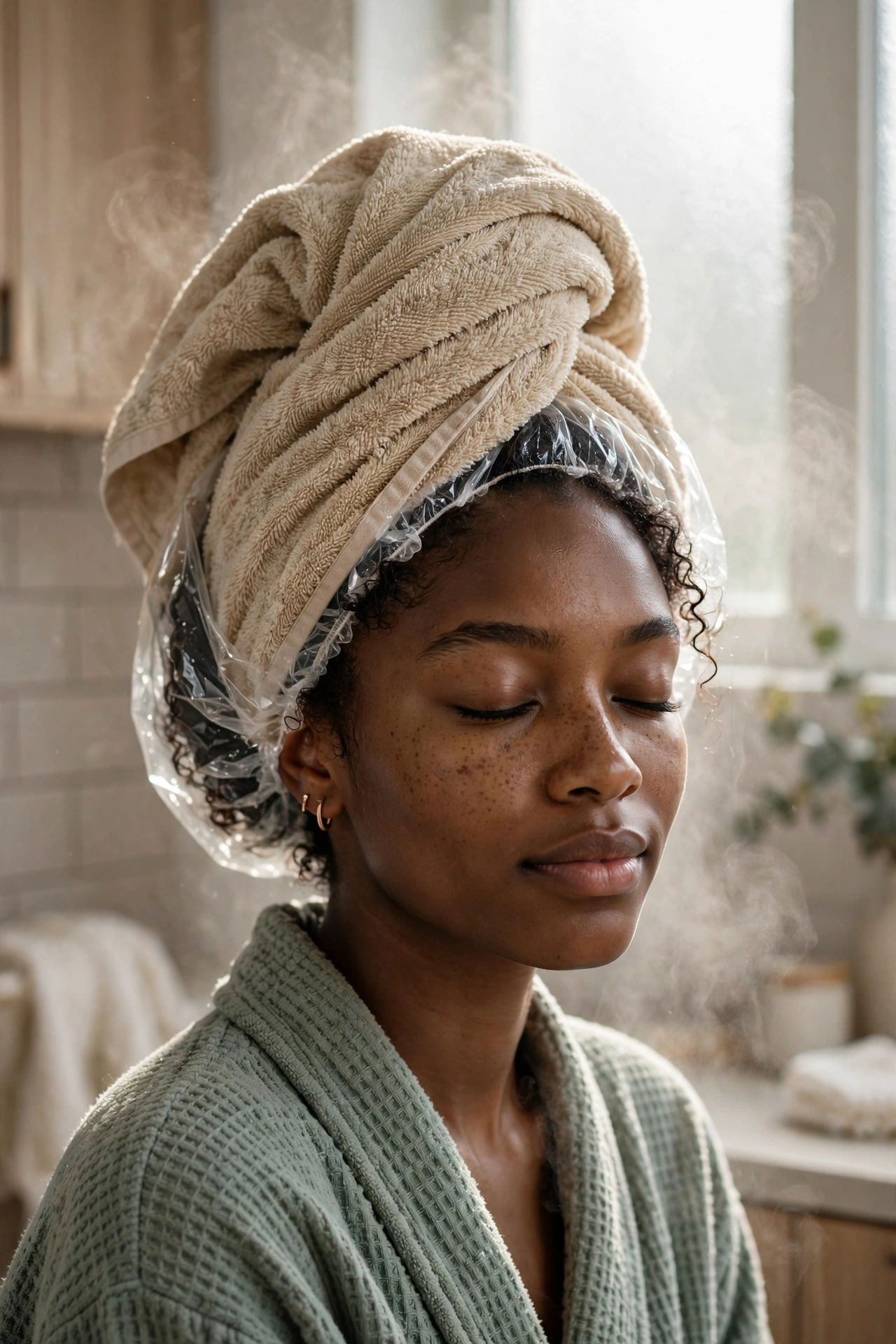
| Hot towel + plastic cap (or a steamy shower) | Nearly free | Worst — cools fast, uneven | The honest budget path. Soak a towel in hot water, wring it out, wrap it over a plastic cap, and re-wet it as it cools. A long steamy shower with a cap on does the same thing. Less consistent, but the mechanism is identical — and free beats unused. |
One practical note if you buy a device: the maintenance nobody mentions. Tap water leaves mineral deposits in the reservoir; hard water minerals are a hair problem too, and they’re an appliance problem as well. Distilled water plus a monthly vinegar-water rinse of the tank keeps a steamer running for years. Check your manufacturer’s instructions first, obviously.
How to steam on wash day: the steps that actually matter
Steaming belongs on wash day, after cleansing, with a real deep conditioner already in your hair. Not on dry hair, not over a leave-in, not as a standalone event.
1. Start with genuinely clean, damp hair
Shampoo first. Steam drives whatever is on the hair deeper — including dirt, oil, and old product — so cleansing first is non-negotiable. Hair should be damp, not dripping; towel-blot the excess water so the conditioner isn’t diluted.
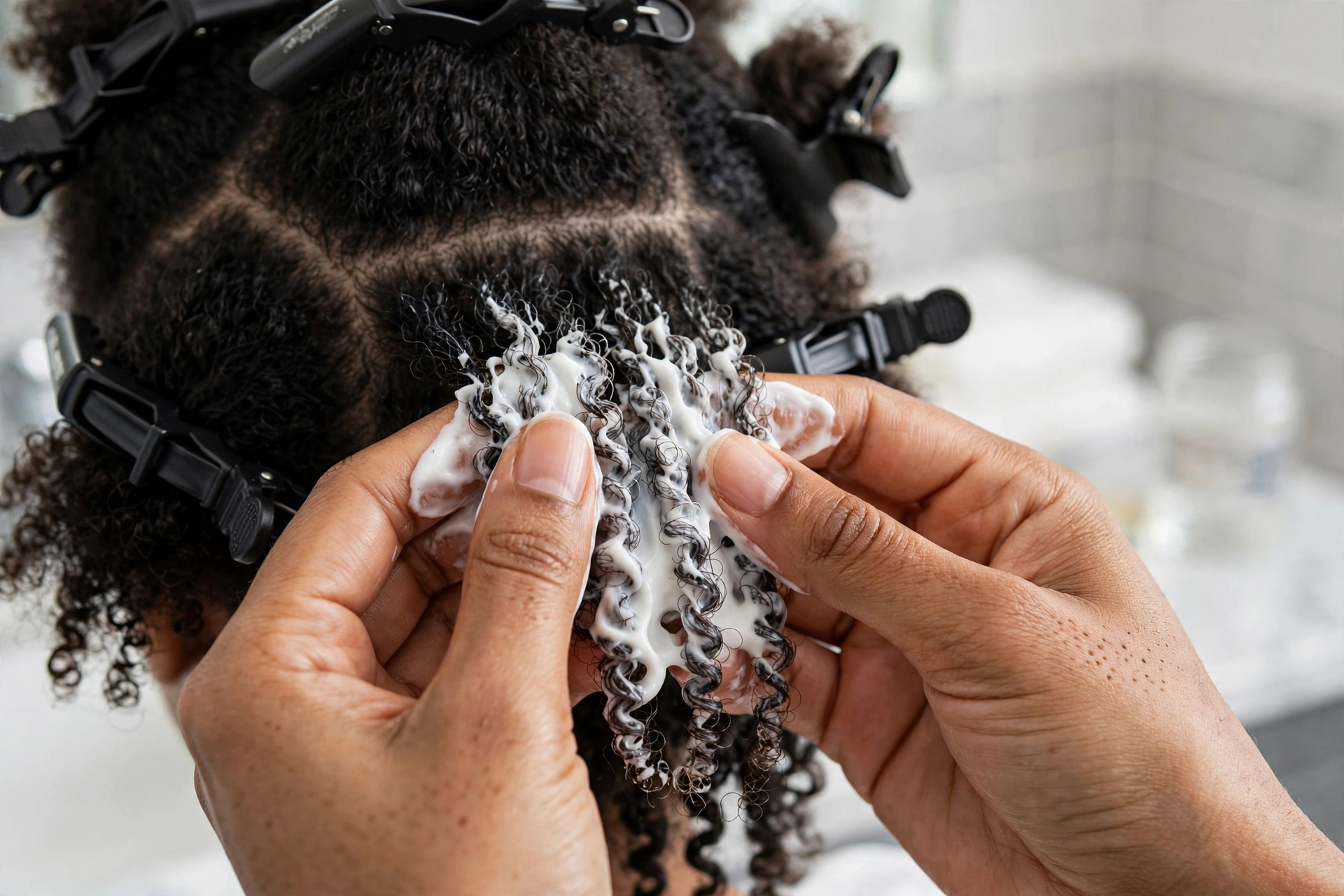
2. Apply a real deep conditioner in sections
Use a rinse-out deep conditioner formulated to work with heat — most quality masks qualify; check the label if you’re unsure. Work it through in 4–6 sections so every strand is coated. This is not the moment for a light leave-in: steam with no substantial product gives results that evaporate within hours. Fine or easily weighed-down hair should use less product than you think, not more.
3. Steam for 15–20 minutes at a comfortable warmth
Sit under the steamer, aim the handheld, or wrap the hot towel — whichever method you chose. The steam should feel comfortably warm on your scalp, never painfully hot. If you’re flinching, it’s too hot, full stop. Set a timer; longer sessions don’t add benefit and push you toward over-moisturized territory.
4. Cool down, then rinse cool
Give your hair a few minutes out of the steam before rinsing — the cuticle settles as it cools. Rinse with cool or lukewarm water to help everything lie flat again. This is also the easiest detangling session you’ll have all month: the softened, well-conditioned hair separates with far less pulling, which is where the length-retention benefit quietly comes from.
5. Seal while damp — the step everyone skips
Steaming fills the hair with water; sealing keeps it there. Apply your leave-in, then a light oil or butter to lock in the moisture. Steaming without sealing is like filling a bucket with a hole in it — by evening, your hair feels exactly as dry as before, and you’ll conclude steaming “doesn’t work.” It worked. You just left the door open on the way out.
How often should you steam? A decision table, not a rule
“Once or twice a week” is the generic advice you’ll find everywhere, and it’s wrong for about half the people reading it. Frequency should follow your hair’s porosity and condition — which is worth actually testing rather than guessing, since most people misjudge their own. Our hair porosity test guide walks through the methods that hold up (and the float test’s limits).
| Your situation | Sensible frequency | Why |
|---|---|---|
| Low-porosity hair that stays dry after conditioning | Every 1–2 weeks | You’re the core audience. Your cuticle resists entry; steam is the workaround. |
| Chronically dry 4C hair, normal regimen | Every 1–2 weeks on wash day | Consistent moisture support where dryness is the main enemy. |
| High-porosity or damaged hair | Every 2–3 weeks, alternating protein and moisture | Your cuticle is already open; you need strength as much as water. Steam a protein treatment some sessions, a moisture mask others. |
| Fine strands that go limp easily | Monthly at most | Fine hair over-absorbs and goes stringy fast. Short sessions, light product. |
| Healthy hair that takes conditioner well | Skip it | Honestly? You don’t need this. Your wash day is already working. |
Signs you’re over-steaming: hair that feels mushy or gummy when wet, stretches excessively without snapping back, looks limp and won’t hold a style, or breaks more than before you started. That constellation has a name — hygral fatigue, the weakening that comes from repeated swelling and shrinking of the fiber — and the fix is simple: stop steaming for a few weeks, lean into protein, and restart at half the frequency. More sessions never fix over-moisturized hair; fewer do.
Steaming with protein vs. moisture: picking the right partner
Steam is usually discussed as a moisture technique, but it works just as well as a delivery system for protein treatments — and for some hair, that’s the more valuable session. The decision comes down to what your hair is asking for:
- Steam a moisture mask when hair feels rough, dry, straw-like, and tangles aggressively. This is the classic use case.
- Steam a protein treatment when hair feels mushy, overly soft, stretches like chewing gum, or breaks during gentle handling. Warmth helps hydrolyzed proteins get where they need to go, same mechanism, different cargo.
- Alternate if your hair is damaged or high-porosity: protein one steam session, moisture the next. Moisture and protein are a balance, and tipping fully to one side creates new problems either way.
If protein treatments are new territory for you, our guide to protein treatments for natural hair covers which types suit which damage level — because steaming the wrong protein at the wrong time is a real way to make hair feel worse.
When to skip the steam entirely
Steaming is optional even at its best, and there are times it’s actively unhelpful:
- During a dandruff or seborrheic dermatitis flare. The yeast involved, Malassezia, thrives in warm, oily, moist conditions — a steam session is room service. Treat the flare first (our ketoconazole shampoo guide covers the evidence-backed option), steam later.
- The first week after coloring. Fresh color is still settling and the cuticle is already stressed; give it at least a week before adding heat and swelling to the mix. Keep any session to 15 minutes once you resume.
- When your scalp has cuts, sores, or irritation. Heat and trapped moisture on broken skin is asking for trouble.
- When your hair already feels mushy. That’s over-moisturization calling. More steam is more of the problem.
- Right after a relaxer or keratin treatment. Follow your stylist’s aftercare timing, not a steaming schedule.
The American Academy of Dermatology’s overview of seborrheic dermatitis is worth a read if flakes and itching are recurring characters in your wash days — it’s the authority on when a scalp needs treatment, not moisture.
Frequently asked questions
Does steaming make natural hair grow faster?
No. Hair growth rate is set in the follicle by genetics, hormones, and nutrition — no outside treatment changes the speed. What steaming can do is improve length retention: better-conditioned, easier-to-detangle hair breaks less, so more of your growth survives. The distinction matters, because “growth” products that only reduce breakage are selling you retention at growth prices.
Can I steam my hair without buying a steamer?
Yes. A plastic shower cap plus a hot, wrung-out towel wrapped over it — refreshed as it cools — uses the same mechanism as a $100 device, just less evenly. A long steamy shower with a cap on counts too. Buy the machine for convenience, not for better results.
How long should I steam my hair?
Fifteen to twenty minutes with conditioner already applied. Up to 30 minutes is sometimes suggested for very dense, low-porosity hair, but treat that as the ceiling, not the target. Longer sessions don’t add benefit and increase the risk of over-moisturized, mushy hair.
Can I steam my hair every week?
Low-porosity or chronically dry hair can handle weekly steaming; most other hair types do better every two weeks or less. Watch for the warning signs — mushy texture, excessive stretch, limp styles — and cut back at the first sign rather than pushing through.
Is steaming good for 4C hair specifically?
It’s most useful for the 4C complaint it actually addresses: dryness and conditioner that won’t absorb. Type 4C hair is naturally drier because scalp oils travel slowly down tight coils, so the moisture-delivery angle fits. But 4C hair with high porosity or damage should steam less often and alternate with protein — the coil pattern doesn’t exempt you from the moisture-protein balance.
Can I steam over a protective style or without rinsing?
You can refresh a style with light steam mid-week, but treat it as a refresh, not a treatment — steaming over leave-in without cleansing afterward can trap product and invite buildup or scalp issues. The real steaming session stays on wash day, after shampoo, with a rinse at the end.
Will steaming damage high-porosity hair?
It can, if overdone. High-porosity hair already absorbs water fast and swells easily, so it’s the most vulnerable to hygral fatigue from too-frequent steaming. Shorter, less frequent sessions — and pairing steam with protein treatments rather than only moisture — keep it beneficial instead of harmful. A review of hair cosmetics in the International Journal of Trichology covers how physical and chemical treatments interact with the hair fiber, which is useful background if you want the science behind why porosity changes the equation.
Disclaimer: This article is for general information, not medical advice. Persistent scalp itching, flaking, pain, or sudden hair loss deserve a dermatologist’s eyes, not a steamer. Stop any treatment that irritates your scalp.
