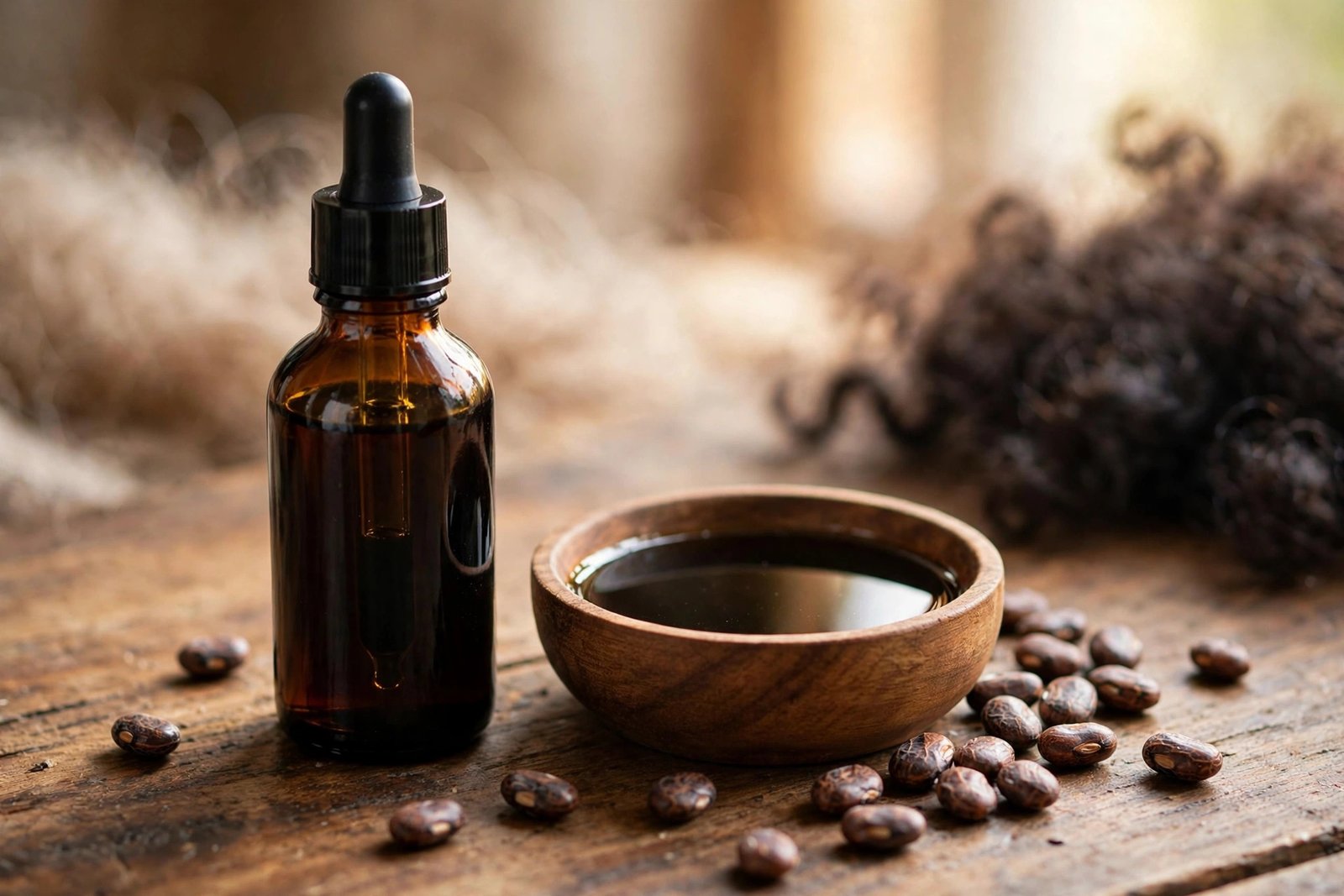
Jamaican Black Castor Oil for Hair: Honest Benefits, What It Can’t Do & How to Use It
 Maya Thompson
📅 September 25, 2026
⏱ 15 min read
Jamaican black castor oil has a reputation that borders on legendary. Scroll through natural hair communities and you will find people crediting it with regrowing edges, thickening thinning crowns, and transforming damaged hair in weeks. Bottles of the dark, smoky oil are a staple on wash-day shelves across the US.
But here at PickHonestly, reputation is not evidence. So we looked past the hype and asked the uncomfortable questions: does Jamaican black castor oil actually grow hair? Is it really better than regular castor oil? And what are the risks that the brands selling it never mention?
Here is the honest breakdown.
What Is Jamaican Black Castor Oil?
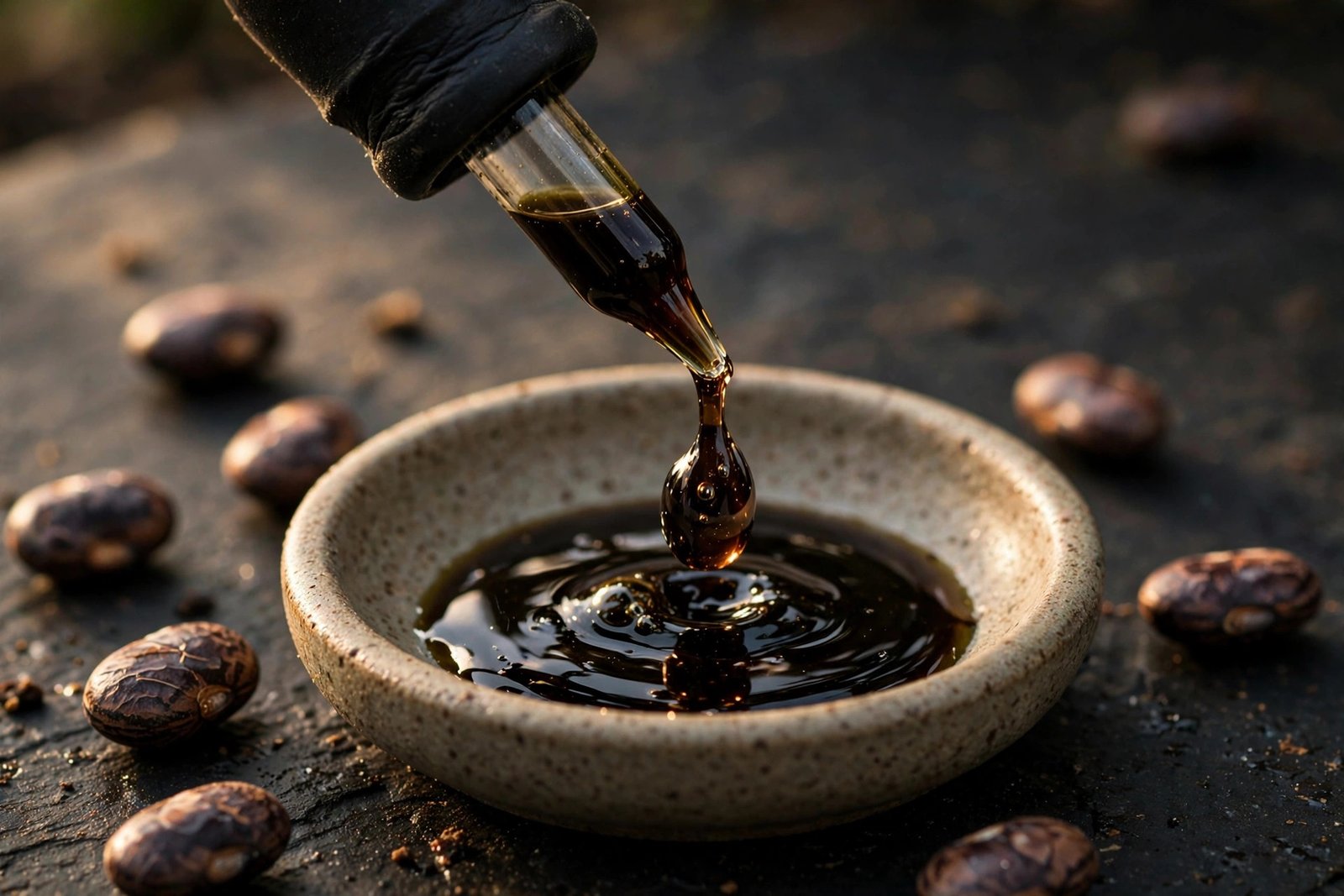
Jamaican black castor oil (JBCO) is made from the seeds of the Ricinus communis plant, just like regular castor oil. The difference is entirely in the processing.
How JBCO Is Made: The Roasting Process
Traditional Jamaican black castor oil starts with castor beans that are roasted, then pounded in a mortar, mixed with water, and slow-boiled. The oil rises to the surface and is skimmed off. The roasting step is what gives JBCO its dark brown-to-black color, its distinctive smoky, roasted smell, and its ash content. Regular castor oil, by contrast, is typically cold-pressed from raw beans and comes out pale yellow and nearly odorless.
The oil itself does not contain ricin, the potent toxin found in raw castor beans. Ricin is a water-soluble protein that stays behind in the bean mash during extraction, so the finished oil is safe for cosmetic use. That said, anyone with a known seed or nut allergy should still patch-test first, which we will come back to.
JBCO vs. Regular Castor Oil: What’s Actually Different?
| Feature | Jamaican Black Castor Oil | Regular (Cold-Pressed) Castor Oil |
|---|---|---|
| Extraction | Beans roasted, ground, boiled; oil skimmed | Cold-pressed from raw beans |
| Color | Dark brown to black | Pale yellow, clear |
| Smell | Smoky, roasted, earthy | Mild to nearly odorless |
| Ash content | Higher (from roasting) | Minimal |
| pH | Slightly more alkaline | Near neutral |
| Key fatty acid | Ricinoleic acid (~90%) | Ricinoleic acid (~90%) |
| Evidence it grows hair better | None | None |
You will often read that the ash content makes JBCO more alkaline, which supposedly helps it absorb into the hair shaft better. Let us be blunt: there is no published research proving that JBCO outperforms regular castor oil for hair growth or absorption. The alkalinity claim is marketing built on a plausible-sounding theory, not data. Both oils share the same star ingredient, ricinoleic acid, at roughly the same concentration. If you already own regular castor oil, you are not missing out on some dramatically superior formula.
The Big Question: Does JBCO Actually Grow Hair?
Short answer: there is no scientific evidence that Jamaican black castor oil — or any castor oil — makes hair grow faster, grows new hair from dormant follicles, or regrows hair lost to genetics or hormones.
That is not just our opinion. Healthline’s review of the evidence states plainly that there is currently no scientific evidence that castor oil promotes hair health, stimulates hair growth, or reduces hair loss. Board-certified dermatologist Dr. Adam Friedman has said there is “zero evidence” showing castor oil is helpful for hair growth, while acknowledging its antimicrobial properties may help with scalp-level inflammation.
You may have seen a more technical-sounding argument: that ricinoleic acid inhibits prostaglandin D2 (PGD2), a compound linked to hair growth inhibition. This claim borrows its credibility from unrelated research. As one evidence review put it, the prostaglandin-hair link does not involve castor oil, and ricinoleic acid’s documented receptor activity is in the gut and uterus — not the hair follicle. No study has shown castor oil affecting PGD2 in human scalps. It is a hypothesis dressed up as a finding.
Growth vs. Retention: The Distinction That Changes Everything
Here is the framing almost every JBCO article misses, and it is the most important paragraph in this guide.
Your hair grows about half an inch per month whether you use castor oil or not. When people say an oil “grew” their hair, what usually happened is that the oil reduced breakage, so more of the length they were already growing actually survived. That is called length retention, and it is real and valuable — but it is not the same as stimulating new growth.
JBCO’s genuine strength is retention, not growth. Its thick, occlusive nature coats the hair shaft, seals in moisture, and reduces the mechanical breakage that keeps so much natural hair stuck at the same length year after year. When your ends stop snapping off, your hair gets longer. The oil did not speed up your follicles; it protected what they produced. If you want the full breakdown of this concept, read our guide to what scalp treatments can and cannot do.
What JBCO Can Honestly Do for Your Hair
Stripping away the hype, here is what Jamaican black castor oil legitimately offers:
- Seals in moisture. Castor oil is highly occlusive. Applied over damp, conditioned hair, it forms a barrier that slows moisture loss — genuinely useful for high-porosity hair that dries out within hours of wash day.
- Reduces breakage. By lubricating the hair shaft, it cuts down on friction during styling, detangling, and sleeping. Less friction means fewer snapped strands and split ends traveling upward.
- Soothes the scalp. Ricinoleic acid has demonstrated anti-inflammatory and antimicrobial properties in laboratory models, which may help calm mild scalp irritation and discourage the microbial overgrowth behind some flaking. (More on the limits of this evidence below.)
- Makes hair look thicker. The oil’s viscosity coats each strand, so hair genuinely looks and feels fuller while it is on. This is a cosmetic effect, not new growth — but for anyone self-conscious about fine or thinning-looking hair, it is a real, immediate benefit.
- Protects edges during styling. A light application along the hairline before braids or wigs can reduce friction damage — though it cannot undo damage from styles that are simply too tight.
What the Science Really Says
Let us look at each piece of “science” commonly cited for castor oil and grade it honestly.
Ricinoleic Acid: Lab Promise, Not Hair Proof
Ricinoleic acid makes up roughly 90% of castor oil’s fatty acids, and it is genuinely interesting stuff. In animal and laboratory models, it has shown anti-inflammatory effects — for example, a study published in Mediators of Inflammation found it reduced inflammation in experimental models. But those were not hair studies, not human studies, and not follicle studies. An anti-inflammatory effect in a mouse model does not translate to “grows hair on your head.” The honest summary: plausible mechanism, zero direct proof.
The Rosemary Contrast: What Real Evidence Looks Like
Here is the comparison that puts castor oil’s evidence problem in perspective. In 2015, Panahi and colleagues published a randomized trial in the journal Skinmed (PMID: 25842469) comparing rosemary oil against 2% minoxidil in 100 adults with androgenetic alopecia over six months. Both groups saw significant increases in hair count, with no significant difference between them.
That is what actual evidence for a natural hair-growth ingredient looks like: a human trial, a control group, measured outcomes. Castor oil has nothing comparable — no human trial, no control group, no measured hair counts. When a brand tells you JBCO is “proven” to grow hair, ask them to show you its Panahi trial. They cannot, because it does not exist.
Scalp Massage: The Unsung Hero of Your Oil Routine
Here is a twist most JBCO content ignores: the massage may matter more than the oil. A 2016 study published in Eplasty found that standardized scalp massage increased hair thickness over 24 weeks, likely by stretching dermal papilla cells and improving blood flow. So if your nightly JBCO ritual includes five minutes of fingertip massage, some of the benefit you are seeing may come from the massage itself — which works with any oil, or even no oil at all.
The Risks Nobody Selling JBCO Mentions
Every brand blog we reviewed listed benefits. Almost none listed these. We will.
Acute Hair Felting: Rare but Real
In 2017, the International Journal of Trichology published a case report with a memorable title: “Castor Oil — The Culprit of Acute Hair Felting.” A young woman applied a castor and coconut oil mixture to her long hair; after washing, her hair matted into a single irreversible tangled mass — like a bird’s nest — that could not be detangled and had to be cut off. The oil’s extreme viscosity is the suspected culprit.
Keep this in proportion: acute felting is rare, with only a handful of cases reported. But it is a documented risk of heavy castor oil use, particularly on long hair, and it is the reason “more is better” is dangerous advice with this oil. Use small amounts, and never pile undiluted castor oil onto very long hair and leave it.
It Is Extremely Hard to Wash Out
JBCO is one of the thickest cosmetic oils in existence. Used undiluted, it can take two or even three shampoo sessions to fully remove, and incomplete removal leads to buildup that leaves hair dull, limp, and oddly dry underneath the grease. This is the most common real-world complaint about castor oil, and it is why dilution is not optional — it is the whole technique.
Buildup and Irritation
On fine hair, low-porosity hair, or oily scalps, JBCO’s heaviness can weigh hair down and clog follicles, potentially worsening the very scalp congestion you were trying to fix. Contact dermatitis is possible with any botanical oil. Always patch-test on your inner forearm for 24 hours before the first scalp application, and discontinue if you notice itching, redness, or increased shedding.
The “Alkaline Ash” Claim Is Unproven
Worth repeating because it appears in nearly every JBCO article: the idea that ash-derived alkalinity drives the oil deeper into the hair shaft has no published evidence behind it. Treat it as brand storytelling, not science.
How to Use JBCO the Right Way

If you are going to use Jamaican black castor oil, use it in a way that captures the real benefits and dodges the real risks.
Step 1: Always Dilute It
Straight JBCO is too thick for most hair. Mix it with a lighter carrier oil:
- For thick, coily hair: 1 part JBCO to 1 part coconut, olive, or grapeseed oil.
- For fine or low-porosity hair: 1 part JBCO to 3 parts jojoba or grapeseed oil — or skip JBCO for leave-in use entirely and use it only as a pre-shampoo treatment.
- Optional boost: a few drops of rosemary essential oil per tablespoon of carrier blend — the one botanical here with an actual human hair-growth trial behind it. Never apply undiluted essential oil to skin.
Step 2: The Scalp Treatment (1–2 Times Per Week)
- Section dry or slightly damp hair into 4–6 parts.
- Warm a teaspoon of your diluted blend between your palms — never microwave oil.
- Massage into the scalp with your fingertips (not nails) for 3–5 minutes. Remember, the massage itself is doing real work.
- Work any remainder lightly down the hair shaft, focusing on the ends.
- Leave on for 30 minutes to a few hours, or overnight under a satin bonnet if your hair tolerates it.
- Shampoo thoroughly — expect to shampoo twice. Follow with conditioner.
Step 3: As a Hot Oil Pre-Poo
JBCO makes an excellent pre-shampoo treatment: apply the diluted blend to dry hair 20–30 minutes before washing to reduce the swelling-and-drying stress of shampooing. For the full method, see our pre-poo treatment guide.
For Thinning Edges: Honest Expectations
JBCO is the internet’s favorite edges remedy, so let us be precise. If your edges are thinning from tension — tight braids, wigs, ponytails — no oil will regrow them while the tension continues. The fix is stopping the pulling; the oil can only protect what remains. If the follicles are scarred (shiny, smooth bald patches), no topical oil of any kind will bring them back, and that is a dermatologist visit, not a shopping trip. Where JBCO genuinely helps edges: reducing breakage of the fragile hairs that remain, and keeping the area moisturized while you switch to gentler styles.
How to Wash It Out Without Stripping Your Hair
Apply shampoo to your oiled hair before adding water — shampoo binds to oil far better than water does. Massage the undiluted shampoo into the oiled sections, then add water and lather. Rinse and repeat. If your hair still feels coated, a second wash is normal with this oil; it is not a sign you need a harsher shampoo.
Who Should Skip JBCO
- Very fine or low-porosity hair: the weight will likely flatten your hair and cause buildup faster than any benefit accrues. Lighter oils suit you better.
- Oily, acne-prone scalps: adding one of the heaviest oils on earth to an already-oily scalp is asking for clogged follicles.
- Anyone with sudden or patchy hair loss: that needs a diagnosis — thyroid issues, alopecia areata, and deficiencies do not respond to oil. See a dermatologist first.
- People expecting regrowth: if what you want is new hair where follicles have miniaturized or scarred, JBCO cannot deliver that. Honest expectations prevent wasted months.
How to Buy Real JBCO (and Spot the Fakes)
The popularity of JBCO has filled shelves with diluted and mislabeled products. Here is what to check:
- Ingredient list should say one thing: 100% Ricinus communis (castor) seed oil. If you see mineral oil, soybean oil, or “fragrance” in a product sold as pure JBCO, it is not pure.
- Color and smell: real JBCO is dark amber-brown with a roasted, slightly ashy smell. Pale, odorless “black” castor oil is a red flag.
- Texture: it should be noticeably thick — slow to pour, slow to spread. Watery JBCO has been cut with cheaper oils.
- Hexane-free and cold-processed claims: traditional JBCO is not solvent-extracted at all; “hexane-free” on the label is a good sign.
- Price realism: traditionally produced JBCO is labor-intensive. A suspiciously cheap large bottle is rarely the real thing.
We do not recommend specific brands — formulations change, and our job is teaching you to read labels, not to sell you one.
The Honest Verdict
Jamaican black castor oil is a good protective oil wrapped in growth marketing. It seals moisture, reduces breakage, soothes scalps, and makes hair look thicker — all genuinely useful for natural hair, and all having nothing to do with stimulating follicles.
What it cannot do is grow hair faster, wake up dormant follicles, or reverse hormonal or scarring hair loss. There is no human trial showing otherwise, and the oft-repeated “alkaline ash” superiority claim is unproven. The biggest dangers are mundane but real: buildup, difficult wash-out, and in rare cases, severe matting.
Use it diluted, use it for retention rather than regrowth, massage your scalp while you are at it — and keep your expectations where the evidence is. That is the honest way to get everything this oil is actually good for. We took the same no-hype approach with chebe powder, another beloved ingredient whose real benefits look very different from its marketing.
Frequently Asked Questions
Does Jamaican black castor oil grow hair faster?
No. There is no scientific evidence that JBCO or any castor oil increases the rate of hair growth or stimulates new follicle activity. It supports length retention by reducing breakage, which makes hair longer over time — a real benefit, but a different mechanism.
Is Jamaican black castor oil better than regular castor oil?
There is no published evidence that it is. Both contain roughly 90% ricinoleic acid. JBCO’s roasted processing gives it a darker color, smokier scent, and higher ash content, and marketers claim the resulting alkalinity improves absorption — but no study has demonstrated superior hair results.
How often should I use JBCO on my hair?
One to two times per week as a scalp or pre-shampoo treatment is plenty. Daily undiluted use invites buildup that is difficult to wash out and, in rare cases, contributes to severe matting.
Can JBCO regrow thinning edges?
Only in limited circumstances. It can protect fragile edge hairs from further breakage while you switch to looser styles, but it cannot regrow hair lost to ongoing tension or to scarring, where follicles are destroyed. Shiny, smooth bald patches need a dermatologist, not an oil.
Can I leave Jamaican black castor oil in my hair overnight?
Yes, if your hair tolerates heavy oils — apply a diluted blend, cover with a satin bonnet, and shampoo thoroughly in the morning. If you have fine, low-porosity, or easily weighed-down hair, limit it to a 30-minute pre-shampoo treatment instead.
Why is JBCO so hard to wash out?
It is among the most viscous cosmetic oils, so water alone barely moves it. Shampoo before wetting your hair: massage shampoo directly into the oiled sections, then add water and lather. Two shampoo rounds are normal.
Is castor oil safe during pregnancy?
Topical cosmetic use is generally considered low-risk, but ingested castor oil can stimulate uterine contractions, which is why it has a history of folk use to induce labor. If you are pregnant, keep use topical and minimal, and check with your doctor about any new routine — as with everything in this guide, this is general information, not medical advice.
Disclaimer: This article is for general informational purposes only and is not medical advice. Hair loss can signal underlying health conditions such as thyroid disorders, hormonal imbalances, or nutritional deficiencies. If you are experiencing sudden, patchy, or severe hair loss, consult a dermatologist or healthcare professional for proper diagnosis and treatment. Always patch-test new products before full application.
