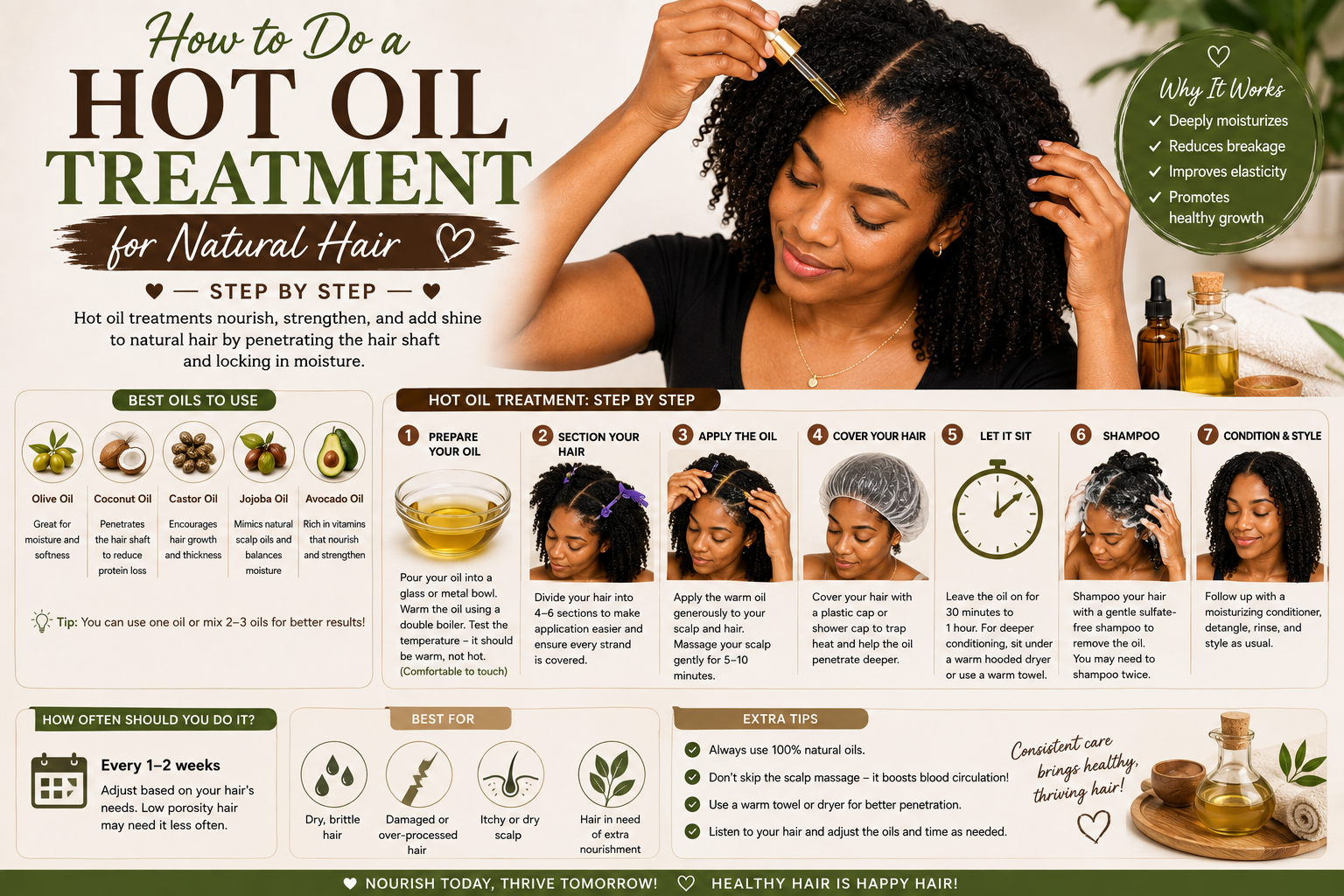
How to Do a Hot Oil Treatment for Natural Hair — Step by Step
Hot oil treatments are one of those things that sound more complicated than they are. People see “treatment” and assume it requires a salon visit or special equipment. It doesn’t. The whole process takes about 45 minutes, costs almost nothing if you already have oil at home, and makes a noticeable difference in how natural hair feels — especially dry or brittle hair that isn’t responding well to regular deep conditioning.
I started doing hot oil treatments when my natural hair kept feeling dry a day after wash day no matter what I used. After two months of weekly treatments, the difference in moisture retention was obvious. Here’s exactly how to do it and what actually works.
What Does a Hot Oil Treatment Do for Natural Hair?
A hot oil treatment uses warmed oil applied to the hair and scalp, left on under heat for an extended period. The heat does two things that room-temperature oil can’t:
- It opens the hair cuticle slightly, allowing oil to penetrate deeper into the hair shaft rather than just coating the surface
- It increases blood circulation to the scalp, which supports healthier hair growth from the follicle
For natural hair specifically, hot oil treatments work well as a pre-poo — applied before shampooing to protect the hair from the stripping effect of shampoo — or as a standalone scalp and hair treatment between wash days.
They’re particularly useful for:
- Natural hair that feels dry persistently, even after deep conditioning
- Dry or itchy scalp
- Hair that breaks easily during detangling
- Natural hair in winter months when dry air pulls moisture from hair constantly
Best Oils for Hot Oil Treatments on Natural Hair
Not all oils work equally well for hot oil treatments. The most effective ones for natural hair are oils that either penetrate the hair shaft or have proven scalp benefits.
Coconut Oil — Best for Penetrating the Hair Shaft
Coconut oil is one of the few oils with a molecular structure small enough to partially penetrate the hair shaft rather than just coating the outside. For hot oil treatments, this makes it the most effective option for adding internal lubrication that reduces breakage. It works best for medium to high porosity natural hair. Low-porosity or protein-sensitive hair may find coconut oil causes buildup over time — if that’s you, use jojoba or avocado instead.
Jamaican Black Castor Oil — Best for Scalp
For the scalp specifically, Jamaican black castor oil is the most popular choice in the natural hair community. It’s thick and rich, and massaged warm into the scalp it increases circulation and supports the follicle environment. Particularly useful for thinning edges or an itchy, dry scalp. Mix it with a lighter oil if you want to apply it to the length too — on its own it’s too heavy for most hair lengths.
Olive Oil — Best All-Around Option
Olive oil partially penetrates the hair shaft and works well on most natural hair types. It’s heavier than coconut oil, which makes it better for very dry 4B and 4C hair. It doesn’t solidify at room temperature like coconut oil does, which makes it easier to work with. Use extra-light olive oil if you’re applying it to the length — regular olive oil can feel heavy and leave residue on fine or low-porosity hair.
Jojoba Oil — Best for Low-Porosity Natural Hair
Jojoba is a liquid wax with a molecular structure similar to scalp sebum — it absorbs more readily than most oils on low-porosity hair that tends to repel heavier options. For a hot oil treatment on low-porosity natural hair, jojoba is the safest starting point. Lightweight, absorbs cleanly, and doesn’t cause the buildup that coconut oil can on low-porosity strands.
Rosemary Oil (As an Add-In, Not a Standalone)
Rosemary essential oil has real research behind it for scalp health and hair growth stimulation. Add 3-5 drops to your carrier oil before warming — never apply essential oils directly to the scalp undiluted. The combination of warm carrier oil and rosemary works well as a scalp massage during hot oil treatments.
How to Do a Hot Oil Treatment on Natural Hair — Step by Step
What You Need:
- Your chosen oil (or oil blend) — 2-4 tablespoons depending on hair length and thickness
- A small glass bowl or jar
- A larger bowl of hot water (to warm the oil — don’t microwave oil directly)
- A shower cap
- A warm towel (optional, for extra heat)
Step 1 — Warm the Oil
Place your oil in a small glass bowl. Set that bowl in a larger bowl of hot water — like a makeshift double boiler. Let it sit for 2-3 minutes until the oil feels warm to the touch. Test it on your wrist before applying to your scalp — it should feel comfortably warm, not hot.
Do not microwave oil directly. It heats unevenly and can get dangerously hot in spots. The hot water method is safer and gives you more control over the temperature.
Step 2 — Apply to Scalp First
Part your hair and apply the warm oil directly to your scalp in sections. Use a dropper or your fingertips. As you apply each section, massage the scalp for 30-60 seconds — circular motions with your fingertips, not your nails. This stimulates blood flow and helps the oil penetrate.
Work your way around the entire scalp, paying extra attention to the edges and nape where hair is thinner and more prone to dryness and breakage.
Step 3 — Apply to Hair Length
After the scalp, work the remaining warm oil through the length of your hair in sections. Focus on the mid-shaft to ends — the oldest and driest parts of your hair. You don’t need to saturate every strand, just a light, even coating.
Step 4 — Cover and Apply Heat
Put on your shower cap to trap the warmth. Then choose one of these heat methods:
- Warm towel: Heat a towel in the dryer for 5 minutes, wrap it around the shower cap. Re-heat and rewrap every 15 minutes.
- Hooded dryer: Sit under a hooded dryer on low to medium heat for 20-30 minutes.
- Steamer: A hair steamer works well for this — the steam adds moisture while the heat opens the cuticle.
- Body heat: If none of the above are available, cover with a shower cap and wrap in a warm towel. Body heat alone provides some benefit, though less than external heat.
Step 5 — Rinse or Shampoo
If you’re doing this as a pre-poo before wash day, leave the oil on for 20-30 minutes then shampoo as normal. The oil protects the hair from the stripping effect of shampoo and reduces the protein loss that washing causes.
If you’re doing this as a standalone between-wash treatment, leave on for 30-45 minutes then rinse thoroughly with warm water. You may need a gentle shampoo to fully remove heavier oils like castor oil — use your sulfate-free shampoo if the oil doesn’t rinse clean with water alone.
See our sulfate-free shampoo guide for options that rinse out oil without stripping the hair afterward.
Step 6 — Follow Your Regular Routine
After rinsing or shampooing, continue with your regular wash day routine — deep condition, apply leave-in, seal. The hot oil treatment prepares the hair; your regular routine maintains the moisture. See our beginner natural hair routine guide for the full routine explained step by step.
How Often Should You Do Hot Oil Treatments?
For most natural hair types, once a week is reasonable — ideally before or during wash day. Very dry natural hair in winter months may benefit from twice a week. Hair that’s not particularly dry may only need it once every two weeks.
There’s no benefit to doing hot oil treatments more than twice a week. Oil buildup on the scalp and hair shaft actually blocks moisture absorption over time — the opposite of what you want. If your scalp feels greasy or your hair feels coated between treatments, reduce frequency and make sure you’re rinsing thoroughly.
Hot Oil Treatment vs Deep Conditioner — What’s the Difference?
These two things serve different purposes and work better together than instead of each other.
Hot oil treatment: warms oil into the hair shaft and scalp. Reduces protein loss during washing. Adds lubrication that reduces breakage. Works from the outside in — coating and partial penetration.
Deep conditioner: adds moisture and sometimes protein to the hair shaft. Improves elasticity and softness. Works on the internal structure of the hair more than oil does.
The most effective routine combines both: hot oil treatment as a pre-poo before washing, then deep conditioner after shampooing. See our deep conditioner guide for specific recommendations.
Frequently Asked Questions
How long should you leave a hot oil treatment in natural hair?
20-30 minutes as a pre-poo before shampooing. 30-45 minutes as a standalone treatment. The heat is what makes it work — without external heat, body heat alone gives you some benefit but less penetration. Don’t leave oil in for hours or overnight without rinsing — extended oil application without washing can cause buildup that blocks moisture.
Can I do a hot oil treatment on dry natural hair?
Yes — hot oil treatments work on both dry and damp hair. Many people prefer applying to dry hair so the oil isn’t competing with water for absorption. If your hair is very thick, slightly damp hair makes the oil easier to distribute evenly. Either works — the more important factor is the heat and the duration.
What is the best oil for a hot oil treatment on 4C hair?
Olive oil or Jamaican black castor oil work best on 4C hair — both are heavy enough to provide a meaningful barrier against moisture loss on the driest natural hair texture. Mix JBCO with a lighter oil like jojoba (50/50) if applying to the full length — JBCO alone is too thick for some people to distribute easily through longer 4C hair. Add a few drops of rosemary oil to the blend for scalp benefits. Our full hair oil guide covers how to choose oils by hair type and porosity.
Can hot oil treatments help with hair growth?
Hot oil treatments support the scalp environment for healthy hair growth — particularly through scalp massage and increased circulation — but they don’t speed up growth rate. Hair grows about half an inch per month regardless. What they do help with is length retention: hair that’s stronger and more moisturized breaks less, which means the growth that happens actually shows up as length over time. Our guide on how to grow natural hair faster covers length retention in full detail.
Can I mix oils for a hot oil treatment?
Yes — mixing oils is common and often gives better results than using one oil alone. A popular combination for natural hair: equal parts coconut oil and olive oil for the length, with a small amount of JBCO added for scalp application. Add rosemary essential oil (3-5 drops per tablespoon of carrier oil) for scalp stimulation. Warm the blend together in hot water before applying.
Final Thoughts
Hot oil treatments are simple, inexpensive, and genuinely effective for natural hair that struggles to retain moisture or breaks easily. The key variables are using the right oil for your hair type, applying warmth to maximize penetration, and doing it consistently — once a week as a pre-poo or standalone treatment.
Start with olive oil or coconut oil if you’re not sure where to begin. Warm it, apply to scalp and length, cover with a shower cap and warm towel, leave for 30 minutes, then shampoo and continue your regular routine. Give it four to six weeks of weekly treatments before evaluating whether it’s making a difference.
More from PickHonestly on natural hair care:
- Best Hair Oils for Natural Hair — Which One Is Right for You
- Best Protein Treatments for Natural Hair
- Best Deep Conditioners for Natural Hair
- How to Moisturize Natural Hair — Complete Guide
- Natural Hair Care Routine for Beginners
Prices accurate as of publication. Verify current pricing before purchasing.