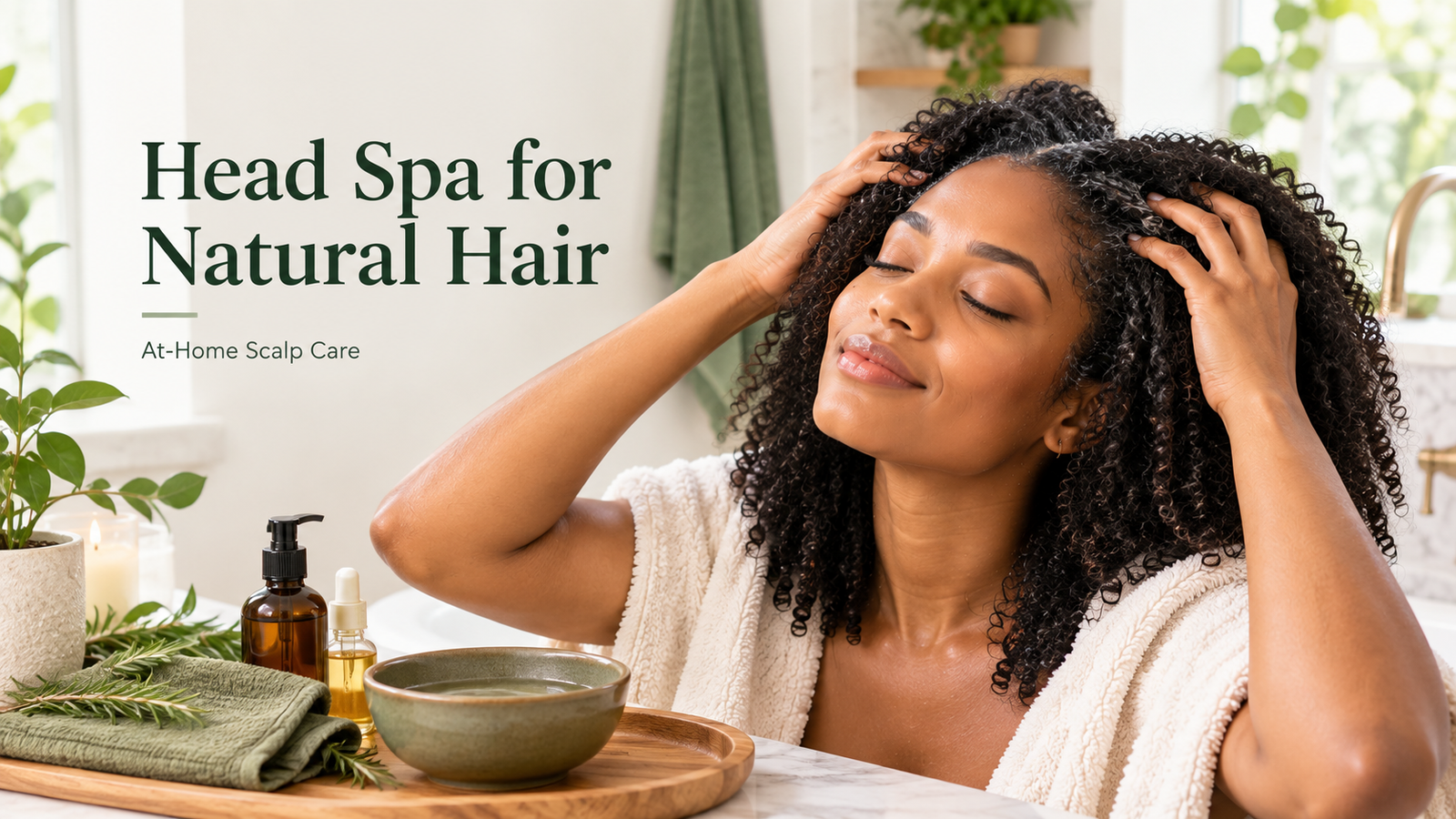
Head Spa for Natural Hair — What It Is, How to Do It at Home, and Why It Works
A head spa for natural hair has become one of the most searched scalp treatments of 2026 — and the appeal makes complete sense. It takes the detailed, multi-step approach that skincare routines give to facial skin and applies it to the scalp. The result is a treatment that goes deeper than a standard wash day, addressing buildup, circulation, dryness, and follicle health in a single extended session.
I started doing a head spa session once a month eight weeks ago. Here’s what it actually involves, what it does for natural hair specifically, and the exact protocol that produces real results at home without any salon equipment.
What Is a Head Spa for Natural Hair?
A head spa is a structured scalp treatment session — longer and more intentional than a standard wash day — that combines several steps: scalp analysis, deep cleansing, steam or heat treatment, scalp massage with targeted oils or serums, and a final moisture treatment for the hair. In Japanese hair salons, where the head spa ritual originated, sessions run 45-90 minutes and are performed by trained specialists.
At home, a simplified but genuinely effective version takes about 45-60 minutes and uses products you likely already have or can add inexpensively. The key difference from a standard wash day isn’t the products — it’s the intention and time given to each step.
For natural hair specifically, the head spa addresses concerns that regular wash days often skip: product buildup in the scalp, reduced circulation from tight protective styles, and the connection between scalp environment and the quality of hair that grows from each follicle.
Head Spa Benefits for Natural Hair
1. Deep Scalp Cleansing That Regular Washing Can’t Match
Natural hair care involves multiple products — leave-ins, oils, butters, creams, edge controls. Over weeks, these accumulate on the scalp and in the hair follicles in ways that weekly shampooing doesn’t fully address. Buildup-clogged follicles produce weaker hair from the root and create the scalp conditions that cause persistent itching and flaking.
A head spa session includes a dedicated scalp exfoliation step — either a physical scalp scrub or a chemical exfoliant like salicylic acid — that removes this accumulated buildup at a level that regular shampoo doesn’t reach. The difference in how the scalp feels after proper exfoliation is immediately noticeable.
2. Improved Scalp Circulation and Hair Growth Support
Extended scalp massage — a central component of any head spa — increases blood flow to the follicles in a way that a quick shampoo rinse doesn’t. A 2016 study published in ePlasty found that four minutes of daily standardized scalp massage over 24 weeks increased hair thickness in participants. A head spa session with 15-20 minutes of intentional massage delivers a concentrated version of this benefit monthly.
For natural hair worn in protective styles that restrict scalp circulation — braids, wigs, locs — a monthly head spa session helps counteract the cumulative circulation restriction that long-term protective styling can cause.
3. Targeted Treatment for the Scalp Microbiome
The scalp has its own microbiome — a community of bacteria and fungi that, when balanced, maintains scalp health. When disrupted by product buildup, over-washing, or under-washing, the imbalance produces dandruff, inflammation, and weakened follicles. A head spa session that includes a microbiome-friendly treatment — prebiotics, tea tree oil, or diluted apple cider vinegar — restores that balance in a way that standard washing doesn’t specifically target.
4. Deep Moisture Restoration for Natural Hair
The steam component of a head spa — whether from a professional steamer, a warm towel, or simply sitting in a warm shower — opens the hair cuticle and allows deep conditioner to penetrate significantly more effectively than room-temperature application. For natural hair where moisture retention is the central challenge, this steam-enhanced deep conditioning produces noticeably better results than the same product applied without heat.
How to Do a Head Spa for Natural Hair at Home — Step by Step
What You Need:
- A scalp scrub or exfoliating shampoo (or DIY: brown sugar mixed with your regular shampoo)
- A scalp oil or serum (rosemary mint oil, pumpkin seed oil, or your preferred scalp treatment)
- A deep conditioner
- A shower cap
- Two warm towels or access to a steamer
- A wide-tooth comb
- 30–60 minutes of uninterrupted time
Step 1 — Pre-Session Dry Detangling (5 minutes)
Before any water or product touches your hair, gently detangle dry natural hair in sections using your fingers or a wide-tooth comb. This removes shed hairs and loose tangles that would otherwise clump together when wet and create unnecessary breakage during the session. Start from the ends and work toward the roots.
Step 2 — Apply a Pre-Shampoo Oil (10 minutes)
Apply a warm oil to your scalp and hair length as a pre-poo before any cleansing. Warm coconut oil, olive oil, or your preferred scalp oil in a bowl of hot water for two minutes, then apply to dry hair section by section. Cover with a shower cap and leave for 10 minutes.
This protective layer reduces the protein loss and friction damage that cleansing causes — particularly important in a head spa session where you’ll be doing more manipulation than a standard wash day. See our guide on hot oil treatments for natural hair for how to apply this step correctly.
Step 3 — Scalp Exfoliation (10 minutes)
Apply a scalp scrub or scalp exfoliating treatment to your wet scalp. Work through each section, massaging in circular motions with your fingertips — not your nails. Focus extra time on areas that tend to accumulate the most buildup: the crown, nape, and areas along your part lines.
Options for scalp exfoliation:
- Physical scrub: A dedicated scalp scrub product, or DIY — mix one tablespoon of brown sugar with your sulfate-free shampoo
- Chemical exfoliant: A shampoo containing salicylic acid dissolves buildup without physical scrubbing — better for a sensitive scalp
- Ketoconazole shampoo: If you have persistent dandruff or seborrheic dermatitis, replace the exfoliating step with a ketoconazole shampoo treatment. See our full guide on ketoconazole shampoo for natural hair.
Leave the exfoliant on for three to five minutes before rinsing thoroughly.
Step 4 — Second Cleanse with Sulfate-Free Shampoo (5 minutes)
After rinsing the exfoliant, follow with your regular sulfate-free shampoo to remove any remaining residue and ensure the scalp is fully clean. Focus on the scalp only — let the rinse water clean the hair length. See our sulfate-free shampoo guide for the best options for natural hair.
Step 5 — Scalp Massage with Oil or Serum (15 minutes)
This is the heart of the head spa session. Apply your scalp oil or serum to the damp scalp in sections. Then massage the entire scalp systematically for a minimum of 15 minutes — longer if you have time.
Massage technique:
- Use the pads of all ten fingers — not just the tips
- Circular motions with moderate pressure — enough to feel the scalp move, not just surface rubbing
- Work systematically: front hairline → temples → top of head → sides → crown → nape
- Don’t stay in one area — keep moving around the scalp to ensure even circulation stimulation
For the best scalp oils to use during this step, see our scalp serum and oil guide. Rosemary water applied to the scalp before the oil adds an additional growth-stimulating layer — see our guide on rosemary water for natural hair for how to make and use it.
Step 6 — Steam Deep Conditioning (20 minutes)
Apply your deep conditioner generously to damp hair in sections. Cover with a shower cap. Add heat using one of these methods:
- Warm towel method: Heat two towels in the dryer for five minutes. Wrap one around the shower cap. Replace with the second warm towel after 10 minutes.
- Hooded dryer: Sit under a hooded dryer on low to medium heat for 20 minutes
- Steamer: A hair steamer is the most effective option — steam opens the cuticle more gently and thoroughly than dry heat
- Hot shower: Sit in a warm shower with the shower cap on for 20 minutes
Leave the deep conditioner on for the full 20 minutes minimum. The steam-enhanced penetration during a head spa session produces noticeably more softness and elasticity than the same deep conditioner applied without heat. See our deep conditioner guide for the best products to use at this step.
Step 7 — Cool Water Rinse and Post-Spa Routine (5 minutes)
Rinse the deep conditioner with cool water — cool water closes the cuticle that the steam opened, sealing in the moisture and conditioning benefits. Follow immediately with your leave-in conditioner, oil, and cream sealant in the LOC method to lock in the moisture from the session.
See our full guide on how to moisturize natural hair for the complete LOC method after washing.
Head Spa at Home vs Professional Head Spa — What’s the Difference?
| At-Home Head Spa | Professional Head Spa | |
|---|---|---|
| Cost | Products you already own + $0–$20 | $80–$200+ per session |
| Duration | 45–60 minutes | 60–90 minutes |
| Equipment | Warm towels, shower cap, your hands | Professional steamer, scalp analysis tools |
| Frequency | Monthly — easy to maintain | Monthly if budget allows |
| Effectiveness | High with correct protocol | Slightly higher — professional massage technique |
| Customization | Full — you choose every product | Limited to what salon carries |
How Often Should You Do a Head Spa on Natural Hair?
Once a month is the standard recommendation — monthly head spa sessions complement your regular weekly wash day routine rather than replacing it. Think of the head spa as a monthly reset and your weekly wash as maintenance.
Natural hair in protective styles that go longer between wash days can benefit from a head spa session immediately after taking down each style — regardless of whether that’s every three weeks or every six weeks. The deep cleansing and circulation reset is particularly valuable after extended protective style wear.
Frequently Asked Questions About Head Spa for Natural Hair
What is a head spa and is it good for natural hair?
A head spa is a structured scalp treatment combining exfoliation, extended scalp massage, steam, and deep conditioning into one session. It’s particularly beneficial for natural hair because it addresses scalp buildup from the multiple products natural hair care requires, improves circulation restricted by protective styles, and provides steam-enhanced deep conditioning that produces better moisture results than standard wash day deep conditioning.
How long should a head spa for natural hair take?
45 to 60 minutes for the at-home version done correctly. The scalp massage step alone should be 15 minutes — this is where most of the circulation benefit comes from and most people rush it. The deep conditioning step needs a minimum of 20 minutes with heat. Cut the time on either of those two steps and you reduce the session’s effectiveness significantly.
Can I do a head spa on natural hair in a protective style?
Not effectively while the style is installed — the exfoliation and massage steps require direct scalp access. Schedule your head spa session for wash days when you take down a protective style. Use a scalp oil spray through the parts of your style during the install period to maintain scalp health in between — our guide on scalp serums for natural hair covers lightweight options that work through braids and twists.
Does a head spa help natural hair grow?
The scalp massage component has research support for improving hair thickness with consistent practice. The deep cleansing removes follicle-blocking buildup that weakens new growth. The improved circulation delivers more nutrients to active follicles. Combined, these effects support the scalp environment where healthy hair grows — which over months of consistent monthly sessions shows up as stronger, denser hair at the root. For the full picture on what supports natural hair growth, see our guide on how to grow natural hair faster.
What products do I need for a head spa on natural hair?
At minimum: a scalp exfoliant (store-bought scrub or DIY brown sugar + shampoo), a scalp oil for the massage step, a deep conditioner, and a sulfate-free shampoo. A shower cap and warm towels provide the heat needed for the steam step without any additional equipment. The full product recommendations for each step are covered in our hair oils guide, deep conditioner guide, and sulfate-free shampoo guide.
Final Thoughts
A head spa for natural hair is the most complete scalp and hair treatment you can do at home — it addresses buildup, circulation, moisture, and follicle health in a single session that goes significantly deeper than a standard wash day. The investment is time, not money — most of the products you need are already in your routine.
Do it once a month. Give each step the time it requires — especially the massage and the deep conditioning. And track how your scalp and hair respond over three months of consistent monthly sessions. The difference in scalp health and hair quality from a regular head spa practice compounds in a way that individual products alone don’t produce.
More from PickHonestly on natural hair scalp care:
- Best Scalp Serum for Natural Hair
- Rosemary Water for Natural Hair — How to Make It at Home
- How to Do a Hot Oil Treatment for Natural Hair
- Best Deep Conditioners for Natural Hair
- How to Grow Natural Hair Faster
- Natural Hair Care Routine for Beginners
Prices accurate as of publication and may vary. Always verify current pricing before purchasing.