Bentonite Clay for Natural Hair: What It Can (and Can’t) Do
If you have natural hair, you’ve almost certainly seen the bentonite clay hair mask trend: a grey, muddy paste made from clay, water, and apple cider vinegar, promising to “detox” your hair, define your curls, and even make your hair grow. The before-and-after photos are dramatic — bouncy, defined curls where there was once a dull, coated mess.
But which of those claims are real, and which are internet folklore? As always, the honest answer is somewhere in the middle. Bentonite clay for natural hair is a genuinely useful clarifying treatment for removing product buildup — but it is not a miracle growth treatment, not a moisturizer, and not something every head of hair needs.
This guide breaks down what the clay actually is, what it can and can’t do (with the real science, including its limits), how to tell whether your hair needs a clay reset, the DIY recipe that actually works, and the mistakes that turn a good treatment into a bad wash day.
What Is Bentonite Clay, Exactly?
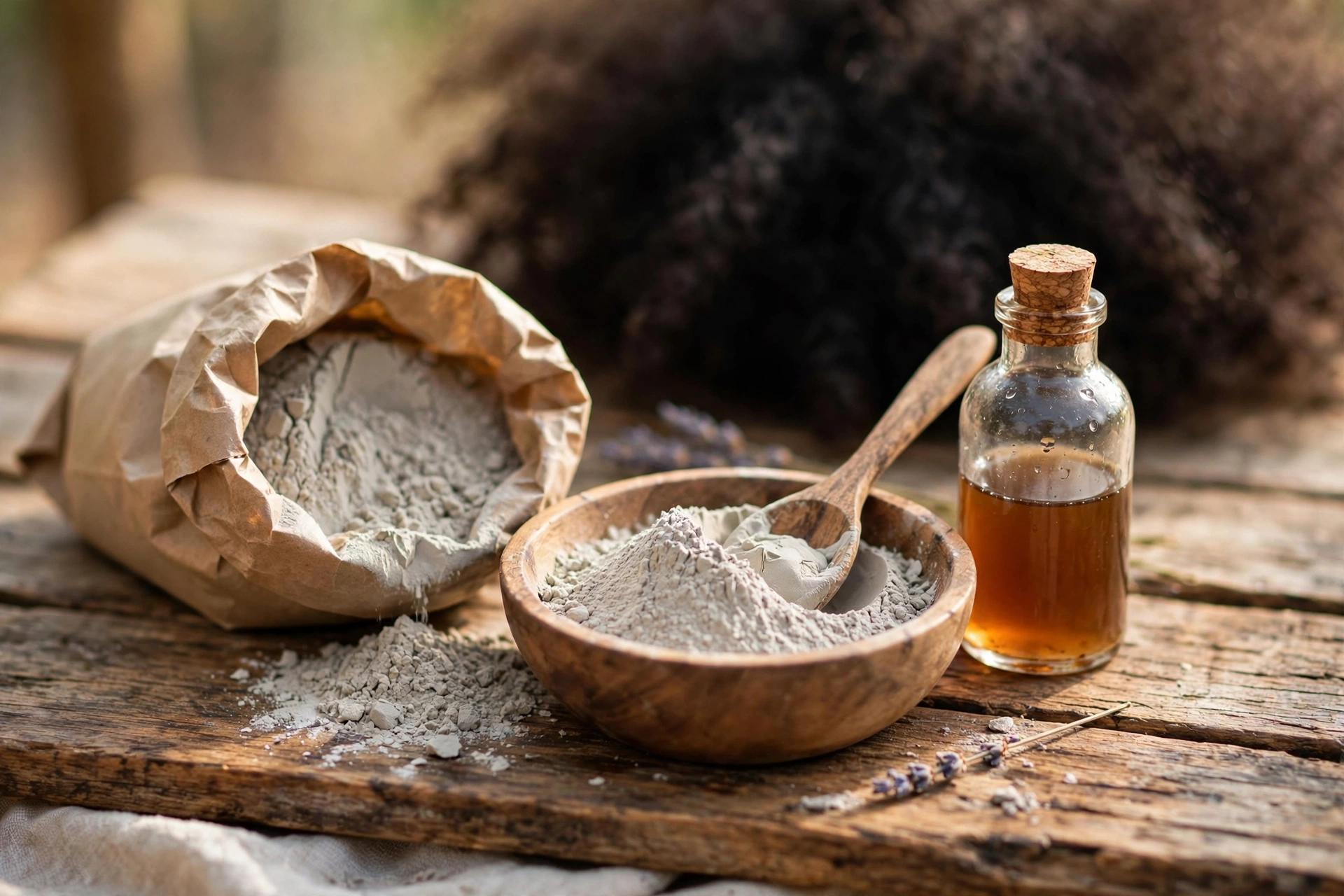
Bentonite clay is a soft, fine powder made from weathered volcanic ash. Its main mineral is montmorillonite, a clay mineral with an unusual property: it carries a negative electrical charge and can swap mineral ions with its surroundings (a process called cation exchange). In plain terms, bentonite clay is very good at grabbing onto positively charged substances — including many oils, residues, and impurities — and holding onto them until they’re rinsed away.
That is the real, unglamorous reason bentonite clay works as a hair treatment. It is not magic; it is absorbent chemistry. This same property is why the clay has been used for centuries as a poultice for skin, and why a 2017 review in the Iranian Journal of Public Health (which surveyed around 100 scientific articles on the clay) documented its long history of traditional external use, including a clinical trial on diaper dermatitis — note carefully that this was on skin, not hair.
The most famous brand in hair circles, Aztec Secret’s “Indian Healing Clay,” is simply 100% calcium bentonite clay — there is no secret ingredient. Any food-grade or cosmetic-grade bentonite clay powder works the same way.
What Bentonite Clay Can Actually Do for Natural Hair
Let’s be specific and honest about the plausible, real benefits — and why each one happens:
1. It removes product buildup better than most things in your kitchen
Natural hair routines involve layers: leave-ins, butters, oils, gels, edge control. Over time, that buildup coats the hair shaft, and your products stop absorbing. Clay’s absorbent, negatively-charged structure physically lifts residue off the hair and scalp when you rinse. After a clay treatment, hair typically feels “squeaky clean” — sometimes for the first time in months.
2. It absorbs excess oil from the scalp
The same absorption works on sebum and oily residue sitting on the scalp. If your scalp feels greasy or itchy a few days after wash day, a clay mask can reset it. This is especially useful for people who co-wash frequently and never fully clarify.
3. It can make curls look more defined — temporarily
Those dramatic before-and-afters aren’t faked; they’re just mislabeled. When buildup is stripped away, the hair shaft is cleaner and lighter, so coils spring up more freely and curls clump better. The clay doesn’t create a new curl pattern — it reveals the one that was buried under product. The effect lasts until buildup returns.
4. It may calm an itchy, flaky scalp
Many naturals report that a clay mask relieves scalp itchiness. This makes sense: if the itch comes from buildup or residue, removing it helps. Healthline’s review of bentonite clay for hair notes the clay’s traditional use for soothing irritated skin. But if your flakes are dandruff or seborrheic dermatitis, clay is a surface treatment, not a cure — see a dermatologist if flaking persists.
5. It adds minerals — but don’t overstate this
Bentonite contains calcium, magnesium, potassium, and other minerals. Marketers claim your hair “absorbs” these. Honestly: a 20-minute topical treatment delivers negligible mineral nutrition to your hair. Don’t buy the clay for this reason.
What Bentonite Clay Can’t Do (The Honest Limitations)
This is the section most clay articles skip. Here’s what the clay will not do for you:
- It will not make your hair grow faster. There are no human clinical trials showing bentonite clay grows hair. The one frequently cited study found bentonite helped sheep wool grow quicker and softer — that is a study on animal fiber, not human hair, and citing it as hair-growth proof is dishonest. Healthy scalp conditions support healthy growth, but clay is not a growth treatment.
- It will not repair damaged hair. Heat damage, split ends, and broken disulfide bonds cannot be fixed by any topical treatment, clay included. Only a trim removes damage.
- It is not a moisturizer. In fact, it can be drying — that is why deep conditioning afterward is non-negotiable.
- It does not “pull toxins out of your body.” The clay adsorbs substances on contact through ion exchange; claims about detoxifying your bloodstream or organs through a hair mask are unproven marketing.
- It is not a protein treatment. Clay contains no protein that your hair can use. If your hair needs protein, use an actual protein treatment — see our guide to the best protein treatments for natural hair.
7 Signs Your Hair Actually Needs a Clay Detox
Not everyone needs a clay mask. Bentonite clay is a clarifying treatment, and clarifying is only useful when there’s something to clarify. Your hair is probably crying out for a reset if:
- Products sit on top of your hair instead of absorbing. Your leave-in beads up or your hair stays white and coated after moisturizing.
- Your curls look dull and undefined no matter what styling products you use — buildup is weighing them down.
- Your scalp is itchy or flaky even though you wash regularly — residue may be irritating it.
- Your hair feels coated, waxy, or “filmy” even right after washing — especially common if you use heavy butters or silicone-containing products.
- You have hard water. Mineral deposits from hard water coat the hair shaft over time; clay’s ion-exchange property makes it one of the better DIY options for lifting them. (See our guide on hard water hair damage signs and fixes.)
- You co-wash more than you shampoo. Conditioner washing doesn’t remove all residue; periodic clarifying keeps the cycle healthy.
- Your wash-and-gos stopped working. If a routine that used to give great definition suddenly falls flat, buildup — not your technique — is the likely culprit.
If none of these sound familiar, skip the clay. As the natural hair blogger CurlyNikki puts it: if your hair is clean, flexible, and styling beautifully, you don’t need to manufacture a problem because a calendar says it’s “clay day.”
Bentonite Clay Hair Mask: The Honest Recipe
Most recipes you’ll find online are nearly identical — because the basic formula works. Here it is, with the honest notes other guides leave out.
Ingredients
- ½ cup bentonite clay powder (food-grade or cosmetic-grade; any brand)
- ¼ cup warm water (not hot)
- ¼ cup raw, unfiltered apple cider vinegar
- 1 tablespoon oil of your choice (olive, sweet almond, or jojoba — optional but recommended for 4c hair)
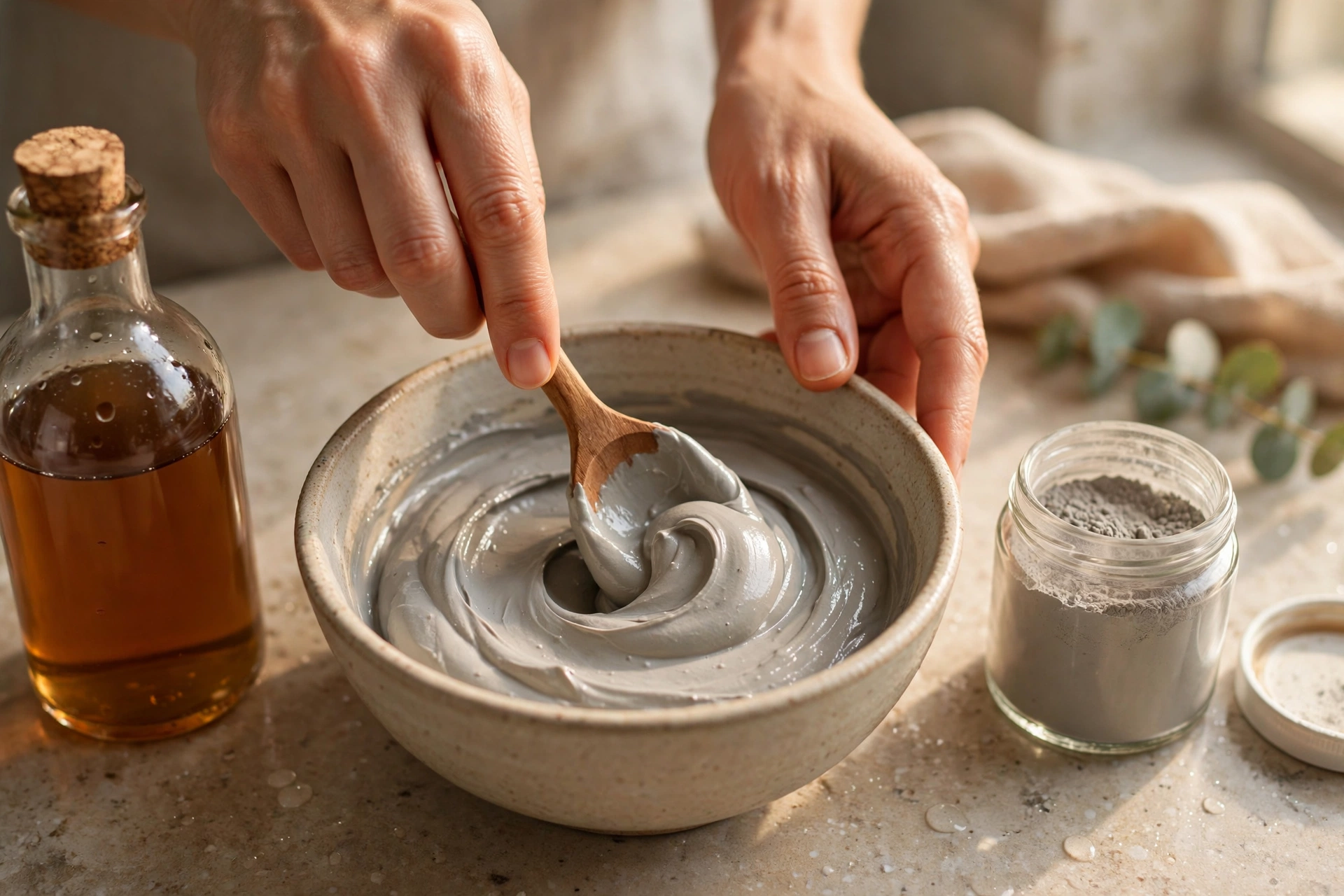
Why apple cider vinegar? Clay is alkaline; ACV is acidic. The fizzing when you mix them is just the acid reacting with the clay’s minerals — completely normal. The slight acidity helps smooth the hair cuticle after the clay lifts it, which is why ACV-based mixes tend to leave hair shinier than water-only mixes. If ACV irritates your scalp, use plain water instead. (More on ACV in our apple cider vinegar rinse guide.)
Step 1: Mix in a non-metal bowl
Add the clay to a glass, ceramic, plastic, or wooden bowl. Pour in the water and ACV, then stir with a wooden or plastic spoon until you get a smooth, thick, yogurt-like consistency. Add the oil last and stir it in.
The metal bowl rule, honestly: every guide says metal deactivates the clay’s charge. The truth is less dramatic — brief contact with a metal spoon during a 2-minute mixing session will not meaningfully deactivate your clay. Bentonite is a cation exchanger, so prolonged storage in reactive metal containers is genuinely unwise, but a stainless steel spoon for 30 seconds is not the reason a mask failed. Non-metal bowls are still the harmless standard, so use one — just don’t panic if you once used a metal spoon.
Step 2: Work on damp, sectioned hair
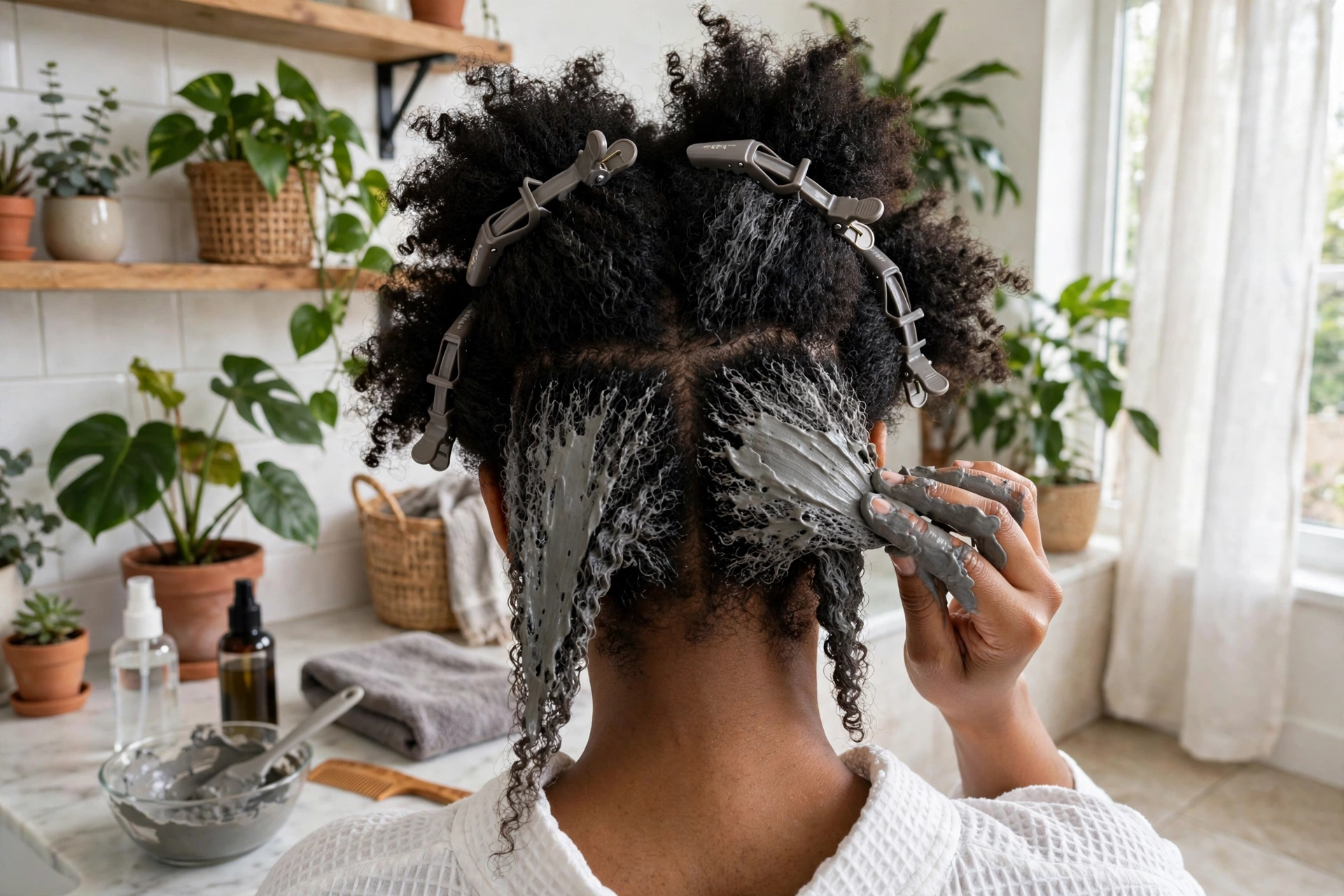
Lightly dampen your hair with water and divide it into 4–6 sections. Clay is much easier to distribute and rinse out on damp hair; on dry hair it grabs, tangles, and wastes product. This matters most for 4c hair.
Step 3: Apply from roots to ends
Working one section at a time, smooth the mixture from roots to ends, making sure every strand is coated. Massage some into your scalp with your fingertips — that’s where the oil and buildup live.
Step 4: Cover and wait 15–20 minutes
Pile your hair up, cover with a shower cap or plastic bag, and leave the mask on for 15–20 minutes. Do not let it dry completely. Fully dried clay hardens, shrinks, and can leave hair feeling rough and tangled. If it starts drying, mist it with water.
Step 5: Rinse thoroughly with warm water
Rinse until the water runs completely clear — this takes longer than you think, especially on dense 4c hair. Leftover clay residue feels gritty and defeats the purpose. You can follow with a gentle sulfate-free shampoo if your hair still feels coated, but many people find the clay alone is enough.
Step 6: Deep condition immediately
This step is not optional. Clay clarifies — it removes oils along with buildup, and your hair needs moisture put back. Apply a deep conditioner, add heat or a shower cap for 15–30 minutes, then rinse. Our DIY deep conditioner recipes work well here, or use your favorite store-bought deep conditioner.
Step 7: Moisturize and style as usual
Seal in the moisture with your normal leave-in and oil or butter (the LOC or LCO method), then style. Expect noticeably more defined, bouncier curls on your first wash-and-go after a clay treatment.
Bentonite vs Kaolin vs Rhassoul Clay: Which One for Hair?
Bentonite isn’t the only clay in hair care. Here’s how the three common ones compare:
| Clay | Absorbency | Best for | Watch out for |
|---|---|---|---|
| Bentonite | Strongest | Heavy buildup, oily scalp, 4c hair that loves deep clarifying | Most drying — deep condition is mandatory |
| Rhassoul | Moderate | Gentler cleanse; popular as a shampoo alternative | Harder to find; pricier |
| Kaolin | Mildest | Fine or easily-dried hair, sensitive scalps | May not cut through heavy buildup |
If your goal is a periodic deep reset for product-heavy natural hair, bentonite is the right pick. If clay masks consistently leave your hair too dry, try rhassoul or kaolin instead of abandoning clay altogether.
How Often Should You Use Bentonite Clay on Natural Hair?
Less often than the internet suggests. Clay is a clarifying treatment, and over-clarifying is a real way to dry out natural hair. Use this as a starting guide, then adjust based on how your hair feels afterward:
| Hair type | Suggested frequency | Notes |
|---|---|---|
| Coily / 4a–4c | Every 2–4 weeks | Always deep condition after; add oil to the mix |
| Curly / 3a–3c | Every 1–2 weeks | Follow immediately with deep conditioner — skipping it leaves curls crunchy |
| Wavy / 2a–2c | Every 1–2 weeks | Most forgiving texture for clay |
| Fine hair (any pattern) | Every 2–3 weeks maximum | Clay is heavy; too frequent use leaves fine hair stripped and flat |
| High porosity / damaged | Monthly or less | Watch how hair feels — if it’s tangled or stiff after, reduce frequency or dilute the mix |
Frequency also depends on how much product you use, how often you wash, and how easily your hair gets coated. Some people only clay when their hair clearly needs a reset — that is a completely legitimate approach.
7 Mistakes That Ruin a Bentonite Clay Treatment
1. Letting the mask dry rock-hard
The single most common mistake. Dried clay tightens, shrinks, and grips the hair shaft, making rinsing miserable and leaving hair rough. Keep it damp under a shower cap; mist with water if it starts drying.
2. Skipping the deep conditioner afterward
Clay removes buildup and natural oils. Going straight to styling without deep conditioning is why some people conclude “clay dried out my hair.” The clay didn’t fail — the routine did.
3. Using it too often
Weekly clay masks on hair that doesn’t need clarifying will slowly strip moisture and leave hair chronically dry. Clay is a reset button, not a weekly ritual.
4. Applying it to dry, tangled hair
On dry hair, the paste drags and tangles, especially on 4c hair. Always dampen and section first — and don’t try to detangle while the clay is still coating the hair. Rinse first, then detangle with conditioner and slip.
5. Expecting it to replace everything
Clay is a clarifier, not a shampoo-and-conditioner-in-one for everyone. If your hair still feels coated after rinsing, follow with a gentle shampoo. And it never replaces deep conditioning or protein treatments.
6. Using it on irritated or broken scalp skin
Clay on scratched, sunburned, or eczema-flared scalp skin can sting and irritate. Wait until the skin has healed.
7. Believing the hype instead of watching your hair
If a clay treatment repeatedly leaves your hair brittle, matted, or severely tangled — even with deep conditioning — listen to your hair, not the tutorial. Some hair simply doesn’t love clay, and a gentle clarifying shampoo achieves the same reset with less effort.
Who Should Skip Bentonite Clay?
Clay is safe for most people, but skip it or proceed with caution if:
- Your hair is severely damaged or highly porous — start with a diluted mix and watch the results, or use a gentler clarifying method.
- You have a sensitive, easily irritated scalp — patch test first: apply a small amount behind your ear, wait 24 hours, and check for redness or itching.
- Your hair is freshly color-treated — clarifying treatments can fade color faster. Wait at least two weeks after coloring.
- You have an active scalp condition (psoriasis, eczema flare, open sores) — talk to a dermatologist first. The American Academy of Dermatology’s guidance on caring for Black hair is a good baseline for gentle scalp practices.
A 2017 scientific review of bentonite clay (Moosavi, Iranian Journal of Public Health) concluded that while traditional uses are extensive, more human research is warranted — so treat bold claims with proportional skepticism. You can read the review on PubMed.
Frequently Asked Questions
Does bentonite clay make hair grow faster?
No — there is no human evidence that bentonite clay grows hair. The frequently cited “study” was conducted on sheep wool, not human hair. What clay can do is create cleaner scalp conditions by removing buildup, which supports the healthy environment hair needs to grow at its normal rate. If you’re focused on length retention, our guide on how to grow natural hair faster covers what actually works.
Can bentonite clay damage natural hair?
Used sensibly, no. Damage-like symptoms (dryness, tangling, brittleness) come from the classic mistakes: letting it dry completely, using it too often, or skipping the deep conditioner afterward. If your hair repeatedly feels worse after clay despite doing everything right, switch to a gentler clarifying method.
Is bentonite clay good for 4c hair?
Yes — 4c hair, which tends to accumulate the most product buildup, is one of the best candidates for periodic clay treatments. Use it every 2–4 weeks, always on damp sectioned hair, add a tablespoon of oil to the mix, never let it dry fully, and deep condition immediately after.
Is Aztec Secret Indian Healing Clay the same as bentonite clay?
Yes. Aztec Secret’s “Indian Healing Clay” is labeled as 100% natural calcium bentonite clay — it is bentonite, not a special formula. Any food-grade or cosmetic-grade bentonite clay powder works the same way, often for less money.
Can I use bentonite clay instead of shampoo?
Sometimes, but not as a complete replacement for everyone. Clay cleanses by absorption rather than surfactants, so it removes buildup and oil without lather. Many naturals use it as an occasional shampoo substitute, but if your hair still feels coated afterward, follow with a gentle sulfate-free shampoo.
Do I really need a non-metal bowl?
For mixing, it’s the standard recommendation because bentonite is a cation exchanger and prolonged contact with reactive metals isn’t ideal. But briefly stirring with a metal spoon won’t ruin your mask — the far more important rules are keeping the mask damp and deep conditioning after. Don’t store mixed clay in metal containers, though.
Can I store leftover clay mask?
Yes — store it in a sealed glass or plastic container (not metal) at room temperature and use it within a week or two. If it dries out, you can usually rehydrate it with a little water. Dry clay powder itself keeps for years in a sealed container.
Does bentonite clay work for low porosity hair?
It can, with adjustments. Low porosity hair resists absorption, so buildup sits on the surface — exactly what clay removes. Use warm water in the mix, apply with gentle heat (a shower cap traps body heat), and keep the mask slightly more diluted. Take our natural hair porosity test if you’re not sure of your porosity.
Will bentonite clay loosen my curl pattern?
No. Nothing you apply topically can permanently change your curl pattern — pattern is determined by the follicle shape. Clay can make existing curls appear more defined by removing weighing-down buildup, which some people misread as a pattern change.
How long should I leave bentonite clay on my hair?
15–20 minutes under a shower cap is the sweet spot. Longer is not better — once the clay dries, benefits stop and the downsides (roughness, difficult rinsing) begin.
The Bottom Line
Bentonite clay earns its place in a natural hair routine as one thing: an excellent periodic clarifier. It removes the product buildup, oils, and mineral residue that dull your curls and irritate your scalp — and it does it without harsh sulfates. That alone makes it worth the $10 bag of powder.
What it isn’t: a growth treatment, a moisturizer, a protein treatment, or a detox miracle. The brands and blogs that promise those things are selling you something the evidence doesn’t support.
Use it every few weeks when your hair shows the signs, mix it with water and apple cider vinegar, never let it dry on your head, and always — always — deep condition afterward. Do that, and the clay will do exactly what it’s actually good at.
Disclaimer: This article is for informational purposes only and is not medical advice. Bentonite clay is a cosmetic treatment with limited human research behind it. Patch test before first use, discontinue if irritation occurs, and consult a dermatologist for persistent scalp issues or hair loss.