Scalp Exfoliation for Natural Hair: The Part Nobody Tells You About
 Maya Thompson
📅 October 29, 2026
⏱ 13 min read
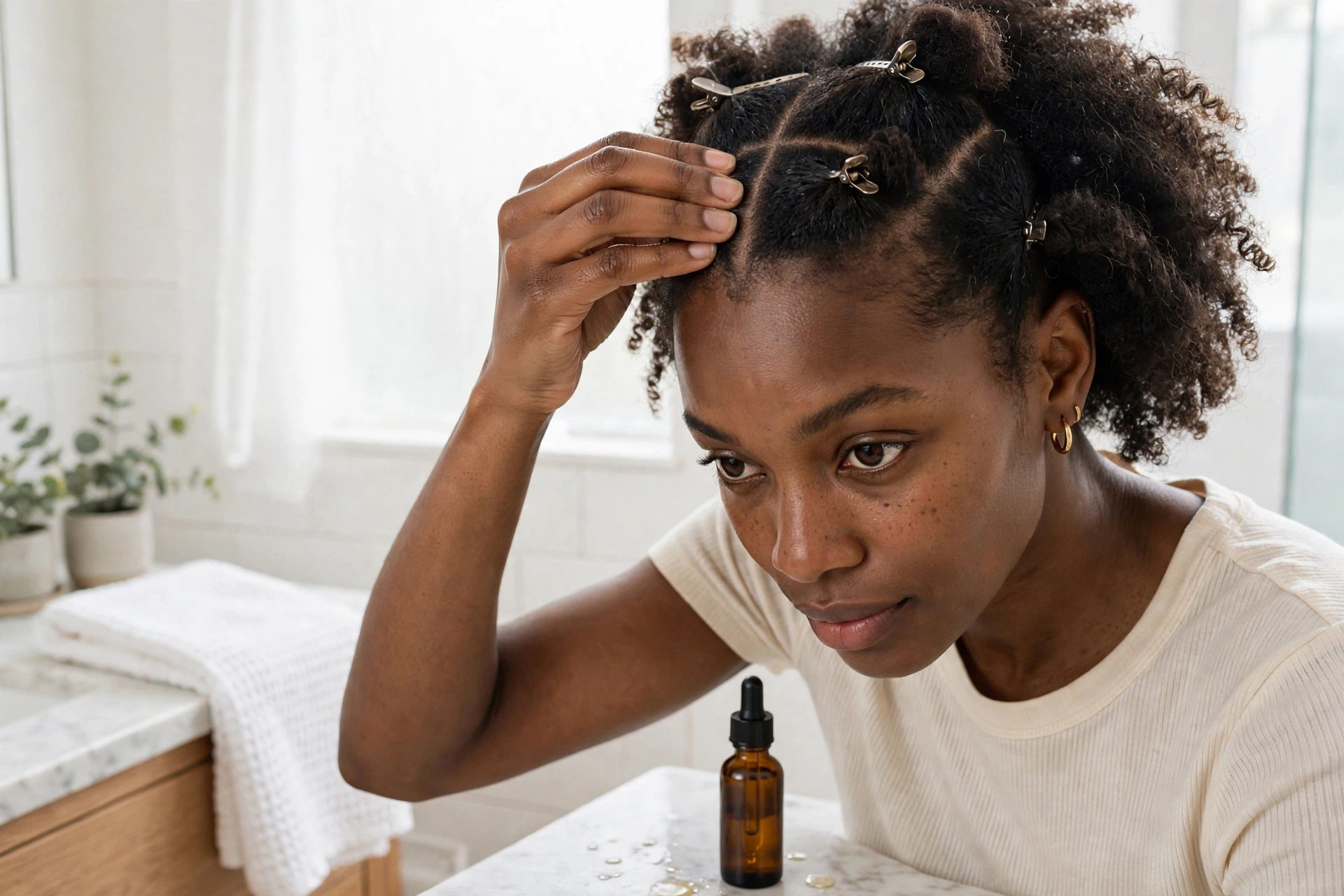
Week three of a braid install is when the trouble usually starts. Not dramatic trouble — just a low, nagging itch along the parts, a faint grey film where the braids meet the scalp, and the creeping feeling that no amount of scalp oil is fixing it. Most advice at that point says “oil it more” or “wash it,” and both can make things worse. The real question is different: is there something sitting on your scalp that shampoo alone is not shifting? That is the only question scalp exfoliation for natural hair is worth asking, and this guide answers it honestly — including when the answer is “you don’t need it.”
What scalp exfoliation actually is — and what it isn’t
Your scalp is skin, and like all skin it sheds dead cells constantly. Shampoo handles most of that shedding. Exfoliation targets what shampoo misses: the stubborn layer of dead skin, sebum, and styling-product residue that builds up around the hairline and along parts, especially under dense curls where rinsing is harder. It comes in two forms. Physical exfoliants use friction — sugar, salt, or fine beads massaged into the scalp. Chemical exfoliants use active ingredients — most commonly salicylic acid — to dissolve the bonds holding dead cells and buildup together, with no scrubbing required.
What exfoliation is not: a hair-growth treatment. Plenty of product pages imply that clearing follicles makes hair grow faster, but no solid evidence supports that claim for healthy scalps. What a clean scalp does is let the products you already use work properly, and stop buildup from causing itch, flaking, and breakage at the root. That is a worthwhile benefit on its own, and it does not need exaggeration.
Do you actually need it? Five signs that say yes — and one that says no
Exfoliation is a tool, not a ritual you owe your hair. You probably benefit from it if you recognise several of these:
- Flakes that survive a good wash. If flakes are still sitting along your parts after a thorough shampoo, they are likely bonded buildup or dead skin, not loose dandruff.
- A coated feeling at the roots. Hair that feels waxy or dull right at the scalp, even freshly washed, often has product film that shampoo alone did not lift.
- Itch that oil makes worse. This is the tell-tale sign. If oiling an itchy scalp gives relief for an hour and then the itch returns stronger, you are likely sealing buildup in, not moisturising dry skin.
- Products that “stopped working.” A leave-in or scalp serum that used to absorb and now sits on top may be meeting a barrier of buildup rather than failing as a product.
- Heavy styling load. Edge control, gels, dry shampoo, and layered stylers all deposit residue at the scalp. The heavier your routine, the faster buildup accumulates.
The sign that says no: a calm scalp, a simple routine, and no itch or flakes. If your scalp feels fine and your products absorb normally, exfoliating “just in case” adds risk — irritation, dryness, rebound oiliness — for no benefit. Healthy scalps do not need regular exfoliation, and the internet’s insistence otherwise is mostly marketing.
Physical vs chemical: why the choice matters more for coils
For straight hair, a scrub rinses out in seconds. For coily and curly hair, rinsing is the hard part — and that changes the maths completely. A physical scrub that is not fully rinsed leaves grit trapped at the scalp, which irritates exactly the skin you were trying to help. Chemical exfoliants, by contrast, dissolve and rinse clean, and they reach the scalp through dense hair far more easily via a nozzle-tip bottle.
| Method | How it works | Best for | Watch out for |
|---|---|---|---|
| Physical scrub (sugar, fine salt, beads) | Friction lifts dead skin and residue | Loose hair you can rinse thoroughly; occasional use | Coarse particles can scratch the scalp; hard to rinse from dense curls and braids |
| Chemical exfoliant (salicylic acid, AHA) | Dissolves bonds holding buildup together | Most natural hair, especially under protective styles | Leave-on time matters; overuse dries the scalp; patch-test first |
| Silicone scalp massager + shampoo | Gentle friction boosts a normal wash | Maintenance between exfoliation sessions; sensitive scalps | Not a substitute when real buildup is present |
| Clarifying shampoo | Stronger cleansing, not true exfoliation | Product film after heavy styling weeks | Does not dissolve bonded dead skin the way acids do |
The honest summary: if you have textured hair and you are choosing one method, a gentle chemical exfoliant is usually the safer, more effective default. Physical scrubs are not forbidden — a fine brown-sugar scrub can work well on loose hair — but they demand a rinse you must actually complete, and that is where most people quietly fail.
The DIY recipes, judged honestly
Competitor guides love DIY scrubs and rarely say which ones are risky. Here is the unvarnished version:
- Brown sugar + conditioner or oil. The safest DIY option. Brown sugar granules are relatively fine and dissolve as you work, and the conditioner base keeps the mixture from dragging. Fine for loose hair, once every two to four weeks.
- Baking soda paste. The most over-recommended and least honest recipe online. Baking soda is strongly alkaline (around pH 9), while your scalp sits near pH 5.5. Occasional use will not ruin your hair, but regular use can dry and irritate the scalp, and the “follow with vinegar to rebalance” advice is folk chemistry, not a fix. Use it rarely, if at all — and never on an already irritated scalp.
- Coarse salt scrubs. Skip these on natural hair. Jagged salt crystals can create micro-tears in scalp skin, and the particles are the hardest to rinse from coils. The tingle is not proof it is working; it is often proof it is too harsh.
- Neat tea tree oil. Never apply undiluted essential oil directly to the scalp. Dilute a few drops in a carrier oil, patch-test behind the ear first, and stop if you feel anything beyond a mild tingle.
- Apple cider vinegar rinses. A diluted rinse (roughly one part vinegar to four or five parts water) can help lift light residue and smooth the cuticle, but it is a mild clarifier, not a true exfoliant. Useful as a follow-up step, not as the main event.
How to exfoliate loose natural hair: the wash-day sequence
Work exfoliation into a wash day, never as a standalone event on dry, unwashed hair. The order matters because exfoliation opens the scalp up — what you put on it afterwards matters more than usual.
1. Section first, then apply
Part your hair into four to six sections. This is the step straight-hair guides skip and the one that matters most for coils: without sections, the product lands on hair, not scalp, and you end up scrubbing lengths for nothing.
2. Apply to the scalp only
Work the exfoliant along each part with your fingertips or a nozzle-tip bottle, using gentle circular pressure with the pads of your fingers — never your nails. Keep it off the lengths; your ends gain nothing from exfoliation and lose moisture from it.
3. Wait, don’t scrub harder
For a chemical exfoliant, leave it for the time the product specifies (usually 5–15 minutes). For a physical scrub, two to three minutes of gentle massage is enough. More pressure does not mean more clean; it means more irritation.
4. Rinse longer than feels necessary
Rinse until the water runs completely clear and your scalp feels clean, not slippery or gritty. With dense hair, that takes longer than you expect. Incomplete rinsing is the single most common reason exfoliation “doesn’t work” — the residue left behind irritates the scalp within days.

5. Shampoo, then condition the lengths
Follow with your normal shampoo, then a moisturising conditioner or deep conditioner on the mid-lengths and ends only. Your scalp has just been exfoliated; it does not need heavy product piled back on immediately.
Scalp exfoliation under braids, twists, and installs
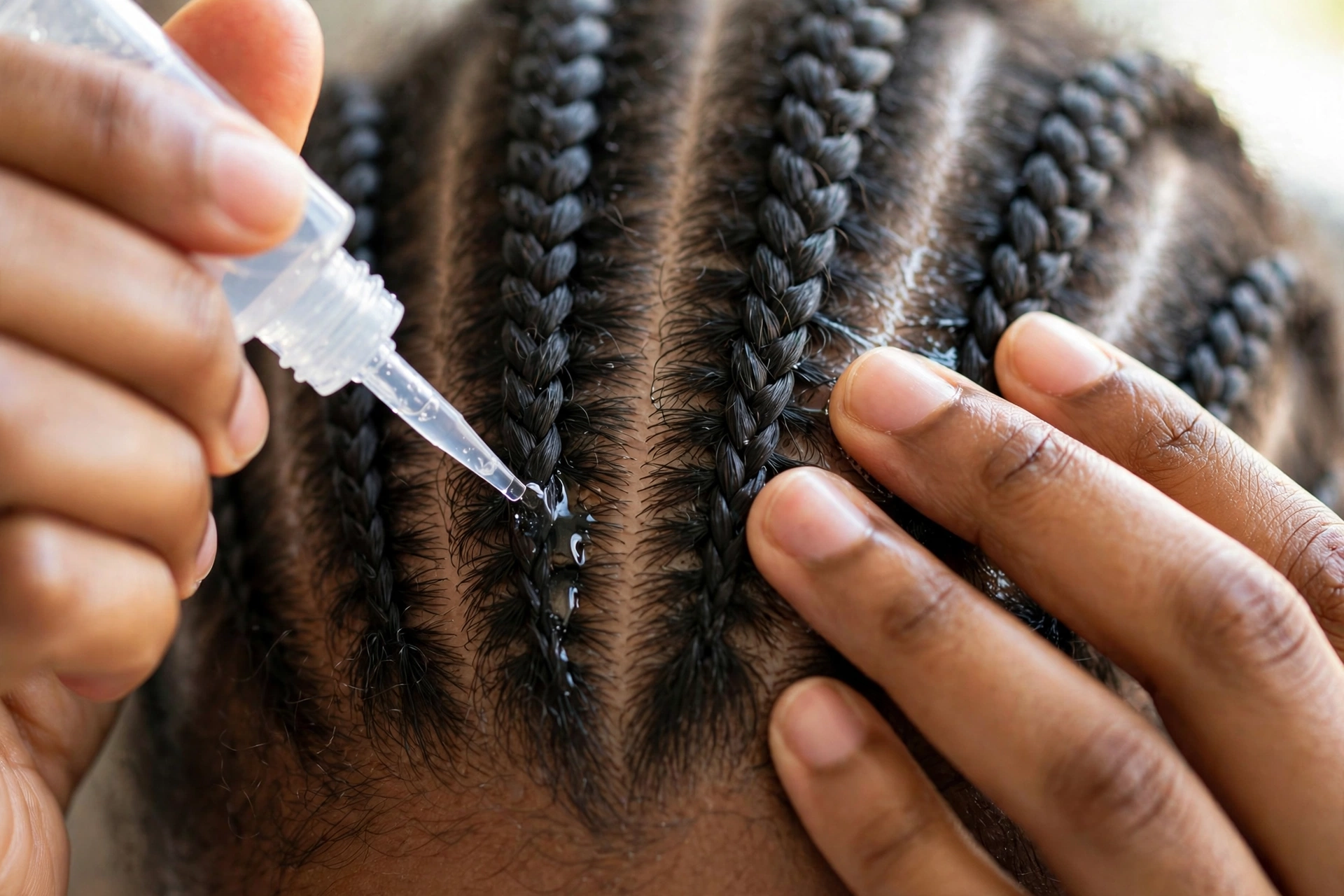
This is the gap almost every competitor guide leaves empty, even though it is where natural-hair wearers need the advice most. You cannot scrub under braids, and you should not try — pulling at parts to reach the scalp risks traction damage and frizzing the style. The method is different:
- Use a liquid, not a scrub. A diluted chemical exfoliant or a diluted clarifying shampoo in an applicator bottle with a narrow tip is the only format that reaches the scalp through parts without disturbing the style.
- Apply along the parts only. Squeeze a thin line along each part, massage gently with fingertips for about thirty seconds per area, and do not work product down the lengths of the braids.
- Rinse thoroughly, then dry completely. This is the rule that matters most. A damp scalp under a style, especially overnight, creates the warm, moist environment where itch and odour thrive. Squeeze with a microfiber towel, then let air reach the scalp before covering it or sleeping on it.
- Do not oil over buildup. When an installed scalp itches, the instinct is to oil it. If the itch comes from buildup, oil traps it and the itch compounds. Cleanse first; oil only a genuinely dry, clean scalp, lightly, afterwards. If you need a refresher between washes, a light water-based scalp mist addresses dryness without adding a layer.
- Frequency under installs is lower, not higher. Once every one to two weeks with a gentle liquid is plenty. More often, and you risk irritating skin you cannot easily inspect.
For more on keeping a style healthy between washes, see our guide to protective styles for natural hair.
How often should you exfoliate? Match it to your scalp, not to a calendar
| Your scalp profile | Suggested frequency | Preferred method |
|---|---|---|
| Oily scalp, heavy product use | Once a week at most | Gentle chemical exfoliant |
| Normal scalp, moderate styling | Every 2–3 weeks | Chemical exfoliant or fine physical scrub |
| Dry or sensitive scalp | Every 3–4 weeks, or only when buildup is obvious | Mild chemical exfoliant; skip physical scrubs |
| Under braids or twists | Every 1–2 weeks | Diluted liquid exfoliant via applicator bottle only |
| Scalp condition (eczema, psoriasis, seborrheic dermatitis) | Only as a dermatologist advises | Do not self-exfoliate an inflamed scalp |
These are starting points, not prescriptions. The feedback loop is simple: if your scalp feels tight, red, or drier after a session, you went too far or too often — space sessions out. If flakes and itch return within days, the cause may not be buildup at all, which brings us to the most important section.
When exfoliation is the wrong answer
Exfoliation treats buildup. It does not treat disease, and scrubbing a diseased scalp makes it worse. Stop and see a dermatologist instead if you notice thick, silvery scales; yellowish, greasy scales around the hairline and ears; spreading red patches; sores, blisters, or broken skin; or hair loss in patches. The American Academy of Dermatology’s overview of seborrheic dermatitis describes a condition that looks like stubborn dandruff but needs medical treatment, not a scrub — and conditions like scalp psoriasis and ringworm are also commonly mistaken for “buildup.” Healthline’s guide to scalp exfoliation makes the same boundary explicit: never exfoliate over an active infection, open cuts, or lice. If home care has not improved things within about two weeks, that is the moment to get a professional opinion, not to exfoliate harder.
Also note the interaction with clarifying: exfoliation and clarifying shampoo do related but different jobs, and doing both on the same wash day is usually overkill. Our guide to clarifying shampoo for natural hair explains how to tell which one your scalp actually needs.
Five mistakes that turn exfoliation against you
- Exfoliating every wash day. The scalp barrier needs time to recover. Daily or every-wash exfoliation strips it, triggering rebound oiliness and flaking — the exact problems you started with.
- Scrubbing with nails or rough tools. Nails scratch; stiff brushes on a sensitive scalp do the same. Fingertips or a soft silicone massager, always.
- Running scrub down the lengths. Exfoliants belong on skin. On hair lengths they cause dryness and tangling for zero benefit.
- Skipping the rinse. Residue from the exfoliant itself becomes the new buildup. Rinse until the water is clear, then rinse a little more.
- Ignoring the warning signs. Burning, prolonged redness, or soreness after a session is not “detoxing.” Stop that product, space out sessions, and if irritation persists, talk to a dermatologist.
Frequently Asked Questions
Does scalp exfoliation help hair grow faster?
Not directly, and honest guides say so. A clean scalp creates a healthier environment for hair, and removing buildup lets treatments absorb better, but no good evidence shows exfoliation itself speeds growth. Anyone promising faster growth from a scrub is selling something.
Can I exfoliate my scalp if I have dandruff?
It depends on the cause. Simple dry-skin flaking often improves with gentle exfoliation. But flaking caused by seborrheic dermatitis or psoriasis usually needs medicated treatment, and scrubbing can worsen it. If flakes are greasy, yellowish, or come with red, inflamed skin, see a dermatologist before exfoliating.
Is a scalp scrub safe for 4c hair?
Yes, with the right method. Chemical exfoliants and fine, dissolvable scrubs are the safest choices, applied in sections and rinsed thoroughly. Coarse salt scrubs and aggressive scrubbing are the real risks for 4c hair — not exfoliation itself. Protect the lengths by keeping product on the scalp only.
How do I exfoliate my scalp with braids in?
Use a diluted liquid exfoliant or diluted clarifying shampoo in a nozzle-tip applicator bottle, applied along the parts only, massaged gently with fingertips, rinsed thoroughly, and dried completely. Never use a gritty scrub under an install, and never oil over an itchy, unwashed scalp.
Can I use a scalp scrub and a clarifying shampoo on the same day?
You can, but usually should not. Both strip buildup; together they often over-strip, leaving a dry, tight scalp. Pick one per wash day, and space clarifying and exfoliation sessions at least a week apart unless your scalp is very oily and tolerates both well.
What should I do after exfoliating?
Shampoo normally, condition the lengths (not the scalp), and leave the scalp mostly bare for the rest of the day. Freshly exfoliated skin is more sensitive — this is a bad moment for heavy oils, edge control on the hairline, or direct sun on exposed parts. For scalp soothing between sessions, aloe vera gel for the scalp is a gentle option. If your water is hard, mineral buildup can mimic product buildup; our guide to hard water hair damage helps you tell the difference.
Disclaimer: This article is for general information only and is not medical advice. Scalp conditions such as seborrheic dermatitis, psoriasis, and fungal infections need proper diagnosis. If you have persistent flaking, redness, sores, or hair loss, see a dermatologist before trying exfoliation. Patch-test any new product before full application.
For the research behind how hair cosmetics and cleansing affect the scalp, see this published review of hair cosmetics in the International Journal of Trichology.
