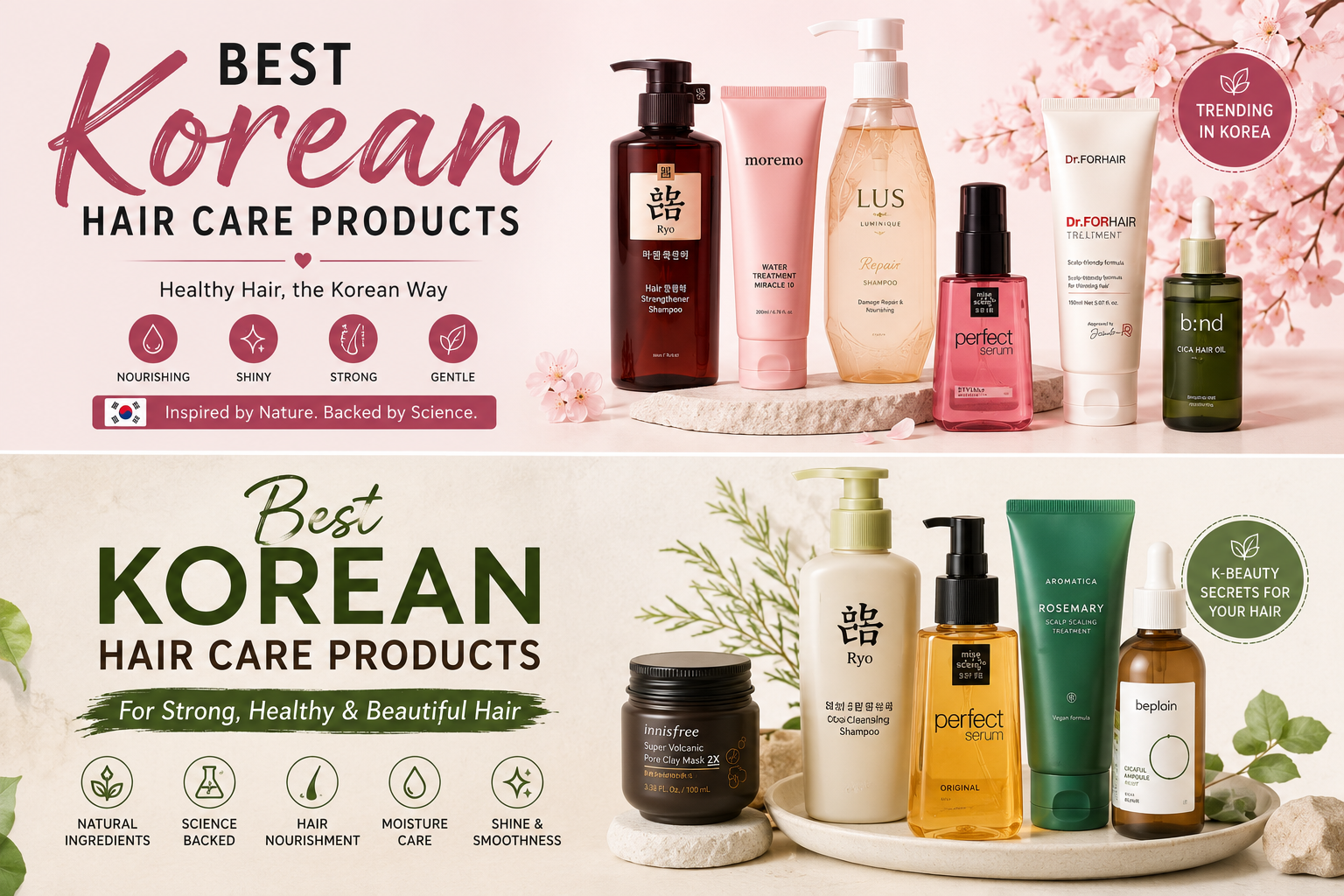
Best Korean Hair Care Products
Every korean hair care product on the market seems to promise the same thing: healthier hair through a healthier scalp. That’s actually the real idea behind it, not just marketing talk. Treat your scalp like skin, and the hair growing out of it gets healthier as a result. That’s the whole philosophy, and it’s why this stuff has spread way past Seoul in the last couple of years.
If you’ve only ever known shampoo-conditioner-done, this might feel like stepping into a different world. Ampoules. Scalp scalers. Essences, for hair, of all things. Stick around, we’ll walk through what’s worth your money and what you can honestly skip.
What Makes a Korean Hair Care Product Different
Western hair care sorts everything by hair type. Curly, straight, fine, coarse, you name it. A typical korean hair care product mostly ignores all that. Instead it zeroes in on the scalp, the same way Korean skincare zeroes in on your face — cleanse it, balance it, feed it, protect it.
That’s the reason so many of these products borrow straight from skincare formulas. Peptides. Amino acids. Exfoliating acids. On a shampoo bottle. Sounds odd until you realize the logic actually holds up.
Key Ingredients Worth Knowing
Not everything with Korean packaging deserves a spot in your routine. A handful of ingredients, though, keep showing up for a reason.
- Rosemary oil. Boosts circulation at the scalp. Some research ties that to better hair growth over time.
- Biotin. Supports keratin production, so it strengthens hair right at the root.
- Salicylic acid. A gentle exfoliant. Clears out buildup from oil, product residue, and dead skin.
- Fermented extracts. Common in these formulas — meant to help everything else absorb better into the scalp.
According to NBC Select’s interview with a board-certified dermatologist, a good korean hair care product usually shares skincare-inspired ingredients that balance and strengthen the scalp’s natural environment. If you read a label and recognize ingredients from your skincare shelf, that’s usually a good sign, not a gimmick.
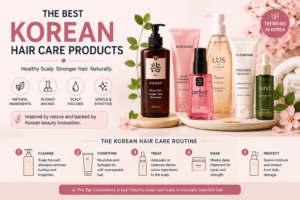
A Typical Korean Hair Care Routine
The routine follows a pretty repeatable structure once you’ve seen it once.
| Step | Product Type | What It Does |
|---|---|---|
| 1. Cleanse | Scalp-focused shampoo | Clears buildup, oil, and product residue from the scalp itself, not just the strands |
| 2. Condition | Hair treatment/conditioner | Hydrates and detangles without weighing hair down |
| 3. Treat | Ampoule or essence | Delivers concentrated actives like peptides or biotin right to the scalp |
| 4. Mask | Weekly hair mask | Deep conditioning, usually once a week, for damage repair |
| 5. Protect | Leave-in serum | Locks moisture in and shields against heat and everyday damage |
Nobody runs through all five steps daily, and you shouldn’t try. Cleanse and condition most days. Bring in the treatment and mask steps once or twice a week. That’s plenty.
If you’re already following a routine for natural hair care, a lot of this will layer in easily — a korean hair care product doesn’t fight against curl-pattern routines, it just adds a scalp-health layer underneath them.
Does It Work for Every Hair Type?
Pretty much, yeah. Since the whole approach is built around scalp health instead of curl pattern, it tends to work across straight, wavy, curly, and coily hair alike. That’s genuinely one of its bigger selling points over Western hair care, which segments products so heavily by type.
That said — and this matters — “works for everyone” doesn’t mean “one product fits everyone.” Match the ingredients to your actual concern. Dryness, thinning, dandruff, whatever it is.
What to Look for When Shopping
- Match ingredients to your concern, not the trend. Rosemary oil for growth. Salicylic acid for buildup. Biotin for strength. Buy based on need, not hype.
- Check for skincare-style actives. Peptides and amino acids on a hair label are usually a sign of a well-formulated product.
- Introduce one new product at a time. These routines involve several steps. Layer in five new products at once and you’ll have no idea what’s actually working.
- Buy from a legit retailer. K-beauty’s popularity brought a wave of counterfeits online. Stick to sellers you can verify.
If you want to try a well-reviewed rosemary scalp oil without hunting through a dozen sketchy sellers, this one on Amazon is a solid, easy starting point.
🛒 Check Price on Amazon
Our Honest Verdict
The average korean hair care product mostly earns its hype. The scalp-first logic actually holds up, and the ingredient quality tends to beat what you’ll find in a standard drugstore aisle. It’s not magic in a bottle though, and nobody should expect overnight results. Weeks, not days.
Start small. One or two products aimed at your actual concern, not a whole five-step routine bought in one haul. Give it a few weeks. If your scalp’s happy, build from there. That’s the honest way to try any new routine, Korean or otherwise.
FAQ: Korean Hair Care Products
Is Korean hair care good for curly or coily hair?
Yes. Since the focus is scalp health rather than curl pattern, it generally works well across hair textures, curly and coily included.
What’s the difference between a hair essence and a hair serum?
An essence is lighter, less concentrated. Used earlier in a routine to add moisture. Serums come later, sealing things in or targeting a specific issue.
Do I need all five steps of a Korean hair routine?
Not even close. Cleansing and conditioning cover the daily basics. Add treatments,masks and serums once or twice a week, as time and budget allow.
Can a korean hair care product help with thinning hair?
Ingredients like rosemary oil and biotin support scalp circulation and hair strength, which can help over time. For serious hair loss, still talk to a dermatologist.
Are Korean hair products safe for color-treated hair?
Many are — the focus on scalp and strand health tends to be gentler than harsh cleansing agents. Check the label for sulfates regardless of where the product’s from, since those fade color faster.