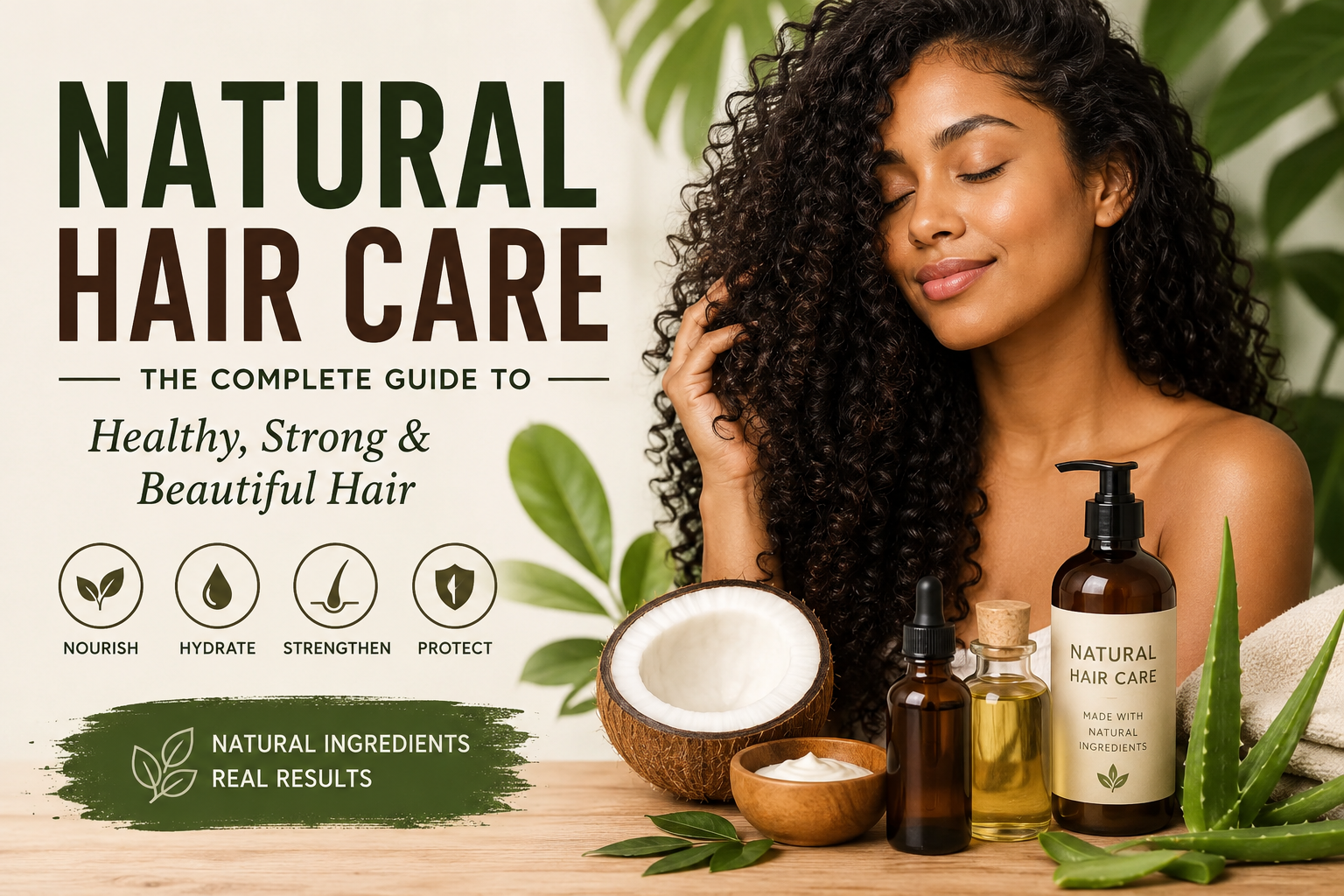
Natural Hair Care: The Complete Guide to Healthy, Strong, and Beautiful Hair
Quick Answer
Natural hair care focuses on keeping your hair healthy by cleansing the scalp gently, maintaining moisture, preventing breakage, and protecting your natural texture. Wash your hair with a sulfate-free shampoo, deep condition regularly, moisturize with a leave-in conditioner, seal hydration with lightweight natural oils, limit heat styling, and sleep on a satin pillowcase to reduce friction.
Table of Contents
- What Is Natural Hair Care?
- Benefits of Natural Hair Care
- Understanding Your Hair Type
- Hair Porosity Explained
- Hair Density Explained
- Daily Natural Hair Routine
- Weekly Hair Care Routine
- Signs Your Hair Needs More Moisture
- Frequently Asked Beginner Questions
What Is Natural Hair Care?
Natural hair care is a long-term approach to maintaining healthy hair without relying on harsh chemicals, excessive heat styling, or routines that damage your hair’s natural structure. Instead of trying to change your hair texture, natural hair care focuses on improving your hair’s overall health through proper cleansing, hydration, nourishment, and protection.
One of the biggest misconceptions is that natural hair care only means using homemade remedies or organic products. In reality, it means choosing products with beneficial ingredients, avoiding unnecessary damage, and creating a routine that matches your hair type and lifestyle.
Healthy hair starts with a healthy scalp. Dirt, oil, product buildup, and inflammation can affect your scalp’s condition, making it more difficult to maintain healthy-looking hair. That’s why dermatologists recommend paying just as much attention to your scalp as you do to your hair strands.
According to the American Academy of Dermatology (AAD), proper cleansing, gentle conditioning, minimizing heat damage, and protecting your hair from unnecessary stress are among the most effective habits for maintaining healthy hair.
Benefits of Natural Hair Care
A consistent natural hair care routine offers more than just smoother hair. Over time, it helps improve your hair’s overall health while reducing damage caused by daily styling and environmental stress.
- Helps reduce hair breakage.
- Improves moisture retention.
- Supports a healthier scalp.
- Reduces frizz naturally.
- Enhances softness and shine.
- Makes hair easier to detangle.
- Protects curls and natural texture.
- Reduces split ends over time.
- Helps maintain stronger-looking hair.
- Improves overall hair manageability.
Remember that healthy hair isn’t measured only by growth. Hair that retains moisture, experiences less breakage, and remains manageable often appears longer because fewer strands are breaking off.
Understanding Your Hair Type
Before buying products or following online tutorials, it’s important to understand your own hair. Using the wrong products is one of the most common reasons people struggle with dryness, frizz, or excessive oiliness.
Straight Hair
Straight hair allows natural oils to travel easily from the scalp to the ends, which often makes it appear shinier but also oilier. Lightweight conditioners and volumizing products generally work well.
Wavy Hair
Wavy hair sits between straight and curly textures. It usually benefits from lightweight moisturizing products that define waves without making them feel heavy.
Curly Hair
Curly hair naturally loses moisture more quickly because scalp oils have a harder time traveling along curved strands. Regular conditioning and leave-in moisturizers are essential.
Coily Hair
Coily hair is often the driest hair type. Rich conditioners, protective hairstyles, and gentle detangling techniques help reduce breakage while preserving natural curl patterns.
Hair Porosity Explained
Hair porosity refers to your hair’s ability to absorb and retain moisture. Understanding your porosity helps you choose products that actually work for your hair instead of following general recommendations.
Low Porosity Hair
Low porosity hair has tightly packed cuticles, making it difficult for moisture to enter the hair shaft. Lightweight products and gentle heat during deep conditioning often improve absorption.
Medium Porosity Hair
Medium porosity hair typically maintains a healthy moisture balance. It responds well to most conditioners and styling products without requiring heavy treatments.
High Porosity Hair
High porosity hair absorbs moisture quickly but loses it just as fast. Rich leave-in conditioners, sealing oils, and regular deep conditioning are especially beneficial.
Quick Tip:If your hair feels dry only a day after washing, high porosity could be one of the reasons. Using a leave-in conditioner followed by a lightweight oil may help retain moisture for longer.
Hair Density vs Hair Thickness
Many people confuse hair density with hair thickness, but they’re completely different.
- Hair Density refers to how many strands grow on your scalp.
- Hair Thickness refers to the width of each individual strand.
Someone with fine hair can still have high density, while someone with thick strands may have low density. Understanding this difference helps you choose the right styling products and avoid making your hair feel too heavy or too dry.
The Foundation of Every Natural Hair Routine
No matter your hair type, every successful natural hair care routine is built around four essential principles.
- Cleanse your scalp regularly.
- Replace lost moisture.
- Seal that moisture.
- Protect your hair from unnecessary damage.
Skipping any of these steps often leads to dryness, frizz, or breakage.
Daily Natural Hair Care Routine
1. Start With Hydration
Water is the true source of moisture for your hair. Products like leave-in conditioners help retain hydration, while natural oils help lock it in. Applying oil to dry hair without adding moisture first usually provides shine but doesn’t solve dryness.
2. Protect Your Hair While Sleeping
Sleeping on cotton pillowcases creates friction that can contribute to tangles and breakage. Satin or silk pillowcases reduce friction and help your hair retain moisture overnight.
3. Avoid Overusing Heat
Heat styling tools weaken the hair cuticle over time. Whenever possible, allow your hair to air dry or use the lowest effective heat setting along with a quality heat protectant.
4. Don’t Overbrush Your Hair
Excessive brushing may lead to unnecessary breakage, especially for curly or coily hair. Use a wide-tooth comb or your fingers while your hair is conditioned and damp.
5. Give Your Scalp Attention
A healthy scalp supports healthy hair. Gently massaging your scalp for a few minutes during washing may improve circulation while helping distribute natural oils.
Weekly Natural Hair Care Routine
A weekly routine helps restore moisture, remove buildup, and keep your scalp healthy without stripping away natural oils.
Step 1: Cleanse Properly
Choose a gentle sulfate-free shampoo that removes excess oil while preserving your hair’s natural moisture barrier.
Step 2: Deep Condition
Deep conditioning once every week helps replenish moisture lost through washing, heat styling, or environmental exposure. Focus on the mid-lengths and ends of your hair where dryness is usually most noticeable.
Step 3: Detangle Carefully
Always detangle while your conditioner is still in your hair. Start from the ends and slowly work toward the roots to minimize breakage.
Step 4: Seal in Moisture
Finish your routine with a leave-in conditioner followed by a lightweight natural oil that matches your hair type. This simple habit can make a noticeable difference in softness and manageability throughout the week.
Step 2: Deep Condition
Deep conditioning once every week helps replenish moisture lost through washing, heat styling, and environmental exposure. Choose a conditioner rich in moisturizing ingredients like shea butter, aloe vera, glycerin, or panthenol. Leave it on for 10–20 minutes to allow the ingredients to penetrate the hair shaft before rinsing thoroughly.
Step 3: Detangle Gently
Detangling should never feel like a battle. Use your fingers or a wide-tooth comb while your hair is saturated with conditioner. Starting from the ends and working upward minimizes unnecessary breakage and preserves your natural curl pattern.
Step 4: Lock in Moisture
After washing and conditioning, apply a leave-in conditioner to damp hair. Follow with a lightweight natural oil to help reduce moisture loss. This simple habit keeps your hair softer for longer and helps reduce frizz between wash days.
Signs Your Hair Needs More Moisture
Many people mistake dryness for damage. Learning to recognize the early signs of dehydration allows you to adjust your routine before your hair becomes brittle.
- Hair feels rough instead of smooth.
- Excessive frizz appears even after styling.
- Hair tangles more easily than usual.
- Curls lose their definition quickly.
- Ends appear dry or split.
- Hair snaps instead of stretching when gently pulled.
Expert Tip:Moisture comes from water—not oil. Oils are sealants, not hydrators. Always hydrate your hair first, then use an oil to help lock that moisture inside the hair strand.
Choosing the Best Natural Hair Care Products
The best natural hair care products are those that support your specific hair type instead of simply following trends. Ingredients matter far more than attractive packaging or marketing claims.
Look for formulas that cleanse gently, improve hydration, and strengthen the hair without leaving heavy buildup.
If you’re searching for product recommendations, our detailed guide to Hair Care Products for Natural Hair compares shampoos, conditioners, leave-in treatments, and styling products suitable for different hair types.
If you’re interested in innovative formulas inspired by Korean beauty, our guide to Best Korean Hair Care Products explores products designed to improve scalp health while keeping hair soft and manageable.
Ingredients That Benefit Natural Hair
| Ingredient | Main Benefit |
|---|---|
| Aloe Vera | Hydrates and soothes the scalp. |
| Argan Oil | Reduces frizz and adds shine. |
| Jojoba Oil | Balances scalp moisture. |
| Shea Butter | Deeply nourishes dry hair. |
| Panthenol (Vitamin B5) | Improves softness and elasticity. |
| Glycerin | Helps attract moisture into the hair. |
| Rosemary Oil | Supports a healthy scalp when diluted properly. |
| Tea Tree Oil | Helps reduce scalp buildup and flakes. |
Ingredients You Should Limit or Avoid
Not every ingredient works well for natural hair. Some ingredients may increase dryness or lead to buildup when used frequently.
- Harsh sulfates (SLS, SLES)
- High amounts of drying alcohols
- Excessive fragrance if you have a sensitive scalp
- Heavy mineral oil products that cause buildup
- Products containing unnecessary harsh detergents
This doesn’t mean every product containing these ingredients is automatically harmful, but choosing gentler alternatives often produces better long-term results.
Best Natural Oils for Healthy Hair
Coconut Oil
Coconut oil is one of the few oils shown to penetrate the hair shaft effectively. It may help reduce protein loss and minimize breakage, making it particularly useful for thick, coarse, or damaged hair.
Argan Oil
Known as “liquid gold,” argan oil is lightweight, rich in vitamin E, and excellent for smoothing frizz while adding shine without leaving heavy residue.
Jojoba Oil
Jojoba oil closely resembles the scalp’s natural sebum, making it an excellent option for balancing moisture while avoiding greasy buildup.
Rosemary Oil
Rosemary essential oil has become increasingly popular because of its potential role in supporting scalp health. Since it is highly concentrated, always dilute it with a carrier oil before applying it to your scalp.
Tea Tree Oil
Diluted tea tree oil may help reduce scalp irritation and dandruff while leaving the scalp feeling refreshed.
LOC Method vs LCO Method
Two of the most popular moisture-retention techniques are the LOC and LCO methods.
| Method | Steps | Best For |
|---|---|---|
| LOC | Liquid → Oil → Cream | High Porosity Hair |
| LCO | Liquid → Cream → Oil | Low Porosity Hair |
Experiment with both methods to determine which one keeps your hair moisturized for the longest period.
Healthy Scalp = Healthy Hair
Your scalp is the foundation of healthy hair. A clean, balanced scalp allows hair follicles to function more effectively while reducing itching, flaking, and excess oil buildup.
- Wash regularly based on your scalp’s needs.
- Avoid scratching aggressively.
- Massage gently during shampooing.
- Remove product buildup consistently.
- Protect your scalp from excessive sun exposure.
According to the American Academy of Dermatology, proper scalp care is one of the most important parts of maintaining healthy hair.
Natural Hair Growth Tips
While no product can magically accelerate hair growth overnight, healthy habits create the ideal environment for stronger, healthier hair over time.
- Eat enough protein every day.
- Stay hydrated.
- Reduce excessive heat styling.
- Trim split ends regularly.
- Avoid tight hairstyles.
- Manage stress levels.
- Sleep 7–9 hours every night.
Foods That Support Healthy Hair
Your daily diet plays a major role in maintaining healthy hair. Hair follicles require protein, vitamins, and minerals to produce strong strands. While hair products improve the appearance of your hair, proper nutrition supports healthy growth from within.
| Food | Key Nutrient | Hair Benefit |
|---|---|---|
| Eggs | Protein & Biotin | Supports stronger hair strands. |
| Salmon | Omega-3 Fatty Acids | Helps maintain scalp health. |
| Spinach | Iron & Folate | Supports healthy hair follicles. |
| Greek Yogurt | Protein | Strengthens hair structure. |
| Sweet Potatoes | Vitamin A | Supports natural scalp oil production. |
| Almonds | Vitamin E | Protects hair from oxidative stress. |
| Berries | Vitamin C | Supports collagen production. |
For science-based nutrition information, visit the NIH Office of Dietary Supplements:
https://ods.od.nih.gov/
Simple DIY Hair Masks
Aloe Vera Mask
Fresh aloe vera gel helps hydrate dry hair while soothing an irritated scalp.
Honey & Yogurt Mask
This combination provides temporary softness and helps improve manageability for dry hair.
Banana & Olive Oil Mask
Bananas provide vitamins while olive oil helps reduce dryness and improve shine.
Tip: Use DIY masks once every one to two weeks rather than daily.
Seasonal Hair Care Tips
Summer
- Protect hair from UV exposure.
- Wash sweat and chlorine after swimming.
- Use lightweight moisturizing products.
Winter
- Deep condition more frequently.
- Avoid very hot showers.
- Use richer moisturizers to combat dry air.
10 Common Natural Hair Care Mistakes
- Using extremely hot water.
- Skipping conditioner.
- Applying oil without moisture.
- Using too much heat.
- Overwashing dry hair.
- Ignoring scalp health.
- Using products that don’t match your hair type.
- Detangling dry curly hair.
- Using dirty brushes and combs.
- Expecting instant results. Natural Hair Care Myths vs Facts
| Myth | Fact |
|---|---|
| Hair grows faster if you cut it often. | Trimming removes split ends but doesn’t increase growth speed. |
| Oil moisturizes hair. | Water hydrates hair; oil seals moisture. |
| Natural products always work better. | Ingredients matter more than marketing labels. |
| More shampoo means cleaner hair. | Overwashing may strip natural oils. |
Expert Tips for Long-Term Hair Health
- Follow a routine consistently for at least 8–12 weeks before judging results.
- Choose products based on your hair type rather than social media trends.
- Sleep on a satin pillowcase to reduce friction.
- Trim damaged ends every 8–12 weeks.
- Stay hydrated throughout the day.
- Reduce unnecessary chemical treatments.
- Always protect your hair before heat styling.
Frequently Asked Questions
How often should I wash natural hair?
Most people benefit from washing every 5–10 days, but frequency depends on scalp oil production, lifestyle, and hair type.
Can natural oils regrow hair?
No natural oil can guarantee hair regrowth, but healthy scalp care may help reduce breakage and support healthier hair over time.
Is coconut oil good for everyone?
Not necessarily. Thick or coarse hair often benefits most, while fine hair may prefer lighter oils such as argan or jojoba.
Should I deep condition every week?
Yes. Weekly deep conditioning helps restore moisture, especially for dry, curly, color-treated, or damaged hair.
Can I air dry my hair every time?
Air drying generally reduces heat damage, although leaving hair wet for very long periods may not be ideal for everyone.
Which shampoo is best for natural hair?
A sulfate-free shampoo that matches your scalp type is usually the best choice.
Do I need expensive products?
No. Consistency and choosing the right ingredients matter far more than buying luxury products.
Final Thoughts
Natural hair care is not about chasing trends or buying every product that promises miraculous results. It’s about understanding your hair, caring for your scalp, maintaining moisture, and following a routine that fits your lifestyle.
Healthy hair develops through patience and consistency. Small habits such as gentle cleansing, deep conditioning, protecting your hair while sleeping, and choosing ingredients wisely often make a greater difference than expensive treatments.
If you’re looking for products that complement the routine described in this guide, explore our detailed resources on Hair Care Products for Natural Hair and Best Korean Hair Care Products. These guides compare ingredients, product types, and recommendations to help you build a routine that works for your unique hair needs.
Remember that healthy hair isn’t achieved overnight. Stay consistent, listen to your hair’s changing needs, and adjust your routine when necessary. Over time, those small daily habits can lead to stronger, softer, and healthier-looking hair.