Rice Water for Natural Hair: Honest Benefits, 3 Methods Compared & How to Use It Safely
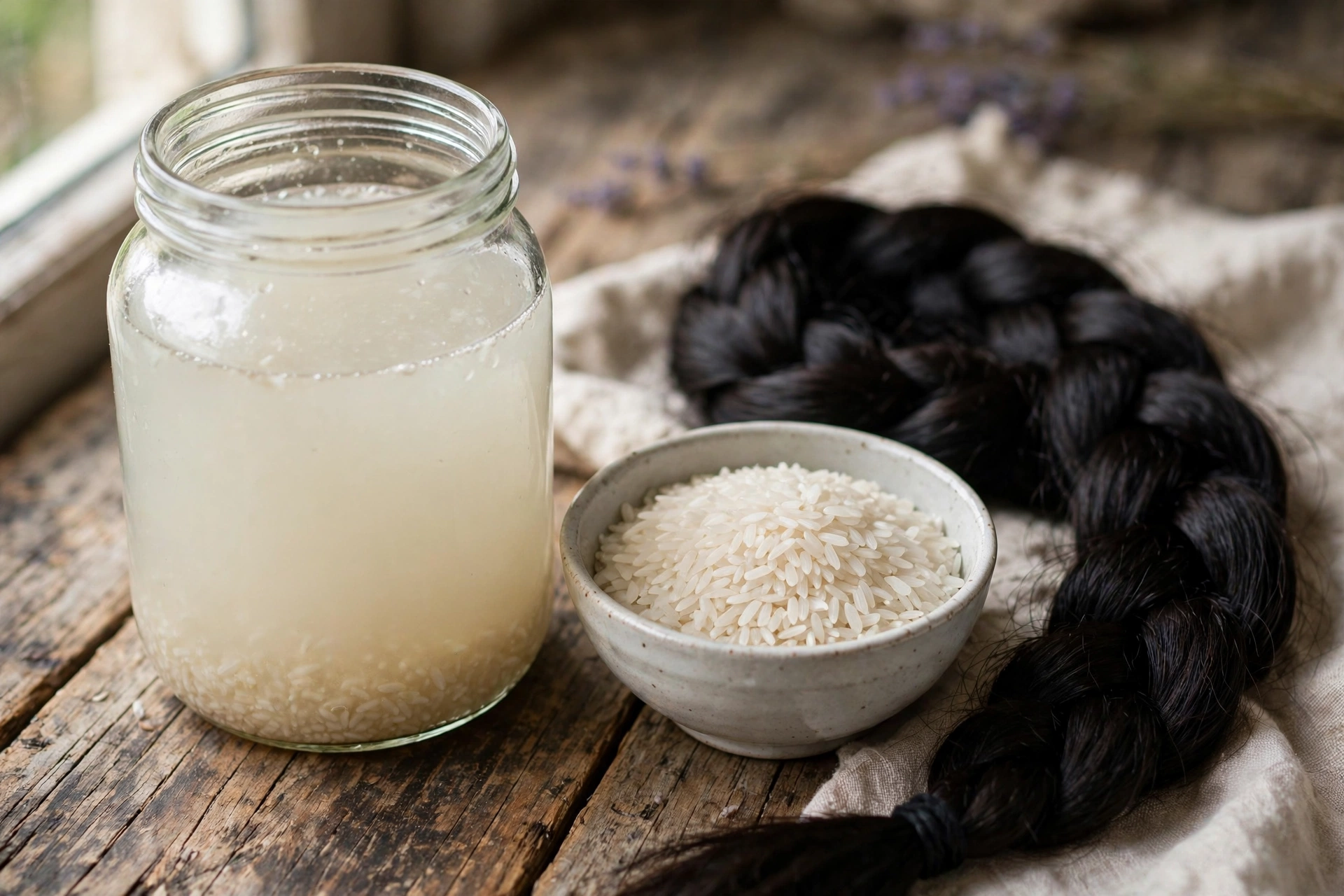
What Is Rice Water?
Rice water is simply the cloudy, starchy liquid left behind after soaking, boiling, or fermenting rice in water. It contains starch, amino acids, B and E vitamins, minerals, and a carbohydrate called inositol — the ingredient behind most of the serious claims about rice water and hair.
The tradition is old and genuinely fascinating. The Yao women of Huangluo village in China, famous for hair that reaches the ground, have rinsed with fermented rice water for generations, and court ladies in Japan’s Heian period reportedly did the same centuries ago. That history is worth respecting — but it is also worth being honest about: a centuries-old tradition is not the same as scientific proof, and the Yao women’s routine includes far more than rice water (gentle handling, infrequent washing, and protective styling all play a role).
In recent years, rice water went viral as a “hair growth miracle.” Before you fill a mason jar, let’s separate what it can actually do from what the internet promises.
The Honest Truth: Will Rice Water Make Your Hair Grow Faster?
Let’s answer the biggest question first: rice water does not make your hair grow faster from the scalp. Your growth rate — roughly half an inch per month for most people — is set by genetics, age, hormones, and overall health. No rinse changes that.
What rice water can do is help you keep more of the length you already grow. Coily and curly hair breaks easily; every broken end cancels out new growth. By smoothing the cuticle, reducing friction, and improving elasticity, rice water helps fragile strands survive washing, detangling, and styling — so over time, hair looks longer because less of it is snapping off. That is length retention, not faster growth, and the distinction matters.
One more honesty note: there are no published clinical trials testing rice water on human hair growth. The study most often cited — a 2010 laboratory study in the International Journal of Cosmetic Science — tested inositol on hair fibers in a lab, not on people’s heads, and it found that inositol could penetrate damaged hair and remain even after rinsing, improving elasticity and reducing surface friction. That is a real, interesting finding about breakage — but it is not evidence that rice water grows hair. Be skeptical of any article or video promising “2 inches in a month” from rice water. That is marketing, not evidence.
What’s Actually in Rice Water (and Why Concentrations Matter)
Rice water’s useful components are real but modest:
- Starch: coats the outside of the hair shaft, adding temporary slip, body, and smoothness.
- Amino acids: the building blocks of protein; they can adsorb to the hair surface and reinforce it lightly.
- Inositol: the standout — laboratory research suggests it penetrates damaged hair and keeps working after rinsing, unlike most rinse-out ingredients.
- Vitamins B and E, minerals, and antioxidants: present in small amounts; good for the scalp environment but not transformative.
The catch: homemade rice water is inconsistent. The nutrient content varies with the rice variety, the soak time, your water, and whether you ferment. You have no way of knowing how much active material is in your jar on any given wash day — which is why results vary so much from person to person. Think of it as a gentle, low-cost conditioning rinse, not a precision treatment. Healthline’s rice water guide makes the same point: the effects are real but modest, and consistency of preparation matters.
What Rice Water Can Realistically Do for Natural Hair
With expectations set correctly, here is what regular, correct use can plausibly deliver:
1. Less breakage during detangling
This is rice water’s strongest use case for coily hair. The starch coating adds slip, and inositol’s cuticle-smoothing effect means the comb glides with less friction. Less friction means fewer snapped strands — which, over months, is exactly how “growth” happens for breakage-prone hair. Pair it with a proper detangling routine and the difference is noticeable.
2. Better elasticity
The lab research on inositol points to improved elasticity — hair that stretches slightly instead of snapping. For high-porosity or heat-damaged natural hair, that extra give during styling is valuable.
3. Reduced frizz and more shine
When the cuticle lies flatter, hair reflects more light (shine) and frizz calms down. Fermented rice water, with its lower pH, is particularly good at this — more on that below.
4. A smoother-feeling scalp
Many users report their scalp feels calmer and less itchy after rice water rinses. This is anecdotal rather than proven, and it is not a treatment for dandruff or scalp conditions — but a balanced, comfortable scalp is never a bad thing.
What Rice Water Cannot Do
- Speed up your growth rate or regrow hair lost to genetics, hormones, or medical conditions.
- Repair split ends — nothing does; only a trim removes them.
- Replace protein treatments for severely damaged hair — its protein content is too low and unpredictable.
- Work as a daily leave-in — undiluted rice water left in the hair regularly leads to stiffness and protein overload (more on that below).
- Fix dandruff, eczema, or scalp infections. See a dermatologist for those.
Plain vs. Fermented vs. Boiled: The 3 Methods Compared
These are the three ways people make rice water, and they are not interchangeable:
| Method | How it works | Strength | Best for | Downsides |
|---|---|---|---|---|
| Plain soak | ½ cup rice rinsed, soaked in 2–3 cups water for 30–60 minutes, then strained | Lightest; lowest protein/starch load | Beginners, fine hair, low-porosity hair, first-time patch test | Mildest effect; must be used fresh or refrigerated |
| Fermented | Strained soak water left at room temperature 24–48 hours until mildly sour-smelling, then refrigerated | Strongest; lower pH smooths the cuticle more, slightly higher nutrient availability | High-porosity, frizzy, or dull hair that needs maximum smoothing | Sour smell; highest protein-overload risk; spoils fastest; must be diluted for sensitive scalps |
| Boiled | Rice cooked in extra water; the excess starchy water is strained off and cooled | Thickest and starchiest; most coating/slip | Very dry, coarse hair that loves heavy conditioning | Can feel sticky or heavy; almost always needs diluting; easiest to over-apply |
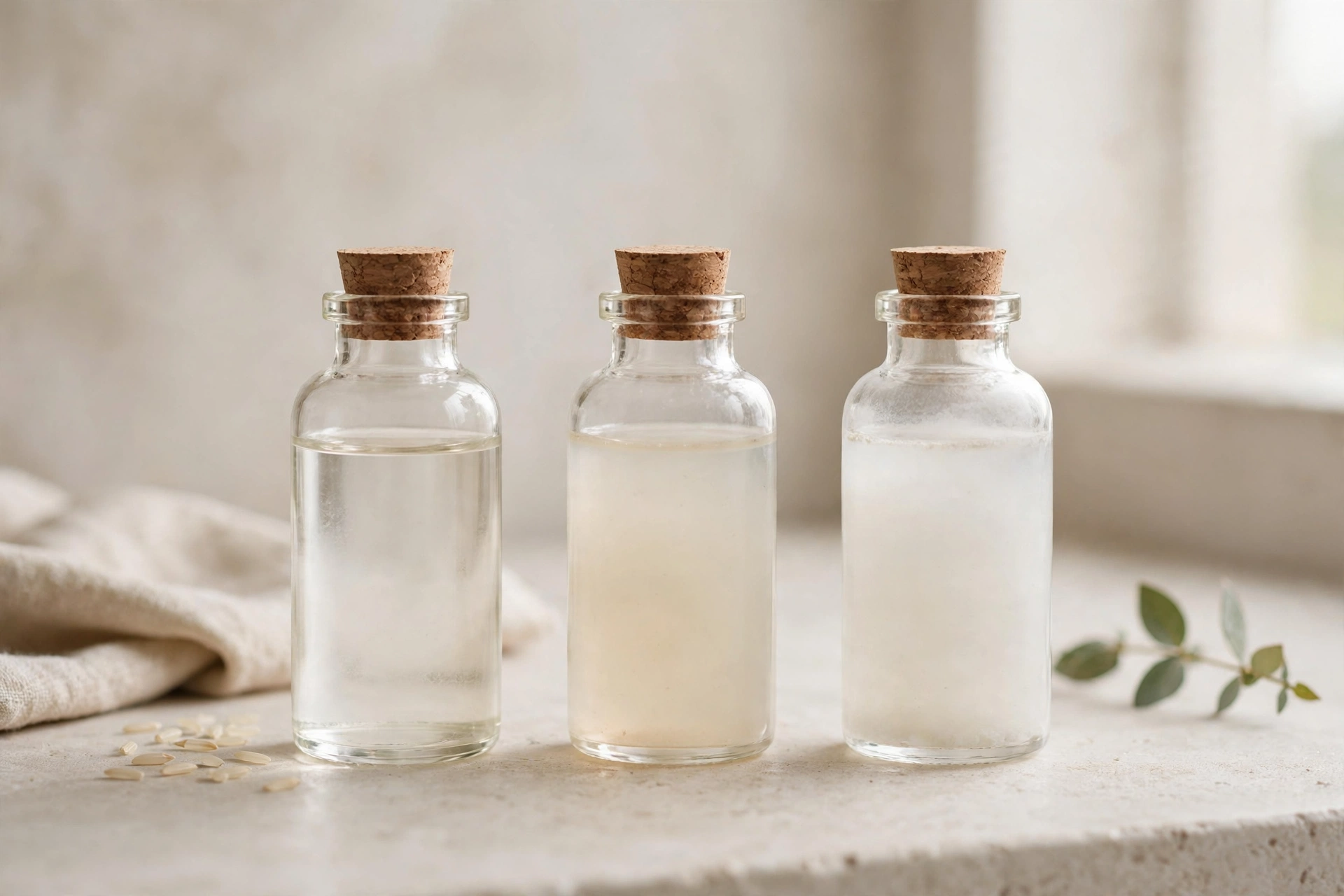
Our recommendation for natural hair: start with the plain soak. It is the gentlest way to learn how your hair responds. Move to fermented only if your hair clearly wants more — and dilute it 1:1 with plain water the first few times.
Step-by-Step: Fermented Rice Water for Natural Hair
If you want the full-strength version, here is the method adapted for coily and curly hair (most generic recipes ignore sectioning — don’t):
What you’ll need
- ½ cup uncooked rice (white, brown, jasmine, or basmati — white is the classic choice)
- 2–3 cups clean water
- A clean glass jar with a loose lid (not airtight — gases need to escape)
- A spray bottle or applicator bottle for easy, section-by-section application
- Wide-tooth comb and shower cap
The process
- Rinse the rice first. Swirl ½ cup rice in water and drain to remove dust and surface impurities. Discard that water.
- Soak. Add 2–3 cups of fresh water, swirl until the water turns milky, and let it sit 30 minutes.
- Strain into a clean glass jar. Cover loosely and leave at room temperature for 24–48 hours. It is ready when it smells mildly sour or tangy — like plain yogurt, not rotten. A strong rotten smell means it went too far: throw it out and start over.
- Refrigerate immediately. Cold stops the fermentation. It keeps 5–7 days in the fridge — no longer.
- Dilute before use (especially the first time): mix 1 part fermented rice water with 1 part plain water.
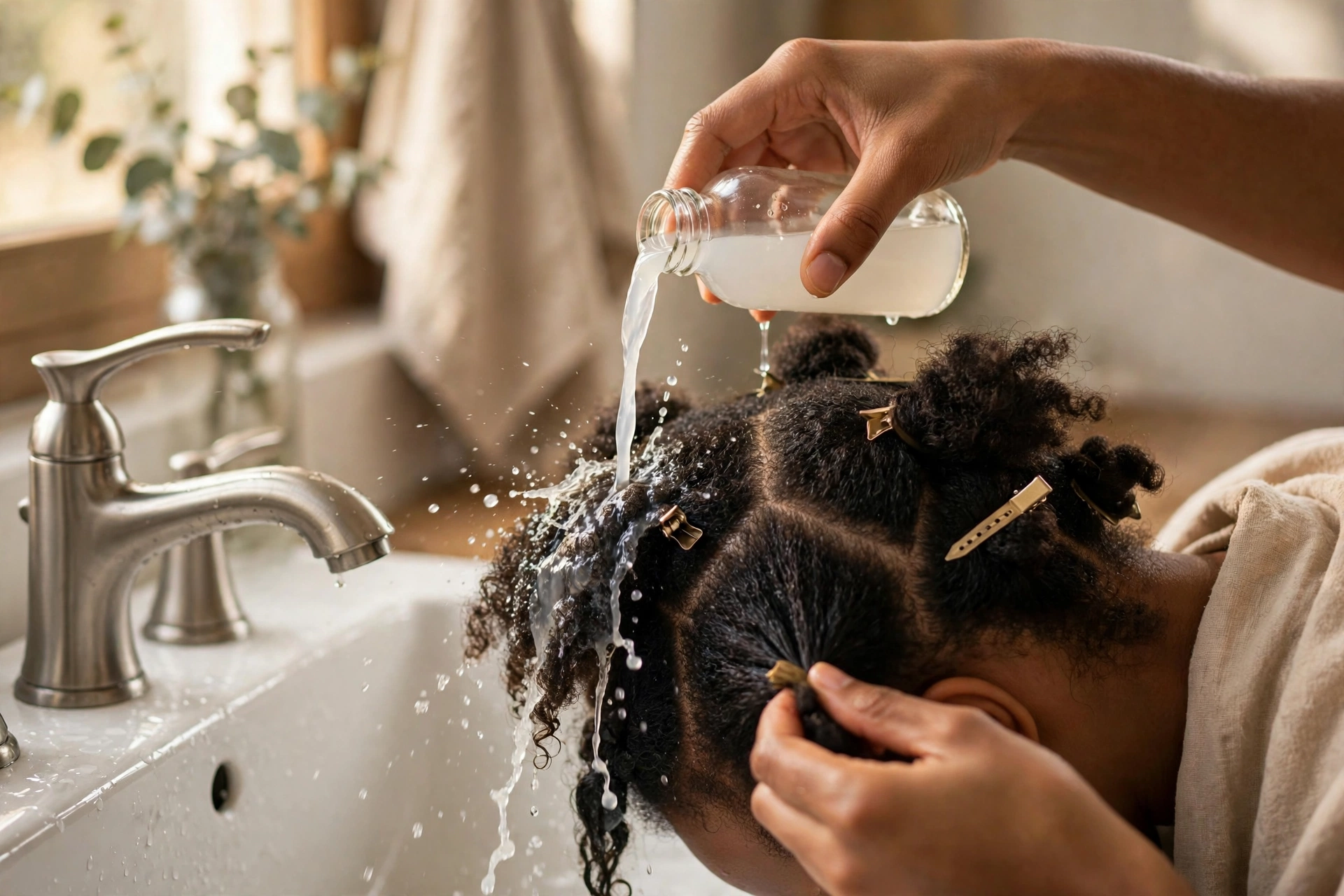
- Apply after shampooing, in sections. Divide damp hair into 4–6 sections. Pour or spray the rice water onto each section from roots to ends, massaging gently. Sectioning is non-negotiable for type 4 hair — pouring it over your head in one go means the under-layers get nothing.
- Leave for 5–10 minutes (up to 20 for very coarse, high-porosity hair), then rinse thoroughly with lukewarm water.
- Follow with conditioner or a light deep condition. Rice water is a protein-leaning treatment; always follow it with moisture to keep the balance.
Rice Water by Hair Type: Porosity Matters More Than Curl Pattern
Most articles give one-size-fits-all instructions. For natural hair, your porosity should decide how you use rice water:
- Low porosity: your cuticle is tight and resists absorption. Use the plain soak method only, dilute it, apply to damp (not soaking) hair, and limit use to once every 2–3 weeks. If your hair feels coated or stiff afterward, rice water may simply not be for you — a lighter option like our flaxseed gel recipe for low porosity hair usually works better. Not sure where you stand? Take our hair porosity test first.
- High porosity: your cuticle is raised and loses moisture fast. You can use fermented rice water weekly; your hair will likely drink it up. Still follow with a moisturizing conditioner.
- Fine strands: go light regardless of porosity — diluted plain soak, short leave-on time. Fine hair shows protein overload fastest.
- Protein-sensitive hair: if your hair has ever gone stiff and straw-like after protein treatments, skip rice water or use it very rarely and very diluted. Read our guide to the best protein treatments for natural hair to understand where your hair sits on the protein-moisture spectrum.
Protein Overload: The #1 Rice Water Risk (and How to Fix It)
The most common rice water complaint is hair that feels dry, stiff, straw-like, and snaps more easily than before — classic protein overload. It happens because rice water adds protein-like material without moisture, and fermented versions are the worst offenders. Healthline’s rice water for 4C hair piece flags the same risk specifically for coily hair.
Warning signs: hair feels rough or coated when dry, loses its stretch (snaps instead of stretching), looks dull, tangles more, and feels worse after each treatment rather than better.
The fix:
- Stop all protein — no rice water, no protein treatments — for 2–4 weeks.
- Clarify once with a sulfate or chelating shampoo to remove buildup.
- Deep-condition with a moisture-rich (protein-free) conditioner, ideally with gentle heat, once a week until elasticity returns.
- Reintroduce rice water only if you want to — diluted, infrequent, and always followed by moisture.
Prevention beats cure: once a week is the maximum for most natural hair, and once every 2–3 weeks is safer for fine or low-porosity strands.
Fermentation Safety and Storage: Don’t Skip This
Fermented rice water is a live, unpreserved product. Treat it like food:
- Clean everything. Wash the jar, lid, and spray bottle with hot soapy water before each batch. Bacteria love starch.
- The smell test is your safety check. Mildly sour/tangy = good. Strongly rotten, putrid, or foul = throw it out, no exceptions.
- Refrigerate after fermenting and use within 5–7 days. At room temperature, a finished batch spoils within a day or two.
- Never use it on broken, irritated, or infected scalp skin. Fermented products on compromised skin can cause irritation or infection.
- Patch test first: apply a little to your inner arm, wait 24 hours, and check for redness or itching before a full application — especially if your scalp is sensitive.
Common Mistakes to Avoid
- Using it daily. More is not better — daily use is the fastest route to protein overload and stiffness.
- Leaving undiluted fermented rice water in as a leave-in. It is a rinse-out treatment. As a leave-in it dries stiff and attracts buildup.
- Skipping the conditioner afterward. Rice water leans protein; hair needs the moisture step after to stay balanced.
- Expecting growth. Judge rice water on breakage, frizz, and manageability after 6–8 weeks — not on growth rate.
- Applying one big pour over unsectioned type 4 hair. The outer layers get everything; the inner layers get nothing. Section always.
- Using spoiled batches. If it smells rotten or has been in the fridge over a week, dump it. A fresh batch costs pennies.
Frequently Asked Questions
Does rice water actually grow hair faster?
No. No clinical evidence supports faster growth. It reduces breakage and frizz, which helps you retain length — that is the honest mechanism.
Is fermented rice water better than plain?
For frizz control and cuticle smoothing, yes — fermentation lowers the pH, which helps the cuticle lie flat. But fermented is also stronger-smelling, spoils faster, and carries a higher protein-overload risk. Start plain; upgrade only if your hair asks for more.
Can I use rice water on low porosity hair?
Cautiously. Use the plain soak method, diluted, once every 2–3 weeks, on damp hair. If hair feels coated or stiff, stop — low-porosity hair often does better with lighter treatments.
Can I leave rice water in my hair overnight?
We don’t recommend it. Extended contact increases protein-overload and scalp-buildup risk with no proven extra benefit. Five to twenty minutes as a rinse is the sweet spot.
Will rice water change my hair color or lighten it?
No evidence suggests it lightens or alters color. Hair may look shinier (which can read as “brighter”), but that washes out. It is generally considered safe for color-treated hair, though as with anything new, strand-test first.
How do I get rid of the sour smell?
Add a few drops of a skin-safe essential oil (like lavender or rosemary, diluted in a carrier) to the batch, rinse thoroughly after the treatment, and follow with a fragranced conditioner. Never mask a truly rotten smell — that batch is spoiled, not smelly.
Can I use rice water on my scalp if I have dandruff?
Rice water is not a dandruff treatment and fermented water on an irritated scalp can make things worse. Keep it on the lengths if your scalp is flaky, and use a proper anti-dandruff approach for the flakes.
How long before I see results?
Give it 6–8 weeks of consistent (not daily) use and judge by breakage, frizz, and detangling ease — not by measuring growth. Take a photo on day one; memory is unreliable.
The Bottom Line
Rice water is not a growth miracle — it’s a cheap, traditional smoothing rinse with modest, real benefits for breakage-prone natural hair. Used correctly (diluted, in sections, followed by moisture, and never daily), it can mean easier detangling, less frizz, and better length retention over time. Used carelessly, it means stiff, straw-like protein overload. Start with the plain soak, respect your porosity, and let your hair — not the hype — decide whether it earns a place in your routine. For more honest, hype-free natural hair care, explore the rest of PickHonestly.
Disclaimer: This article is for informational purposes only and is not medical advice. Rice water has not been evaluated in clinical trials for hair growth. If you have a scalp condition, significant hair loss, or concerns about hair thinning, consult a board-certified dermatologist.