How to Take Care of Your Hair: A Complete, Evidence-Based Guide
What Healthy Hair Actually Looks Like
Healthy hair isn’t about shine alone. It bends without snapping, holds moisture without feeling greasy within hours, and doesn’t leave a trail of broken strands on your pillow or hairbrush. If you’re seeing a lot of short, bulb-less strands rather than full-length ones with a small white root attached, that’s breakage, not normal shedding, and it’s worth treating differently.
Matching Your Routine to Your Hair Type
Straight, wavy, curly, and coily hair don’t behave the same way, and a routine built for one often works against another. Straight hair gets oily faster since scalp oil travels down the shaft easily. Coily hair holds onto moisture the least, since the same oil struggles to travel down a tightly curled strand.
Hair Type Comparison
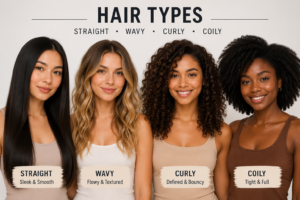
| Hair Type | Typical Wash Frequency | Biggest Need | Common Issue |
|---|---|---|---|
| Straight | Every 1-2 days | Lightweight, oil-control products | Getting oily fast |
| Wavy | Every 2-3 days | Balanced moisture, light hold | Frizz, undefined waves |
| Curly | Every 3-5 days | Deep moisture, gentle cleansing | Dryness, shrinkage |
| Coily / 4C | Every 5-7 days | Heavy moisture and sealing | Breakage, dryness |
Don’t Forget Your Scalp Type
Hair type and scalp type aren’t always the same thing. You can have curly hair with an oily scalp, or straight hair with a dry, flaky one. Treat the scalp based on how it actually behaves, not based on assumptions from your strand texture alone.
How Often You Should Actually Wash Your Hair
There’s no single universal answer here, despite how often “wash every other day” gets repeated as a rule. Washing frequency should follow your hair type, scalp oil production, and activity level, not a fixed number everyone follows regardless of their actual hair.
Signs You’re Overwashing or Underwashing
Hair that feels stripped, dry, and static-prone shortly after washing usually means you’re washing too often for your hair type. Hair that looks flat, feels heavy, or smells slightly off by day two or three is usually a sign you’re stretching washes further than your scalp can comfortably handle.
Conditioning the Right Way
A lot of people condition purely out of habit, without actually understanding what each type of conditioner is doing. Rinse-out conditioner smooths the outer cuticle layer for a few minutes before washing out. Leave-in conditioner stays in longer, offering ongoing moisture and detangling help throughout the day. A weekly deep conditioner penetrates further, restoring elasticity that daily products can’t reach on their own.
Deep Conditioning Isn’t Optional for Drier Hair Types
For curly and coily hair specifically, skipping deep conditioning entirely tends to show up fast, as increased breakage and dullness. Once a week is a reasonable baseline, adjusted up or down based on how dry your specific hair runs.
Detangling and Brushing Without Snapping Strands
Detangling dry, especially with a fine-tooth comb, causes more breakage than almost any other single habit. Adding slip first, through conditioner, a detangling spray, or even just water, makes a measurable difference in how much hair actually survives the process. Curlier and coilier hair types benefit specifically from detangling with fingers or a wide-tooth comb, starting from the ends and working upward rather than dragging a comb straight down from the root. We covered this in more depth in our piece on what actually causes 4C hair breakage, including the research behind why tightly coiled hair breaks more easily under tension in the first place.
Heat Styling and Chemical Treatments: Damage Control
Heat weakens the internal protein bonds inside each strand, and that damage doesn’t reverse once it happens. A heat protectant genuinely helps reduce this, but it doesn’t eliminate the risk entirely, especially with frequent use.
Recovering After a Keratin or Chemical Treatment
Chemical processes, relaxers, keratin treatments, and color, all add stress to hair that needs a different kind of aftercare than untreated hair. Our guide on keratin treatment aftercare covers the specific first-72-hour window that determines how well a treatment actually holds, along with which products to avoid afterward.
Hard Water: The Hidden Cause Nobody Talks About
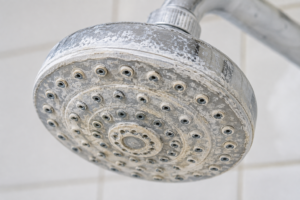
This is one of the most overlooked causes of “why does my hair feel dry no matter what I use.” A study published through the National Institutes of Health directly compared hair treated in hard water against hair treated in distilled water over 30 days, and found measurably reduced tensile strength and elasticity in the hard water group.
How to Tell If You Have Hard Water
Shampoo that barely lathers, white mineral buildup around your faucet or showerhead, and hair that feels coated or dull no matter what product you switch to are all common signs. Dermatologists interviewed by USA Today confirm hard water leaves a mineral residue on the hair shaft that blocks moisture from actually penetrating, which explains why switching shampoos alone often doesn’t fix the underlying dryness.
Fixing It Without Replacing Your Plumbing
A chelating or clarifying shampoo used every couple of weeks helps strip mineral buildup without needing a whole-house water softener. A simple shower filter attachment is a smaller, cheaper option worth trying first if hard water is suspected but not confirmed.
Protecting Hair While You Sleep and Outdoors
A cotton pillowcase creates friction against hair overnight, which adds up over months into tangles and breakage. Switching to satin or silk reduces that friction significantly, a small change with a genuinely noticeable payoff over time. Sun exposure, chlorine, and salt water all pull moisture out of hair too, so rinsing with clean water before and after swimming meaningfully limits how much gets absorbed into the strand.
What the Research Actually Says About Diet and Hair
This is where a lot of hair care content gets genuinely misleading, so it’s worth being straight about it. Biotin gets marketed constantly as a hair growth miracle, but the actual evidence tells a more complicated story.
Where Biotin Hype Outpaces the Evidence
A review published in the Journal of Clinical and Aesthetic Dermatology found that true biotin deficiency is rare in industrialized countries, since a normal diet already exceeds the daily requirement. The highest-quality study reviewed, double-blind and placebo-controlled, found no actual difference between biotin and a placebo for hair growth in people without a deficiency.
Nutrients With Real Support Behind Them
According to the International Society of Hair Restoration Surgery, the supplements with genuine evidence behind them are vitamin D, iron, and vitamin C, the last mainly for improving how well the body absorbs iron. A varied diet covering lean protein, iron-rich foods, and healthy fats does more for hair health long-term than a biotin supplement taken on faith.
Adjusting Your Hair Care Routine by Season
Dry winter air pulls moisture out of hair faster, especially with indoor heating running constantly. Humid summers push in the opposite direction, adding frizz and puffiness even to hair that behaves well the rest of the year. A lightweight leave-in during winter and a stronger anti-frizz or anti-humidity product during summer keeps a routine from working against the season instead of with it.
Common Hair Care Mistakes to Avoid
- Following a generic washing schedule that doesn’t actually match your hair type or scalp behavior.
- Assuming a dry, dull feeling always means you need a new product, when hard water or over-washing is often the real cause.
- Relying on a biotin supplement as a fix-all without addressing detangling habits, heat exposure, or diet as a whole.
When to See a Dermatologist Instead of DIY-ing It
Sudden, significant hair loss, visible scalp patches, persistent itching or flaking that doesn’t respond to a normal routine, or hair loss following a major illness or medication change are all worth a real appointment rather than another product swap. A dermatologist can rule out conditions a home routine simply can’t fix on its own.
A Sample Weekly Hair Care Routine
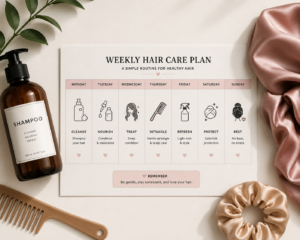
| Day | What to Do |
|---|---|
| Day 1 | Wash and condition, deep condition if it’s your designated day |
| Day 2-3 | Refresh with a light moisturizer or leave-in as needed |
| Day 4 | Protective style or gentle detangle if needed |
| Day 5-6 | Seal ends, silk pillowcase every night regardless of routine day |
| Day 7 | Assess: trim check, scalp check, plan next wash day |
Adjust the actual days based on your specific hair type from the comparison table earlier, this is a starting template, not a fixed rule.
Frequently Asked Questions
How often should I actually wash my hair?
It depends on your hair type and scalp oil production, ranging from every 1-2 days for straight hair to once a week for coily hair. Match frequency to how your hair actually behaves, not a fixed universal rule.
Does hard water really damage hair?
Yes, research measuring tensile strength found hair treated in hard water was measurably weaker than hair treated in soft or distilled water over time.
Is biotin actually necessary for healthy hair?
For most people without a true deficiency, no. Current evidence doesn’t support biotin supplements improving hair growth in people who already get enough through diet.
What’s the difference between hair type and scalp type?
Hair type refers to your strand’s texture and curl pattern. Scalp type refers to oil production and can be oily, dry, or balanced independent of your hair’s texture.
When should I see a dermatologist about my hair instead of adjusting my routine?
If you notice sudden hair loss, visible scalp patches, or persistent flaking that a normal routine doesn’t fix, it’s worth a professional appointment rather than continuing to guess.
Conclusion
Learning how to take care of your hair really comes down to matching your routine to what your specific hair actually needs, not following generic advice built for someone else’s hair type entirely. Address the real causes, hard water, over-washing, rough detangling, chemical or heat damage, and most hair genuinely improves within a few consistent weeks.