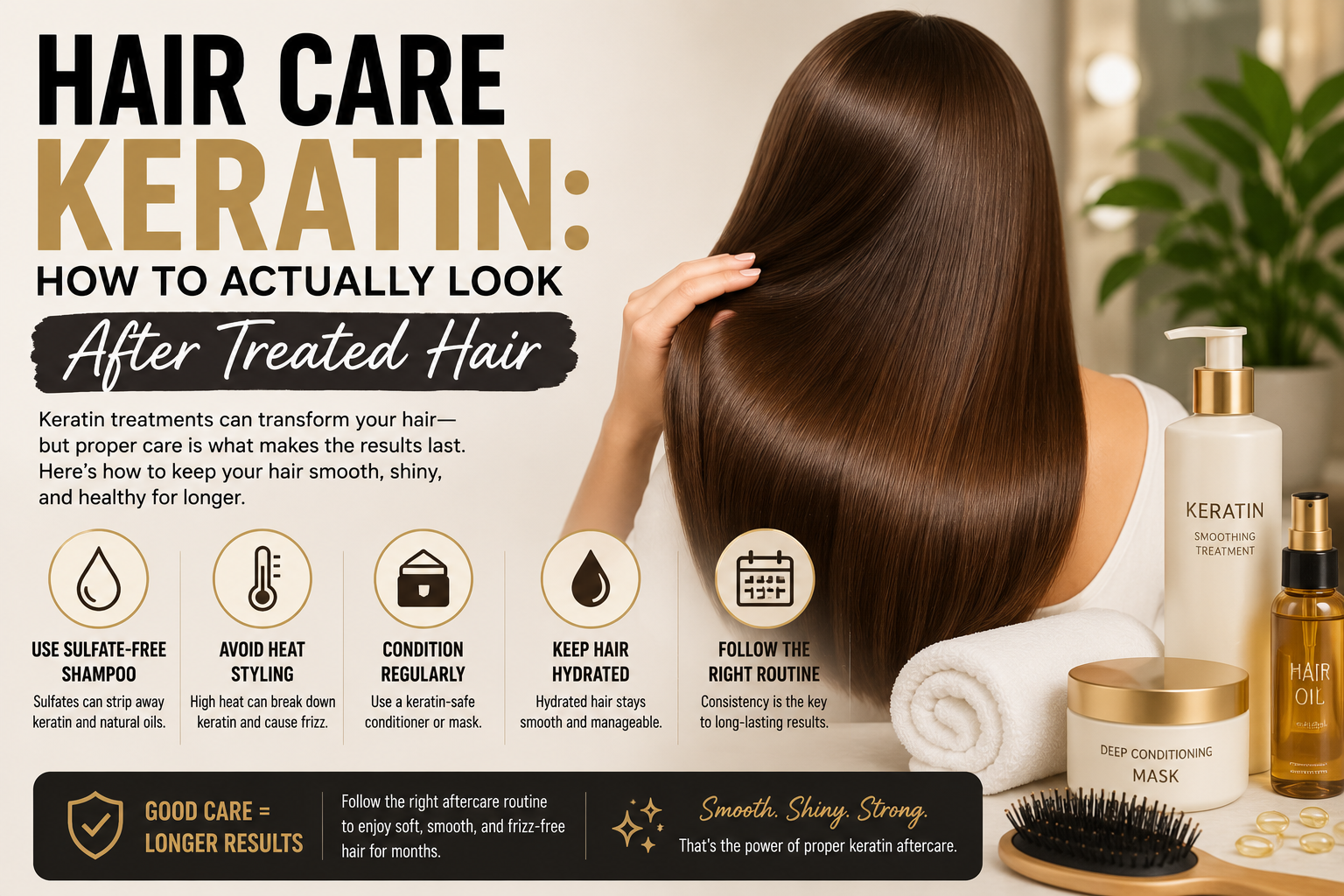
Hair Care Keratin: How to Actually Look After Treated Hair
What Keratin Treatment Actually Does to Your Hair
Keratin’s a protein your hair is already made of. Treatments add extra keratin back onto the hair shaft, smoothing the outer layer down so it lies flatter and reflects more light. That’s the shine everyone talks about.
Cleveland Clinic’s Dr. Alok Vij explains it plainly: your body naturally loses keratin as it ages, and treatments are essentially replacing what’s already breaking down. Not adding something foreign, just topping up what’s already there.
Why the Effect Fades After a Few Months
It’s not permanent, and it was never supposed to be. Washing, heat, sun, and just normal wear gradually strip the added layer back off. Most people get somewhere between two and six months before a touch-up makes sense, depending on hair type and how it’s treated day to day.
Who This Actually Works Best For
Frizzy, coarse, or curly hair usually sees the biggest change. Fine, already-smooth hair notices less of a difference, and sometimes ends up looking a bit flat instead. Worth knowing before you book anything, honestly.
The First 72 Hours Matter More Than People Think
This is the part I got wrong the first time. Most stylists recommend waiting at least three days before the first wash. GK Hair’s aftercare guide lays this out clearly, and it’s not a random rule, that window is how long the protein needs to properly bond to the hair.
What to Skip During That Window
No clips, no tight ties, no tucking hair behind ears for hours at a time. Any crease that forms in those first three days can genuinely set into the hair. Sweating heavily counts too, so maybe skip the gym for a couple of days if you can.
What to Have Ready Before You Even Leave the Salon
A dry shampoo for those three days helps a lot, since you’ll want to avoid water but might still want your roots looking less oily. A basic dry shampoo from Amazon.ca does the job fine here, nothing fancy needed.
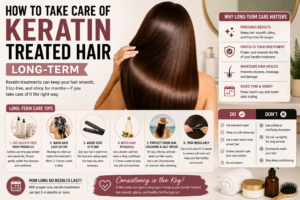
How to Take Care of Keratin Treated Hair Long-Term
Once you’re past the first wash, the real routine starts. Sulfates are the biggest threat long-term, full stop. All Things Hair’s maintenance guide makes the same point pretty bluntly: sulfate shampoo will wash your treatment down the drain, slowly but surely.
Building a Washing Routine That Actually Protects It
Two to three washes a week is the general target, down from daily if that’s your normal habit. Every wash strips a little bit of the treatment, so fewer washes genuinely stretches things out. A sulfate-free shampoo set on Amazon.ca is worth having on hand specifically for this.
Heat Styling Without Undoing the Work
Heat isn’t the enemy here, it’s actually part of how keratin seals in the first place. The issue is overdoing it once the treatment’s already set. Keep the flat iron on a moderate setting, and don’t go over the same section repeatedly out of habit.
Canada-Specific Challenges Worth Knowing
Dry winter air pulls moisture straight out of treated hair, faster than people expect. That leaves it looking flat and a bit lifeless by February, even with a decent routine. A lightweight leave-in conditioner helps counter this without weighing hair down.
Winter Static and Dryness
Indoor heating makes this worse, not better. If your hair’s suddenly staticky and frizzy despite a proper keratin routine, dry indoor air during a Canadian winter is very likely the actual cause, not a failed treatment.
Humid Summers Working Against You
Come July and August, humidity does the opposite problem, puffing hair back up if it’s not protected. A silk pillowcase and an anti-frizz serum both help here, and a silk pillowcase from Amazon.ca pulls double duty by also reducing friction damage overnight.
Common Mistakes People Make With Keratin Treated Hair
- Washing too soon, before the three-day window is up. This alone undoes a huge chunk of the treatment’s benefit.
- Grabbing whatever shampoo’s already in the shower instead of checking for sulfates first.
- Assuming natural hair care rules apply the same way. They don’t always. If you’re working with textured or curly natural hair specifically, our guide on natural hair care covers a slightly different set of priorities worth knowing before combining routines.
If You’re Comparing Product Lines First
Before committing to a full keratin routine, it’s worth browsing what’s already working for other hair types. We’ve reviewed a few Korean hair care products that overlap surprisingly well with post-keratin care, mostly around gentle, low-sulfate formulas. And if natural hair is the actual starting point rather than a chemical treatment, our breakdown of hair care products for natural hair is the better first stop.
Quick Questions People Ask
How do you care for hair after a keratin treatment?
Wait at least 72 hours before the first wash, avoid tying it up or sweating heavily during that window, then switch to sulfate-free products going forward.
How long should you wait to wash keratin treated hair?
Three days minimum in most cases, though some express treatments allow washing sooner. Always check with whoever did the treatment, since formulas vary.
What shampoo should you use on keratin treated hair?
Anything labeled sulfate-free and sodium chloride-free. Regular shampoo will strip the treatment out faster than normal wear would on its own.
Can you take care of keratin treated hair without special products?
Not really, not for long. Regular shampoo contains sulfates that actively break down the treatment, so at minimum, a sulfate-free swap is worth the switch.
Does Canadian winter weather affect keratin treated hair?
Yes, dry indoor heating tends to pull moisture out faster. A lightweight leave-in product helps offset that during the colder months specifically.
Bottom Line on Hair Care Keratin Routines
Keratin treatments hold up fine, longer than people expect, as long as the first three days are respected and sulfates stay out of the shower routine after that. Skip those two things, and no amount of good luck saves the treatment.