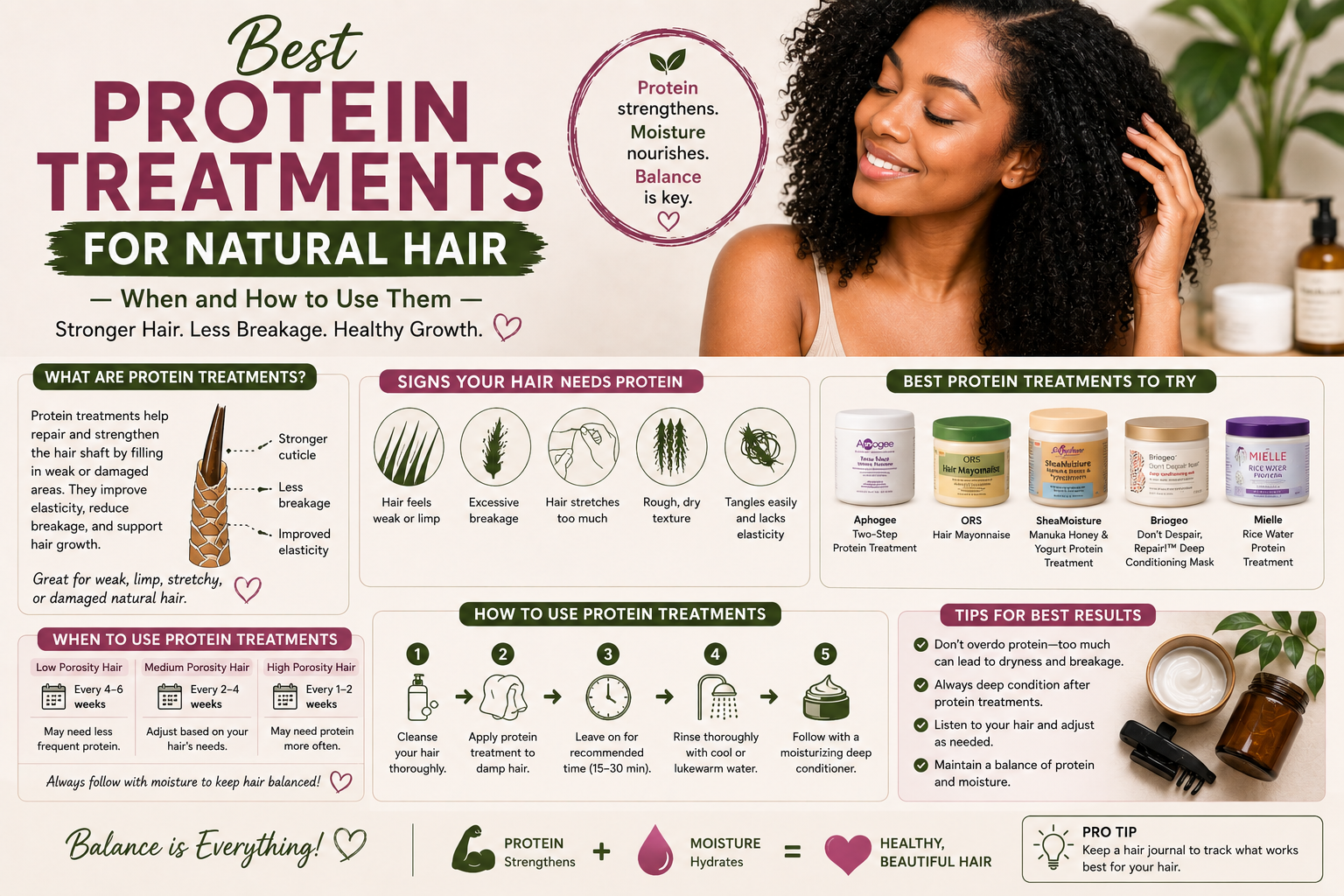
Best Protein Treatments for Natural Hair — When and How to Use Them
Protein treatments are one of the most misunderstood parts of natural hair care. People add more moisture when their hair is breaking and wonder why it keeps breaking. Or they use protein treatments every week and end up with hair that snaps even more than before. Both are protein problems — just different ones.
Getting protein right changed my natural hair more than any other single product change I’ve made. Here’s what actually works and how to know when you need it.
Does Your Natural Hair Need Protein?
Before reaching for a protein treatment, you need to know whether your hair actually needs protein or moisture — because the symptoms can look similar, and using the wrong one makes things worse.
Your natural hair needs protein if:
- It breaks when you stretch a strand — not at the end, but somewhere in the middle
- It feels mushy or gummy when wet
- It has no elasticity — stretched strands don’t spring back, they just break
- It has been colored, bleached, heat damaged, or chemically processed
- It feels limp and weak even after deep conditioning
Your natural hair needs moisture, not protein, if:
- It feels dry and brittle
- It snaps at the ends when detangling
- It feels rough and straw-like
- It shrinks a lot but the strands themselves feel intact
The stretch test is the most reliable way to tell: take a wet strand and stretch it gently. Healthy hair stretches about 30% before snapping and springs back. Hair that needs moisture stretches very little and snaps immediately. Hair that needs protein stretches excessively — it feels almost elastic and mushy — before breaking.
Best Protein Treatments for Natural Hair
1. ApHogee Two-Step Protein Treatment — Best for Severely Damaged Natural Hair
Best for: Severely damaged, over-processed, or chemically treated natural hair
ApHogee Two-Step is the strongest protein treatment widely available for natural hair — and it works differently from every other option on this list. After applying it and sitting under a dryer, it hardens on the hair. Completely. Your hair will feel like straw when it dries, which is alarming the first time you experience it. That’s normal. The hardening is the protein bonding with the damaged parts of the hair shaft.
After rinsing, you apply the balancing moisturizer that comes with it, which softens everything back to normal — but now with a rebuilt protein structure underneath. The results on severely damaged natural hair are significant and last four to six weeks per treatment.
This is not a treatment for every wash day. Use it once every four to six weeks maximum, and always follow with a moisture deep conditioner the next wash day. Used too often, it causes the brittle breakage that protein overload produces.
- ✅ Most effective protein treatment for severe damage
- ✅ Results last four to six weeks
- ✅ Works across all natural hair types
- ❌ Hair hardens significantly during treatment — alarming if you don’t expect it
- ❌ Requires heat (hooded dryer) to work properly
- ❌ Too strong for monthly use — maximum every four to six weeks
Price: $18–$25
2. SheaMoisture Manuka Honey & Yogurt Hydrate + Repair Protein Power Treatment — Best Gentle Protein Treatment
Best for: Natural hair that needs protein support without aggressive treatment
Not all protein treatments need to be intense. This SheaMoisture option uses yogurt as its protein source — a gentler, more natural form of protein that strengthens hair without the dramatic hardening of stronger treatments. It balances protein and moisture together, which reduces the risk of over-proteinizing.
It works well as a monthly treatment for natural hair that’s somewhat weak or recovering from mild damage — color, heat styling, or just the accumulated stress of regular manipulation. Apply it to damp hair after shampooing, leave for 20-30 minutes, rinse, then deep condition as normal.
- ✅ Gentler protein source — lower risk of protein overload
- ✅ Balances protein and moisture in one step
- ✅ Good for mild damage and preventive protein maintenance
- ✅ Works well on 3C through 4C hair
- ❌ Not strong enough for severely damaged or over-processed hair
- ❌ Results less dramatic than stronger treatments
Price: $14–$18
3. TGIN Miracle RepaiRx Curl Protein Reconstructor — Best Protein Leave-In
Best for: Ongoing protein maintenance between stronger treatments
Most protein treatments are rinse-out products. TGIN’s reconstructor is a leave-in, which makes it useful in a different way — you can use it on wash days when your hair needs protein support without committing to a full 30-minute treatment session.
Apply it to damp hair after washing instead of your regular leave-in. It strengthens fragile natural hair over multiple uses and works especially well for hair that breaks easily during detangling. Use it every other wash day if your hair is consistently weak, or alternate it with a moisture leave-in to maintain protein-moisture balance.
- ✅ Leave-in format — easier to incorporate into regular routine
- ✅ Good for ongoing maintenance between stronger treatments
- ✅ Reduces breakage during detangling with consistent use
- ❌ Not strong enough for severely damaged hair
- ❌ Can cause protein overload if used every wash day without alternating with moisture
Price: $12–$16
4. Briogeo Don’t Despair, Repair! Deep Conditioning Mask — Best for Color-Treated Natural Hair
Best for: Color-treated or bleached natural hair that needs both protein and moisture
Bleached and color-treated natural hair loses both moisture and protein faster than unprocessed hair. Most protein treatments address one or the other. Briogeo’s repair mask does both — it uses B vitamins and rosehip oil alongside protein to address the full range of damage that chemical processing causes.
It’s more expensive than the others, but the results on color-treated natural hair are consistently better than cheaper alternatives. Use it weekly for the first month after coloring, then every two weeks once hair has recovered. Always follow with a moisture-focused product to prevent the stiffness that protein alone can cause.
- ✅ Addresses both protein and moisture loss from color processing
- ✅ Noticeably improved elasticity and strength with consistent use
- ✅ Works across 3A through 4C hair types
- ❌ Expensive compared to other options
- ❌ Overkill for unprocessed hair that doesn’t need intensive repair
Price: $36–$42
How to Use Protein Treatments on Natural Hair
- Shampoo first. Protein treatments work best on clean hair — product buildup on the hair shaft prevents protein from bonding properly. Use a sulfate-free shampoo before every protein treatment. See our sulfate-free shampoo guide for options.
- Apply to damp hair in sections. Divide hair into four to eight sections. Apply protein treatment generously from roots to ends in each section.
- Add heat if the treatment requires it. Stronger treatments like ApHogee need heat to work. Lighter treatments benefit from heat but don’t require it.
- Follow timing instructions. Don’t leave protein treatments on longer than recommended — unlike deep conditioners, more time doesn’t mean better results with protein. It can mean overload.
- Always follow with moisture. After every protein treatment, deep condition with a moisture-focused formula. Protein without moisture makes hair stiff and brittle. The two work together — not separately.
How Often Should You Use Protein Treatments on Natural Hair?
Frequency depends on how damaged or protein-deficient your hair is:
- Severely damaged hair (bleached, over-processed): Every four to six weeks with a strong treatment like ApHogee, alternated with moisture deep conditioning every other wash day
- Mildly damaged or color-treated hair: Once a month with a gentler treatment like SheaMoisture Manuka Honey
- Healthy natural hair with no damage: Every six to eight weeks as preventive maintenance — healthy hair still benefits from occasional protein support
The pattern to avoid: using protein every wash day without balancing with moisture. That’s how protein overload happens — hair becomes stiff, brittle, and breaks more than it did before you started.
What Is Protein Overload and How Do You Fix It?
Protein overload happens when natural hair has more protein than it can use — usually from using protein treatments too frequently or layering multiple protein-heavy products without moisture in between.
Signs of protein overload:
- Hair feels hard and straw-like even when wet
- Hair snaps immediately when stretched — no elasticity at all
- Hair feels rough and tangles easily
- Products don’t seem to absorb or help
How to fix it:
- Stop all protein products immediately — including protein-containing leave-ins and styling products
- Deep condition with a moisture-only formula every wash day for two to four weeks
- Use the LOC method consistently to rebuild moisture levels
- When reintroducing protein, do so slowly — once a month maximum, with moisture deep conditioning the following wash day
Our full guide on how to moisturize natural hair covers rebuilding moisture levels in detail.
Frequently Asked Questions
How do I know if my natural hair needs protein or moisture?
Do the wet stretch test: take a wet strand and gently stretch it. If it breaks immediately with very little stretch — moisture. If it stretches excessively and feels mushy or gummy before breaking — protein. If it stretches about 30% and springs back — balanced, no treatment needed right now. Hair that’s been colored, bleached, or heat-damaged almost always needs protein alongside moisture.
Can I do a protein treatment and deep condition on the same day?
Yes — and you should. Always follow a protein treatment with a moisture deep conditioner on the same wash day. The protein strengthens the hair structure; the moisture keeps it flexible. Doing both on the same day is the correct approach, not excessive. Apply the protein treatment first, rinse, then apply your moisture deep conditioner, rinse.
How long should I leave a protein treatment on natural hair?
Follow the product’s instructions — protein treatments are not like deep conditioners where more time generally means better results. Leaving a protein treatment on longer than directed can cause overload. Most light treatments: 15-30 minutes. ApHogee Two-Step: until fully dry under a dryer, which typically takes 20-45 minutes depending on hair thickness.
Do natural hair protein treatments work for 4C hair?
Yes — 4C hair responds well to protein treatments, especially hair that breaks easily during detangling or has been chemically processed. The same rules apply: identify whether the problem is protein or moisture first, use the right treatment for the level of damage, always follow with moisture, and don’t overdo frequency. Our 4C hair guide covers protein balance in the context of the full routine.
Final Thoughts
Protein treatments work — when you use them for the right reason, at the right frequency, and always paired with moisture. Most natural hair breakage problems have a protein component, but most people reach for more moisture before checking whether protein is actually the issue.
Do the stretch test. Identify what your hair actually needs. Use the appropriate treatment and always follow with deep conditioning. Give it four to six weeks of consistent, balanced protein-moisture routine before evaluating the results.
More from PickHonestly on natural hair care:
- How to Detangle Natural Hair Without Breakage
- Best Deep Conditioners for Natural Hair
- Best Leave-In Conditioners for Natural Hair
- How to Moisturize Natural Hair — Complete Guide
- Natural Hair Care Routine for Beginners
Prices accurate as of publication. Verify current pricing before purchasing.