Best Hair Gel for Natural Hair: 8 Honest Picks That Define Without Flakes (2026)
 Maya Thompson
📅 September 28, 2026
⏱ 17 min read
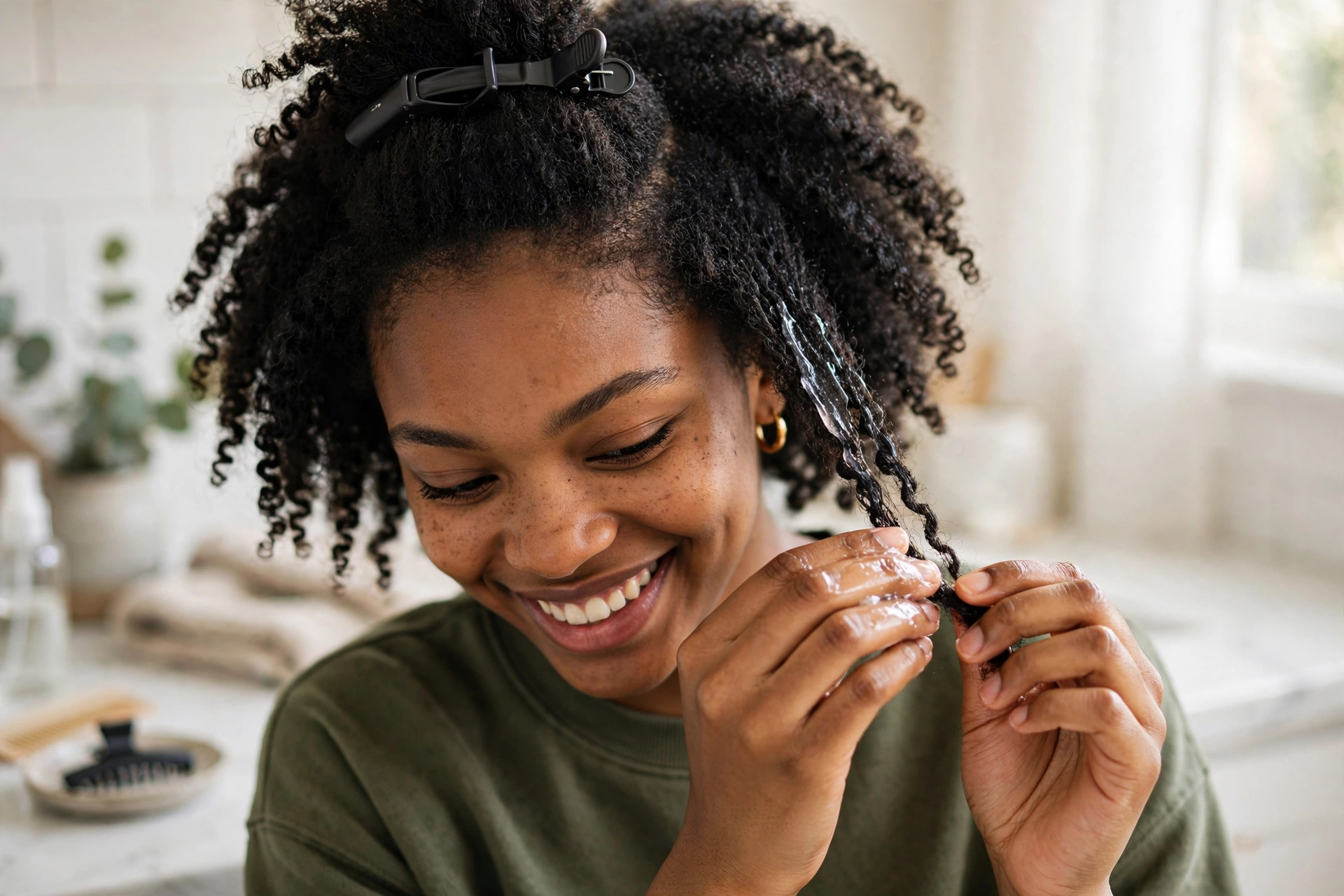
Finding the best hair gel for natural hair is one of those deceptively simple shopping trips that ends in a bathroom cabinet full of half-used jars. One gel leaves your coils defined and soft; the next leaves white flakes that look like dandruff by lunchtime; a third one holds fine for two hours and then surrenders to humidity.
After analyzing the top-ranking gel roundups and hundreds of reviews from people with Type 3C to 4C hair, a clear pattern emerged: most gel guides just list products and stop there. They don’t explain why gels flake, what hold-level you actually need for your style, or what gels honestly can’t do. This guide fills those gaps — 8 research-based picks, the science of gel hold in plain English, a step-by-step application method, and a flaking diagnosis you can use forever.
A word on how this list was made: We did not run lab tests or pretend to have a team of testers. These picks are based on ingredient analysis, brand claims checked against formulation evidence, and consistent patterns in reviews from people with natural hair — plus what each product can’t do, because no gel is magic.
How Hair Gel Actually Works (and What It Can’t Do)
Before spending money, it helps to understand what you’re actually buying. A hair gel is mostly water plus film-forming polymers (commonly PVP, PVP/VA copolymer, or carbomer). When the gel dries, these polymers form a thin, flexible film around each strand — the “cast” that makes hair feel stiff at first. Scrunching the cast out once fully dry (“scrunch out the crunch”) leaves defined, separated coils behind the film.
That mechanism explains everything gels are good at — and their limits:
- Gel does not moisturize your hair. Water evaporates; the polymer film is not a moisturizer. Gels with glycerin, aloe, or marshmallow root feel more conditioning, but they still can’t replace a leave-in conditioner. Dryness under gel is a routine problem, not necessarily a gel problem.
- Gel does not create curls. It reveals and holds the curl pattern you already have. If a wash-and-go dries into a fro with no definition, no gel will manufacture clumps — that’s a technique issue (usually too little water or product applied in too-large sections).
- Gel does not grow hair. No styler speeds up growth. What gel can do is reduce daily manipulation and breakage, which helps you retain length — a very different claim. For the honest story on growth vs retention, see our guide to growing natural hair faster.
- Gel does not permanently straighten or loosen curls. And water-based gels on silk-pressed hair can cause reversion — the hair returning to its natural texture as moisture reaches it. If your hair is straightened, traditional gels are usually the wrong tool; that’s one place where edge controls and wax sticks earn their place.
The 8 Best Hair Gels for Natural Hair
Here’s the quick comparison, then the detail on each pick. Hold is rated from light (soft, touchable) to extreme (immovable slick styles).
| Gel | Best For | Hold | Finish | Moisture Level |
|---|---|---|---|---|
| The Doux Big Poppa Defining Gel | Wash-and-go definition | Medium-strong | Soft, touchable | Medium |
| Camille Rose Curl Maker | Lightweight wash-and-gos | Light-medium | Soft, bouncy | High |
| Kinky-Curly Curling Custard | Curl clumping, frizz control | Medium | Soft, defined | High |
| Wetline Xtreme Professional Styling Gel | Firm hold, sleek styles | Strong | Firm, glossy | Low |
| Eco Style Argan Oil Styling Gel | Budget everyday styling | Medium-strong | Glossy | Medium |
| Aunt Jackie’s Don’t Shrink Flaxseed Elongating Gel | Shrinkage control | Medium | Soft, stretched | Medium |
| SheaMoisture JBCO Strong Hold Gel | Sleek ponytails and buns | Strong | Polished, shiny | Medium |
| Eco Slay Jello Shot | Strong-hold botanical gel | Medium-strong | Soft with hold | Medium-high |
1. The Doux Big Poppa Defining Gel — Best Overall for Wash-and-Go Definition
Best for: defined wash-and-gos, braid-outs, frizz control in humidity.
The Doux Big Poppa has become a staple in Type 4 wash-and-go routines for a reason: it balances definition and hold without a punishing cast. The formula includes babassu oil for flexibility, so coils stay defined but touchable, and it’s built to resist humidity — a real weak point for many botanical gels. Reviewers with 4C hair consistently report multi-day definition when it’s applied to soaking-wet, clean hair in small sections.
What it can’t do: It won’t give you the glass-like hold of a firm gel for slicked-back styles — that’s not its job. It also performs best on minimal layering; piling three products underneath it defeats the formula’s design and can cause dullness.
2. Camille Rose Curl Maker — Best Lightweight Gel for Low-Porosity Hair
Best for: low-porosity naturals, soft wash-and-gos, fine-to-medium density.
Built on marshmallow root and agave extract, Curl Maker is one of the few gels that people with low-porosity hair consistently praise — it defines without sitting on top of the hair or weighing coils down. The hold is light-to-medium, so the finish stays bouncy rather than shellacked.
What it can’t do: Dense 4C hair that needs serious hold for multi-day styles will likely find this too light on its own. It pairs well under a stronger gel (test the combo in your palm first — incompatible polymers are the #1 cause of flaking, covered below).
3. Kinky-Curly Curling Custard — Best for Curl Clumping
Best for: wash-and-gos where clumping and frizz control matter more than maximum hold.
A long-running favorite in the natural hair community, this custard-gel hybrid uses botanical extracts and agave nectar to encourage coils to clump together — the mechanism behind a defined wash-and-go. It shrinks less than some gels because the formula is lighter on heavy film-formers.
What it can’t do: It won’t hold a sleek ponytail all day, and it has a learning curve: applying it to hair that isn’t wet enough is the most common reason people report disappointing results with it.
4. Wetline Xtreme Professional Styling Gel — Best Firm-Hold Budget Gel
Best for: slick backs, puffs, edges, styles that need control.
The classic clear gel. Wetline’s alcohol-free formula with aloe vera and panthenol is why it survives on wash-day shelves: it gives firm, reliable hold at a drugstore price without the drying alcohols that made old-school gels notorious. A little genuinely goes a long way.
What it can’t do: It can feel firm or crunchy if over-applied — and on low-porosity hair, too much of a firm gel over a heavy cream is a flaking guarantee. Pair it with a light, water-based leave-in, not a butter. See our leave-in conditioner picks for 4C hair for compatible options.
5. Eco Style Argan Oil Styling Gel — Best Budget Everyday Gel
Best for: versatile everyday styling — wash-and-gos, twists, sleek styles.
Eco Styler is the workhorse gel of natural hair care, and the Argan Oil version is the one reviewers with textured hair recommend most: less drying than the original Olive Oil formula, with reliable hold and definition. For the price, it’s the best value gel on this list.
What it can’t do: It’s not the most refined formula — some users report a slightly tacky feel, and the protein content in some versions can bother protein-sensitive hair. If your hair is protein-sensitive, check the label and read our protein treatment guide to understand your hair’s protein tolerance first.
6. Aunt Jackie’s Don’t Shrink Flaxseed Elongating Gel — Best for Shrinkage Control
Best for: twist-outs, braid-outs, and wash-and-gos where you want a more elongated look.
Shrinkage is normal — but some styles need coils to hang with a bit more stretch. The flaxseed and wheat protein formula is designed for exactly that: bounce and elongation with definition, without the rigidity of a hard gel. It’s a good bridge between a botanical gel and a stronger styler.
What it can’t do: It won’t hold ultra-sleek styles on its own, and like all flaxseed-based products, the protein content means protein-sensitive hair should use it in moderation. Prefer the real thing? Our DIY flaxseed gel recipe costs almost nothing — though homemade gel spoils within a week or two without preservatives, so don’t expect it to replace a store-bought jar.
7. SheaMoisture Jamaican Black Castor Oil Strong Hold Gel — Best for Sleek Styles
Best for: sleek ponytails, buns, flyaway control, polished finishes.
With castor seed oil, shea butter, and linseed oil in the formula, this is a conditioning strong-hold gel — richer than a bare-bones firm gel, which matters for sleek styles on dense 4C hair that resists laying flat. It smooths flyaways and adds shine without parabens, phthalates, or mineral oil.
What it can’t do: The richer ingredient profile means it plays best with a simple routine — layer it over heavy creams and butters and you’re asking for buildup. Also, the fruity scent is noticeable; skip it if you prefer fragrance-free styling.
8. Eco Slay Jello Shot — Best Strong-Hold Botanical Gel
Best for: botanical-gel lovers who need more hold.
Most botanical gels trade hold for softness; Jello Shot is the exception. The okra and aloe base gives stronger hold than typical botanical gels while keeping the soft finish that makes botanicals popular. It’s a strong pick for 4B/4C naturals who want multi-day wash-and-go definition without a crunchy cast.
What it can’t do: It’s a smaller-brand product — availability and price fluctuate more than drugstore staples. And no botanical gel matches a firm polymer gel for slicked, humidity-proof styles; choose your tool for the job.
How to Choose the Right Gel for Your Hair
The top-ranking gel guides mostly say “pick one from the list.” Here’s the decision framework they skip:
Match the gel to the style, not the brand
Wash-and-gos need definition + frizz control (light to medium-strong hold). Sleek ponytails, puffs, and slicked edges need hold + humidity resistance (strong to extreme). Braids, twists, and cornrows need grip and smoothness during installation (a braid gel often outperforms a curl gel here). Most people end up owning two gels — one for definition, one for hold — and that’s normal, not a failure.
Read the ingredient label like a formulator
You don’t need a chemistry degree — look for three things:
- Hold builders: PVP, PVP/VA copolymer, carbomer, acrylates copolymer. These create the cast. More of them = firmer hold.
- Moisture feel: glycerin, aloe vera, panthenol, marshmallow root, honey. These make the gel feel conditioning. Note: humectants like glycerin draw moisture from the air — great in humidity, potentially drying in very dry winter air.
- Red flags for daily use: drying alcohols (isopropyl alcohol, denatured alcohol — not the fatty alcohols like cetyl alcohol, which are conditioning). Modern gels mostly avoid these, but always check.
Match your porosity
Hair porosity — how readily your hair absorbs water — changes which gels work. Low-porosity hair repels product, so lightweight, water-based gels (Curl Maker, Kinky-Curly) perform better and flake less. High-porosity hair drinks product up, so it can handle richer gels and often needs a stronger hold to keep definition. If you don’t know your porosity, take our simple hair porosity test first — it takes five minutes and changes everything about product selection.
Test layering compatibility before committing
Most “gel problems” are actually product-combination problems. Some leave-ins and gels use incompatible polymers that curdle on contact. The palm test: mix a dab of each product in your palm and rub. If it balls up, pills, or turns white, don’t put that combination on your head. This single test prevents most flaking.
How to Apply Gel on Natural Hair: 5 Steps
Technique matters as much as the product. This is the method that gives the top picks their best results:
Step 1: Start with clean, soaking-wet hair
Gel needs water to distribute evenly — this is the single most skipped step. Style on freshly washed, conditioned, dripping-wet hair, not damp hair. Water is what carries the gel through dense coils; without enough of it, you get patchy hold and frizz. Detangle fully before styling (see how to detangle without breakage).
Step 2: Apply leave-in conditioner first
Gel is not a moisturizer — put moisture underneath it. Apply a light, water-based leave-in to each section before the gel. Heavy butters under gel are the classic flaking recipe, especially on low-porosity hair.
Step 3: Work in small sections
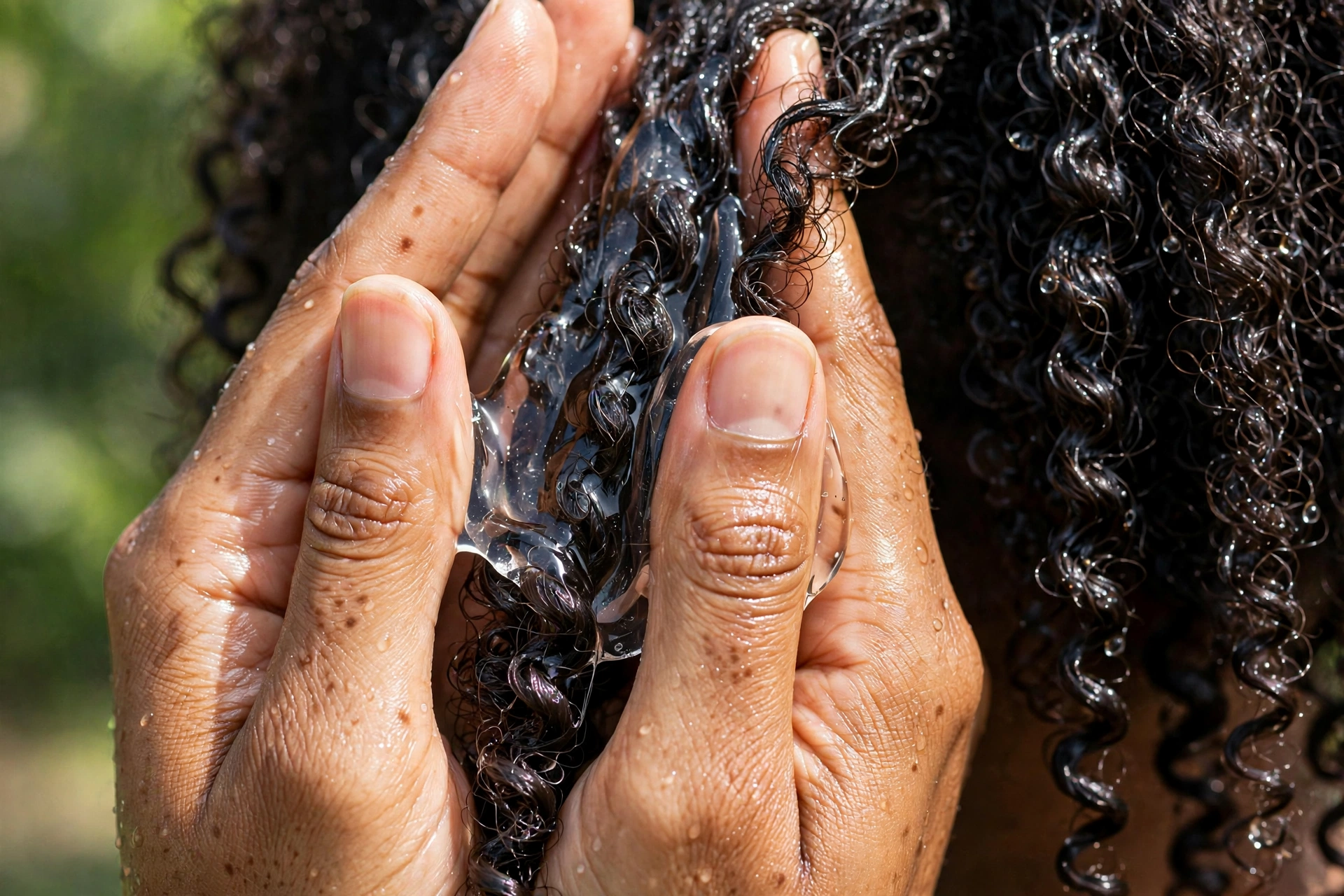
Split hair into 4–8 sections depending on density. Apply a quarter-sized amount of gel per section (start small — you can add more). For wash-and-gos, use the praying-hands method (smooth each section between your palms from root to tip), then rake or finger-comb through to encourage clumping. For extra definition on tight coils, a Denman-style brush per section works well.
Step 4: Let it dry completely — then don’t touch it
Air dry, diffuse on low heat, or sit under a hooded dryer. Do not touch, fluff, or separate coils while wet — touching wet gel disrupts the forming cast and creates frizz. This is where patience pays off: 4C styles that get handled too early lose definition fast.
Step 5: Scrunch out the crunch and seal
Once 100% dry, scrunch each section upward with your hands to break the cast, then fluff at the roots for volume. Finish with a light oil on your hands (not on the hair directly) for shine. If you skipped the seal and your ends feel dry by day two, that’s the missing step — see how to moisturize natural hair for the full LOC/LCO breakdown.
Why Your Gel Flakes — and How to Stop It
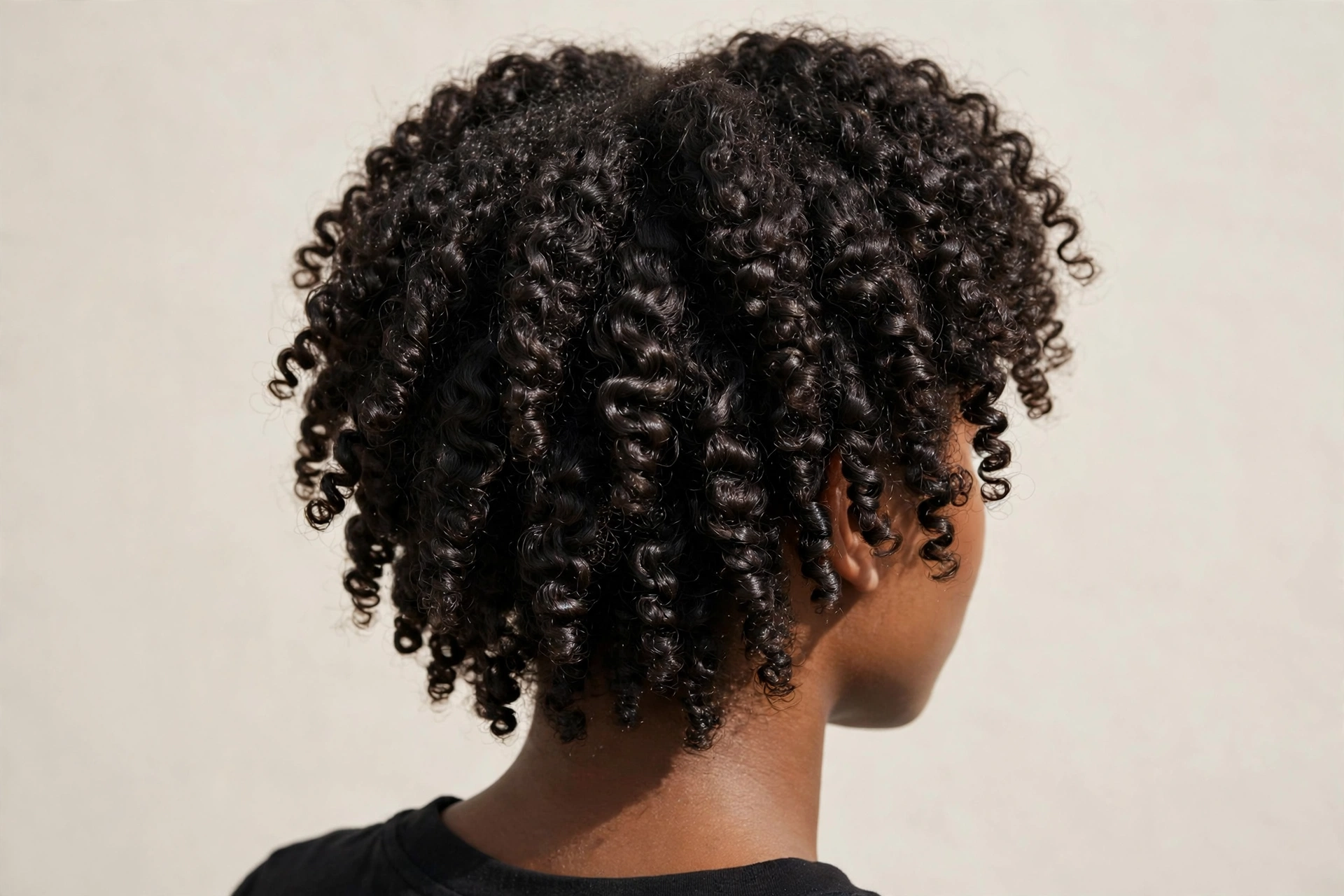
Flaking is the #1 gel complaint, and it’s almost never one cause. Run this diagnosis in order:
- Incompatible layering. The most common cause. Your leave-in and gel (or gel and oil) curdle together. Do the palm test; switch to a simpler, water-based leave-in under your gel.
- Too much product. More gel ≠ more hold. Excess polymer dries into visible residue. Start with less than you think you need.
- Not enough water. Gel applied to barely-damp hair can’t spread evenly and dries in clumps. Soaking wet is the standard.
- Heavy creams or butters underneath. Butters + gel = a film that sits on top of low-porosity hair and flakes off as it dries. Keep the under-layer light.
- Old or expired product. Gels past their prime (usually 12 months after opening) can separate and flake. If a gel that used to work suddenly flakes, check the date.
- Hard water mineral buildup. Calcium and magnesium from hard water coat the hair shaft and interfere with how products perform — including gels. If flaking started after a move or season change, check for hard water damage before blaming the gel.
Gel vs Mousse vs Cream: Which Styler Do You Actually Need?
These three get confused constantly. Here’s the honest breakdown:
| Styler | What It Does Best | Hold | Best For |
|---|---|---|---|
| Gel | Definition + hold via polymer film | Light to extreme | Wash-and-gos, sleek styles, edges |
| Mousse | Volume + light definition | Light to medium | Fine hair, root lift, twist-out volume |
| Cream | Moisture + softness | Very light | Twist-outs, braid-outs, dry-hair styling |
Gel and mousse aren’t enemies — they’re different tools. Mousse gives volume where gel gives definition. Many naturals layer mousse at the roots for lift and gel on the lengths for definition. Creams, meanwhile, are moisturizers with styling benefits, not hold products — if your twist-out falls flat by noon, it needed a gel or mousse on top of the cream, not a heavier cream.
5 Mistakes That Ruin a Gel Style
- Styling on dirty hair. Gel over a week’s worth of buildup can’t grip the hair shaft properly. A gel style is only as good as the wash underneath it.
- Touching wet hair. Every touch while the cast is forming breaks definition. Hands off until fully dry.
- Skipping the leave-in. Gel without moisture underneath is how you get defined but straw-dry hair. The gel gets blamed; the routine was the problem.
- Using one gel for every job. A botanical wash-and-go gel will not slick a ponytail, and a firm gel makes a crunchy wash-and-go. Own the right tool for the style.
- Never clarifying. Polymers build up. If styles start looking dull and gels stop performing, you need a clarifying wash — not a new gel. A sulfate-free clarifying shampoo every 4–6 weeks keeps gel performance consistent.
Frequently Asked Questions
Does gel damage natural hair?
Gel itself doesn’t damage hair — misuse does. The damage people blame on gel usually comes from three things: gels with drying alcohols (rare in modern formulas), wearing hard-hold styles that pull at the hairline, and skipping moisture underneath the gel. A published review of hair cosmetics in the International Journal of Trichology notes that styling products are generally safe when used as directed, with problems arising mainly from overuse or harsh formulations (PMC4387693). Keep styles tension-free, moisturize first, and clarify regularly.
Can I use gel on my natural hair every day?
You can, but daily reapplication builds up fast. A better approach: style once, then refresh — lightly mist with water to reactivate the existing product and smooth only the sections that need it, rather than adding fresh gel daily. The American Academy of Dermatology’s guidance for Black hair emphasizes gentle handling and avoiding excessive manipulation, which applies directly to how often you restyle.
Why does my gel flake on 4C hair specifically?
4C hair’s tight coil pattern means product has more surface area to cover and more bends to catch residue in. The usual culprits: incompatible leave-in + gel combos, too much product, styling on hair that isn’t wet enough, or hard water mineral buildup interfering with the formula. Work through the flaking diagnosis above in order — most cases are fixed by steps 1–3.
Is gel or mousse better for a wash-and-go?
For definition, gel wins. For volume, mousse wins. Many naturals use both: mousse at the roots for lift, gel on the lengths for clumping. If you have fine, low-density hair, mousse alone may give you a fuller result; if frizz and definition are the priority, gel is the tool.
What’s the best gel for low-porosity natural hair?
Lightweight, water-based gels — Camille Rose Curl Maker and Kinky-Curly Curling Custard are the most consistently recommended. Low-porosity hair repels heavy products, so avoid layering rich creams or butters under your gel, and always style on soaking-wet hair to help the product spread.
Can gel cause hair loss?
Gel doesn’t cause hair loss from the follicle. What it can contribute to is traction alopecia — hairline thinning from styles that pull too tightly (slicked ponytails and buns held with strong gel, worn daily). The gel isn’t the villain; the tension is. Vary your styles, keep edges tension-free, and give your hairline rest days.
How do I remove gel buildup?
Regular shampoo often isn’t enough for polymer buildup. Use a clarifying shampoo every 4–6 weeks (more often if you use firm-hold gels daily). Our sulfate-free shampoo guide includes clarifying options that won’t strip your hair.
Can I use gel on straightened or silk-pressed natural hair?
Generally, no — water-based gels cause reversion, pulling straightened hair back toward its natural texture. For sleek looks on straightened hair, edge controls, wax sticks, or silicone-based serums are the standard choice instead.
The Bottom Line
The best hair gel for natural hair isn’t the most expensive one — it’s the one matched to your style goal, porosity, and layering routine. For wash-and-go definition, The Doux Big Poppa and Kinky-Curly Curling Custard lead the pack. For budget firm hold, Wetline Xtreme is nearly unbeatable. And if your gel is flaking, the answer is almost never “buy a new gel” — it’s fix the water, the layering, or the amount first.
Start with clean, soaking-wet hair, put a light leave-in underneath, work in small sections, and keep your hands off until it’s dry. Do that with any of the 8 gels above, and you’ll get the defined, flake-free result the jar promises.
Disclaimer: This article is for informational purposes only and is based on ingredient analysis and community review patterns, not clinical testing. Everyone’s hair responds differently — patch-test new products and consult a dermatologist if you experience scalp irritation or unusual shedding. For our complete product philosophy, see our complete 4C hair product guide.
