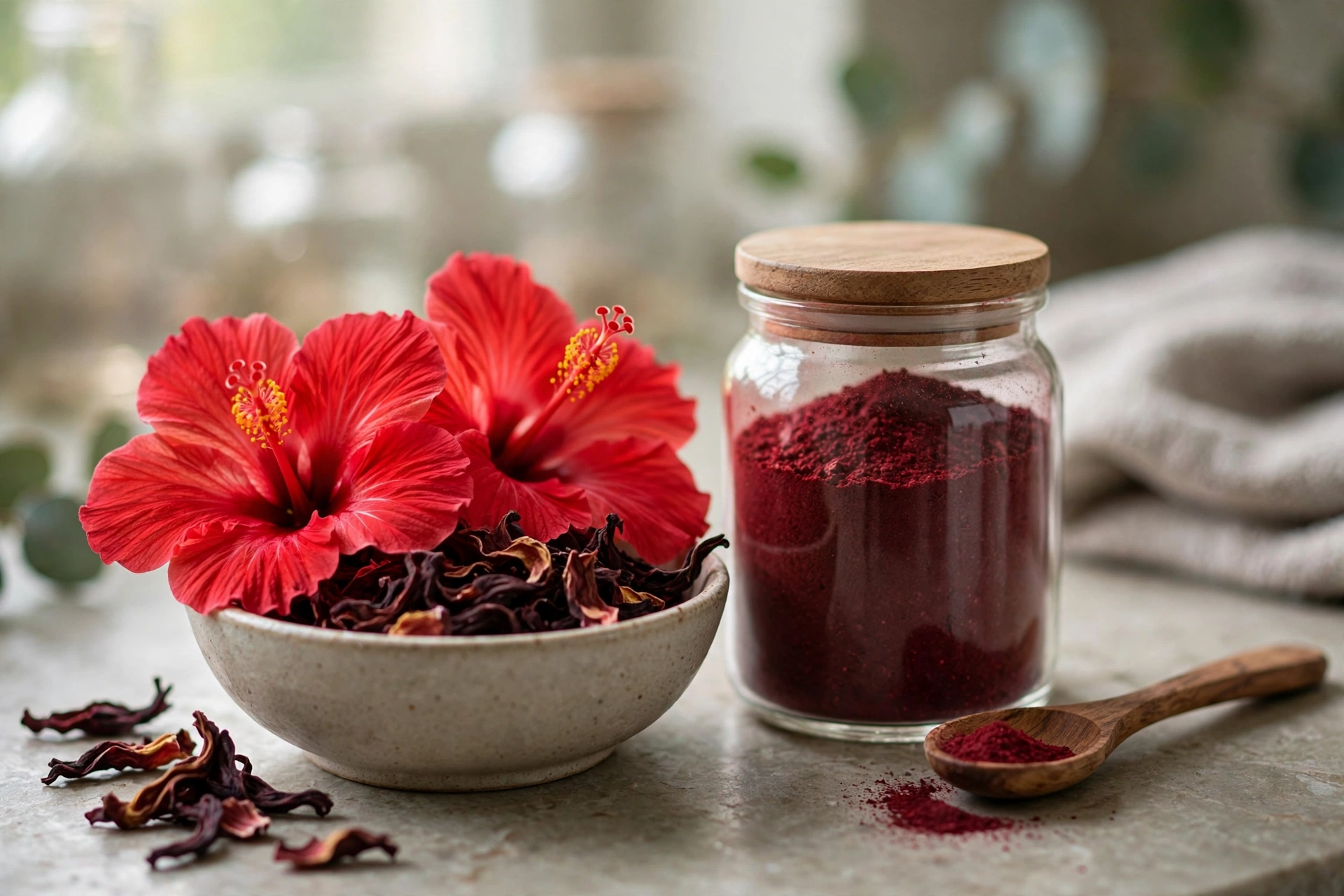
Hibiscus for Natural Hair: Honest Benefits, What It Can’t Do & DIY Recipes
If you spend any time in natural hair circles, you have seen the claims: hibiscus for natural hair “grows your edges back,” “works like minoxidil,” “stops shedding in a week.” The flowers are beautiful, the deep-red masks look great on wash day, and centuries of Ayurvedic tradition stand behind them — but what does hibiscus actually do for coily, curly hair, and what is just marketing?
This guide gives you the honest version. We looked at the actual research (what little exists), compared it against what the top-ranking articles say, and tested the logic of every popular claim — so you know exactly where hibiscus for hair is genuinely useful, where the evidence is thin, and how to use it safely on natural hair if you decide to try it.
The Quick, Honest Answer
Hibiscus (Hibiscus rosa-sinensis) is a genuinely pleasant conditioning herb for natural hair. Its flowers and leaves contain mucilage — a slippery, gel-like substance — that smooths the hair cuticle, adds shine, and makes detangling easier. Used regularly as a mask or oil, it can leave hair softer and more manageable.
Here is what it cannot do: there is no human clinical evidence that hibiscus grows new hair, regrows bald spots, stops pattern hair loss, or reverses graying. As Healthline’s review of hibiscus for hair puts it plainly: although some research shows it may promote hair growth, testing has only been done on animals. Everything else is tradition and anecdote — which is not nothing, but it is not proof either.
What the Research Actually Says (All of It)
There is remarkably little peer-reviewed research on hibiscus and human hair. Here is every study that matters, described honestly.
The 2003 rat study everyone quotes
The most-cited paper is a 2003 animal study published in the Journal of Ethnopharmacology. Researchers applied a petroleum-ether extract of hibiscus leaves and flowers to the shaved skin of albino rats for 30 days and measured hair length and follicle growth phases. The leaf extract showed stronger hair-growth activity than the flower extract.
What this means: it is a real, published finding — in rats, using a concentrated solvent extract that has little in common with the hibiscus powder mask you mix in your kitchen. Rats are not people. This study cannot tell you whether your DIY hibiscus mask grows hair. Honest blogs cite it; dishonest ones skip the word “rats.”
The “works like minoxidil” claim
You will read on several sites that hibiscus “works as well as minoxidil.” This traces back to animal studies comparing hibiscus extracts against standard hair-growth treatments in rodents — not to any head-to-head trial in humans. There has never been a published human study comparing hibiscus to minoxidil. The claim sounds scientific because it names a real drug; the evidence behind it is not there yet.
What has never been studied
No published human trial has tested hibiscus for hair growth, dandruff, or scalp health. No study has tested it specifically on natural, coily, or 4c hair. The anti-dandruff, anti-graying, and shine claims rest on tradition, anecdote, and the plant’s known chemistry (more on that below) — not on clinical data. This is the gap every top-ranking article glosses over: they write “studies show” without mentioning the studies were on rats.
Benefits of Hibiscus for Natural Hair (Honestly Rated)
Setting the growth hype aside, hibiscus has real, explainable properties. Here is each popular claim, rated by how much support it actually has.
Conditioning and detangling slip — strong support
This is hibiscus’s best, most honest benefit. Hibiscus leaves and flowers are rich in mucilage, a slippery plant gel very similar in feel to flaxseed gel for low porosity hair. On 4c hair, that slip matters enormously: it lets your fingers or a wide-tooth comb glide through tangles with less pulling, which means less breakage. Less breakage means better length retention — and for many people, “retaining length” looks exactly like “growing hair faster.”
Shine and softness — plausible
The mucilage coats the hair shaft and smooths the cuticle, which reflects light more evenly. Hair looks shinier and feels softer after a hibiscus mask. This is a cosmetic effect — it washes out — but it is real and immediately visible, and unlike silicones it comes without buildup concerns when you rinse well.
Scalp comfort and dandruff — anecdotal, chemically plausible
Traditional use and many reviewers report less itching and flaking after hibiscus scalp masks. Hibiscus contains flavonoids and other plant compounds with documented antioxidant and antimicrobial activity in lab settings. That is not the same as a clinical dandruff trial, but it makes the reports more credible than pure placebo. If dandruff is persistent, see a dermatologist rather than relying on any herb.
“Prevents premature graying” — not supported
This claim appears on nearly every hibiscus article, usually with zero sourcing. There is no study — animal or human — showing hibiscus prevents or reverses graying. What likely happened: hibiscus petals are a natural red dye (they stain; we will get to that), and a darkening tint on dark hair can make grays less noticeable. That is a cosmetic tint, not prevention.
What Hibiscus CAN’T Do (The Honest Limitations)
An honest hair blog should tell you what a product can’t do. Here is the list for hibiscus.
- It is not a protein treatment. Blogs love to say hibiscus “rebuilds keratin” because it contains amino acids. Trace amino acids in a plant powder are not the same as a hydrolyzed protein treatment your hair can absorb. If your hair needs protein, use an actual protein treatment — hibiscus is a conditioning herb, not a protein one.
- It will not regrow hair on bald spots. No herb does this reliably, and hibiscus is no exception. Areas where follicles have been inactive for years do not respond to topical herbs.
- It will not stop pattern hair loss on its own. Androgenetic alopecia is driven by hormones; a flower mask does not change that equation. Be skeptical of any site that positions hibiscus as a minoxidil replacement.
- Drinking hibiscus tea will not fix hair fall. A viral claim suggested drinking hibiscus tea reduces hair fall — fact-checkers rated this false. Topical tradition and internal consumption are completely different things; do not confuse them.
- Results, if any, take weeks of consistent use. Anyone promising visible growth “in 7 days” is selling something, not informing you.
Hibiscus Powder vs Fresh Flowers vs Hibiscus Tea: Which Form to Use
Not all hibiscus products are equal, and the top articles rarely explain the difference.
- Hibiscus powder (dried flower powder) — the most practical form for natural hair. Fine, consistent, easy to mix into masks, and widely available online and in Indian grocery stores. Look for 100% pure powder with no added color or fragrance; cheap blends are sometimes cut with fillers.
- Fresh flowers and leaves — traditional and effective, but impractical for most people (you need a hibiscus plant). Interestingly, the 2003 study found leaf extract more potent than flower extract — yet almost every recipe uses only the flowers. If you have access to leaves, include them.
- Hibiscus tea / tea bags — fine for a light rinse (see Recipe 3 below), but much weaker than powder. A steeped tea contains a fraction of the mucilage and active compounds. It is gentle and cheap, but do not expect powder-level results from it.
One more note: cosmetic “hibiscus shampoos” and “hibiscus oils” from beauty brands usually contain only trace amounts of the extract — the marketing is louder than the formula. For real effect, DIY with pure powder beats a scented product with hibiscus listed near the end of the ingredients.
How to Use Hibiscus for Natural Hair: 4 DIY Recipes
These are the four preparations that make sense for natural hair, in order of usefulness. Each uses pure hibiscus powder unless stated otherwise.
Step 1: Hibiscus Deep-Conditioning Hair Mask (best all-rounder)
The classic for a reason: maximum contact time, maximum slip, easy to rinse.
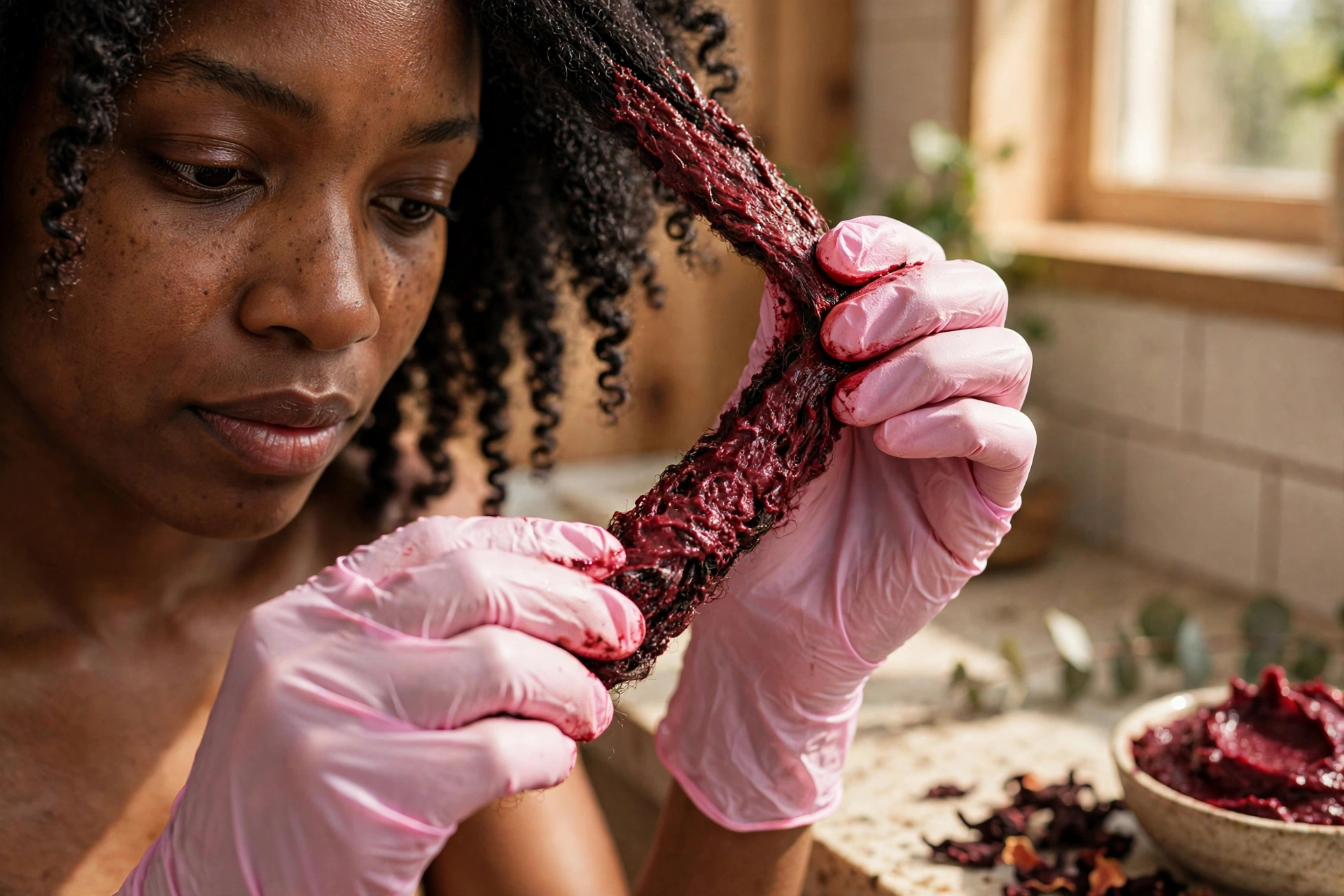
- Mix 2 tablespoons of hibiscus powder with 4 tablespoons of plain yogurt (or coconut milk for a dairy-free version) into a smooth, thick paste.
- Optional: stir in 1 tablespoon of honey for extra humectant slip.
- On damp, sectioned hair, apply the mask from roots to ends, working it through each section with your fingers.
- Cover with a shower cap and leave for 30 minutes. Do not exceed 45 minutes — the paste dries out and becomes harder to rinse.
- Rinse thoroughly with lukewarm water until the water runs clear, then shampoo with a mild sulfate-free shampoo and condition as usual.
Use once a week or every two weeks. This is the recipe behind most “my hair feels amazing” reviews, and the mucilage genuinely helps with detangling on wash day.
Step 2: DIY Hibiscus-Infused Hair Oil (scalp massage oil)
Good if you prefer the traditional oiling approach — see also our guide to hot oil treatments for natural hair.
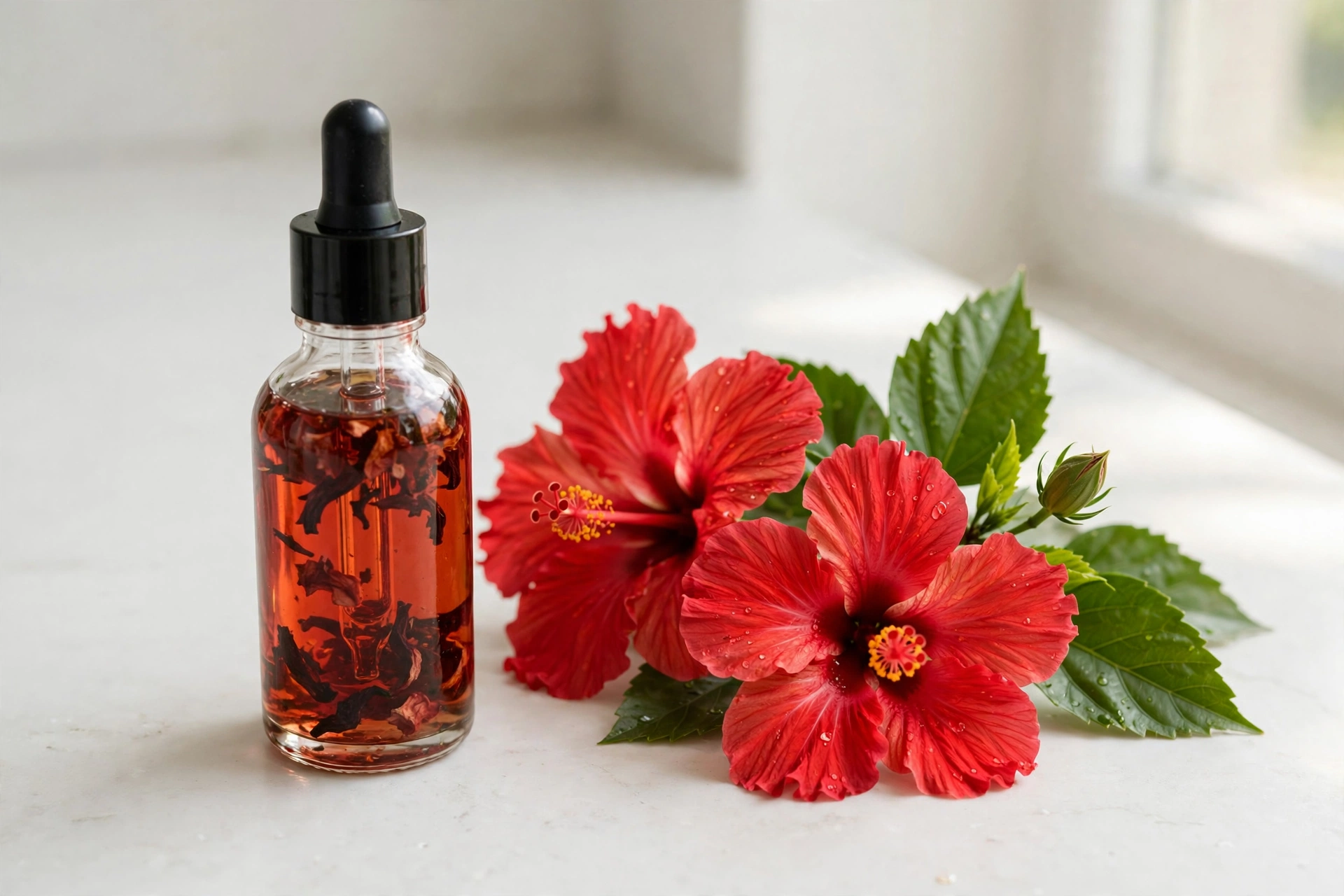
- Warm 1 cup of coconut oil (or almond oil for lighter feel) in a pan over low heat — warm, not smoking.
- Stir in 2 tablespoons of hibiscus powder and keep on the lowest heat for 5–10 minutes, stirring occasionally. Do not fry the powder.
- Remove from heat, cover, and let it cool completely — at least 2 hours, ideally overnight for a stronger infusion.
- Strain through a fine cloth or coffee filter into a clean, dry glass bottle. Straining matters: leftover grit irritates the scalp.
- Massage 1–2 tablespoons into your scalp for 5–10 minutes, leave for at least 30 minutes (or overnight), then wash out with shampoo. Use 1–2 times per week.
Step 3: Hibiscus Tea Rinse (lightweight shine rinse)
The gentlest option — good for low-porosity hair that gets weighed down easily.
- Steep 2 tablespoons of dried hibiscus petals (or 2 tea bags) in 2 cups of just-boiled water for 20 minutes.
- Strain completely and let it cool to room temperature.
- After shampooing and conditioning, pour the rinse slowly over your hair, saturating from roots to ends.
- Leave for 2–3 minutes, then rinse lightly with cool water. Style as usual.
Expect subtle shine rather than transformation. This is maintenance, not treatment.
Step 4: Hibiscus Pre-Poo Slip Treatment
Apply the mask from Step 1 (or just hibiscus powder mixed with aloe vera gel) to dry, sectioned hair 20 minutes before shampooing. The mucilage pre-softens tangles so your shampoo session causes less breakage — a genuinely useful trick for 4c hair on wash day.
Hibiscus vs Other Natural Hair Ingredients
How does hibiscus stack up against the other DIY staples? Here is the honest comparison the top-5 articles never give you.
| Ingredient | Best for | Main strength | Main weakness |
|---|---|---|---|
| Hibiscus | Conditioning, detangling slip, shine | Mucilage gives real slip; pleasant to use | Stains everything; no human hair-growth evidence |
| Fenugreek | Scalp issues, shedding | Long tradition for scalp health; also mucilaginous | Strong smell; can leave gritty residue |
| Aloe vera | Scalp soothing, light moisture | Gentle; easy to find; low mess | Weaker conditioning effect than hibiscus |
| Rice water | Strength, protein-like feel | Cheap; some evidence for reduced friction | Can cause stiffness/protein overload; fermented versions smell |
The practical takeaway: hibiscus sits in the conditioning/slip category alongside flaxseed and aloe — it is not in the same category as protein treatments or growth serums, despite what some blogs imply. For a rinse-based routine, compare with our rice water guide for natural hair.
Side Effects and Warnings Nobody Mentions
Most hibiscus articles list benefits and skip the downsides. Here are the ones that actually matter.
- It stains — everything. Hibiscus petals are a genuine natural dye (anthocyanins). It will stain your hands (wear gloves), your towels (use dark ones), your clothes, and your bathroom grout. More importantly: it can leave a reddish tint on light blonde, bleached, or gray hair. If your hair is not dark, do a strand test first.
- Gritty residue. Cheap or coarse powder does not dissolve fully and leaves grit on the scalp, which can cause itching and flaking — ironically the opposite of what you wanted. Sift the powder or strain your mixes.
- Scalp sensitivity. Plant powders are not automatically gentle. Do a patch test behind your ear 24–48 hours before a full application, especially if you have eczema or a sensitive scalp.
- Drying if overused. The mild astringency that helps oily scalps can dry out already-dry hair if you use hibiscus masks more than once a week. Follow with a proper conditioner, always.
- Pregnancy and medical conditions. Hibiscus is a medicinal plant with documented effects in animal studies. If you are pregnant, breastfeeding, or managing a medical condition, check with a healthcare professional before regular use — Healthline’s overview of herbs for hair growth gives the same caution for herbal hair remedies generally.
Hibiscus for 4c Hair: Specific Tips
Most hibiscus content is written with straight or wavy hair in mind. For 4c hair specifically:
- Use the mask for detangling, not just conditioning. Apply to sectioned, damp hair and detangle gently with the mask in — the mucilage slip is the real prize for tight coils.
- Do not skip the shampoo after. Powder residue + 4c density = buildup. Always follow a hibiscus mask with a real shampoo, not just a rinse.
- The tint is your friend or your enemy. On dark 4c hair the reddish tint is invisible; on dyed, highlighted, or graying hair it shows. Know which you have.
- Pair it with your protein-moisture balance. Hibiscus is a moisture/conditioning step. If your hair is over-moisturized and mushy, hibiscus will not fix it — you need protein that week, not more slip.
How Often to Use Hibiscus (and How to Store It)
Frequency: once a week for masks, 1–2 times per week for the oil, and the tea rinse can be used after every wash since it is very light. More is not better — overuse leads to dryness and buildup.
Storage: keep dry powder in an airtight container away from light; it lasts 6–12 months. Freshly mixed masks should be used immediately — wet plant powder grows bacteria fast. The infused oil keeps 1–2 months in a cool, dark place (refrigerate for longer life). The tea rinse keeps 3–4 days in the fridge.
Frequently Asked Questions
Does hibiscus really grow hair?
There is no human evidence that it does. The one published study showing hair-growth activity was conducted on rats using a concentrated solvent extract. Hibiscus can reduce breakage through conditioning, which helps you retain length — and that is often mistaken for faster growth.
Is hibiscus powder good for 4c hair?
Yes — its mucilage gives genuine detangling slip, which is one of the hardest things to get on tight coils. Just shampoo thoroughly afterward to avoid powder buildup, and watch the staining if your hair is color-treated.
Does hibiscus darken hair?
It can. Hibiscus petals contain natural red-purple pigments that act as a mild dye. On dark hair the effect is invisible, but on blonde, bleached, or gray hair it can leave a noticeable reddish tint. Always strand-test first.
Can hibiscus stop hair fall?
It may reduce breakage-related shedding by conditioning the hair shaft, but it will not stop shedding caused by hormones, deficiencies, illness, or genetics. If you are losing noticeably more hair than usual, see a dermatologist — no herb replaces a diagnosis.
Hibiscus vs fenugreek for hair — which is better?
They do different jobs. Hibiscus is the better conditioner (more slip, nicer feel, less smell). Fenugreek has the longer tradition for scalp issues and shedding. Many people combine them — a hibiscus-fenugreek mask is a classic Ayurvedic pairing — but start with one at a time so you know what your hair responds to.
Can I leave hibiscus on my hair overnight?
It is not recommended. The paste dries out, becomes difficult to rinse, and prolonged contact increases the chance of scalp irritation and staining. Thirty minutes is the sweet spot; 45 at most.
Is hibiscus a protein treatment?
No. Despite frequent claims about “amino acids rebuilding keratin,” hibiscus is a conditioning herb, not a protein treatment. It will not repair damage the way hydrolyzed protein does.
Can I use hibiscus if I have dandruff?
Anecdotally, many people find hibiscus scalp masks soothing for mild flaking. But persistent or severe dandruff (especially with itching, redness, or thick scales) deserves a proper anti-dandruff treatment or a dermatologist visit — hibiscus is a comfort measure, not a cure.
Does hibiscus work better than rosemary water?
Different tools. Rosemary preparations are used mainly for scalp stimulation and have slightly more human-adjacent research interest; hibiscus is the better conditioner. There is no reason you cannot use both — rosemary water as a scalp rinse, hibiscus as a conditioning mask.
Where can I buy pure hibiscus powder?
Indian and Middle Eastern grocery stores, Ayurvedic shops, and reputable online herb sellers. Look for a short ingredient list — just hibiscus — with no added dyes or fragrance. Cosmetic-grade from a herb supplier beats a “beauty brand” jar with pretty packaging and trace amounts.
The Bottom Line
Hibiscus for natural hair is worth trying — as a conditioner, not as a growth miracle. Its mucilage gives real detangling slip and shine, the DIY recipes are cheap and pleasant, and the tradition behind it is centuries old. Just keep your expectations honest: the growth claims rest on a rat study and enthusiastic anecdotes, not human evidence. Use it for what it provably does — softer, more manageable, better-detangled hair — and you will not be disappointed.
Disclaimer: This article is for informational purposes only and is not medical advice. Hibiscus is a medicinal plant; if you are pregnant, breastfeeding, managing a scalp condition, or experiencing unusual hair loss, consult a healthcare professional before use. Always patch-test new DIY treatments.