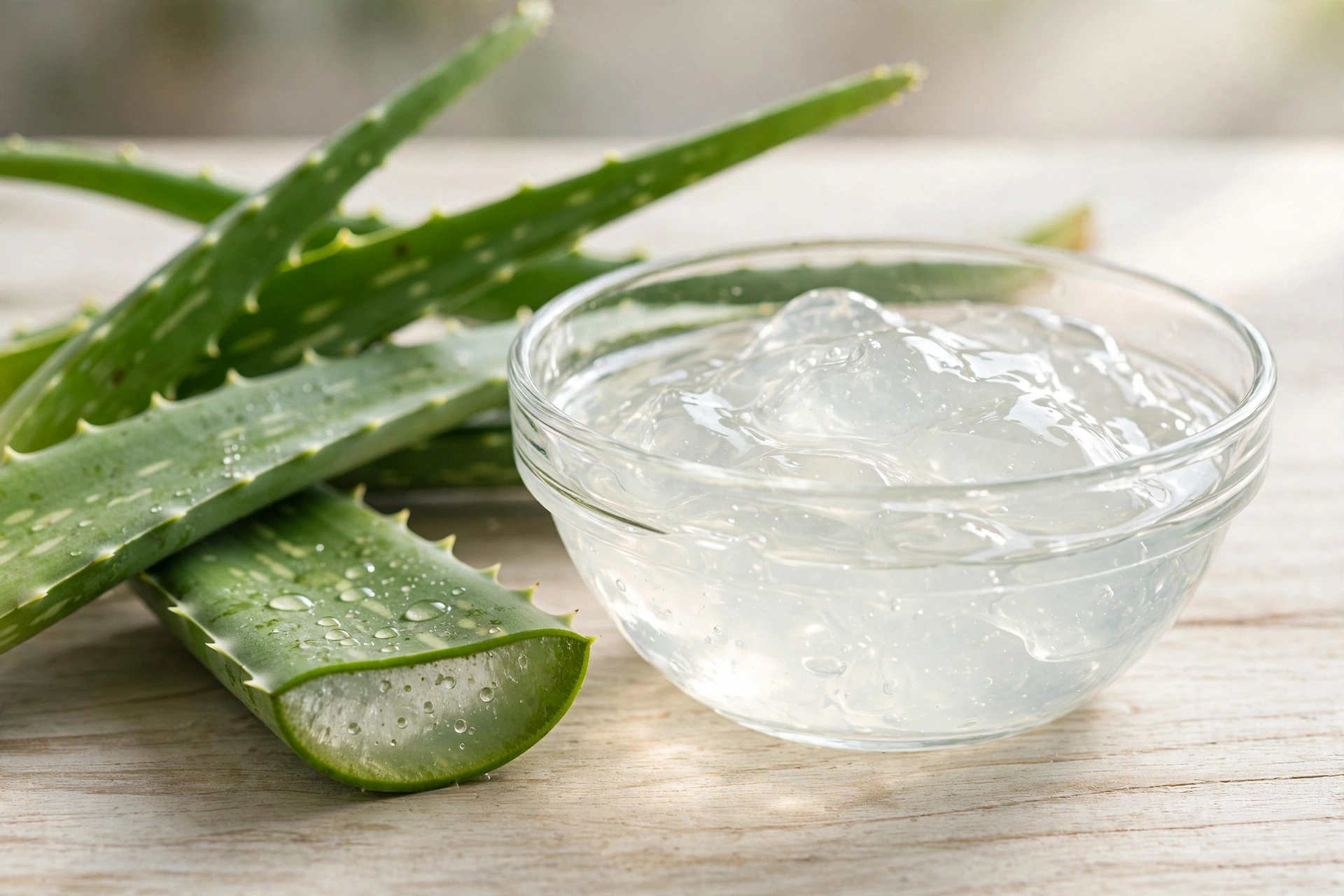
Aloe Vera Gel for Natural Hair: Benefits, How to Use It & What It Can’t Do
What Aloe Vera Gel Actually Does for Hair (and What the Evidence Says)
Aloe vera gel for natural hair is one of the most talked-about ingredients in the curly community. Aloe vera has been used on skin for centuries, and its reputation carried straight over to hair care. Scroll through any natural-hair forum and you will find people crediting it with everything from melting tangles to regrowing edges. Some of that is real. A lot of it is wishful thinking. Here is the honest breakdown.
What aloe vera gel genuinely offers: it is mostly water (about 99%), with a mix of polysaccharides, amino acids, vitamins, minerals, and plant enzymes suspended in it. On hair, that combination does three useful things. First, it is mildly acidic (typically around pH 4.5–5.5), close to hair’s own pH, so it can help the cuticle lie flatter — which reads as smoothness and shine. Second, its gel texture gives “slip,” which is why so many naturals use it to detangle. Third, it forms a light film on the hair shaft as it dries, which can tame frizz and give soft hold for styles like wash-and-gos and twist-outs.
What the research actually supports is narrower. Healthline’s review of aloe vera for hair is admirably blunt: there is no clinical evidence that aloe vera grows hair, though it is safe for most people and may soothe the scalp. The most-cited study is a small 1998 trial in which an aloe vera emulsion helped resolve the scalp inflammation behind seborrheic dermatitis (the clinical name for dandruff) — real, but small, old, and about scalp skin, not hair growth. The National Center for Complementary and Integrative Health summarizes the evidence for aloe vera as limited for most claimed uses, which is the pattern you will see repeated everywhere in this article: plausible mechanism, thin human data.
One more honest note before the how-to: aloe contains amino acids, and some brands market that as “protein.” It is not a protein treatment. Amino acids sitting on the hair shaft are not the same as hydrolyzed proteins that can temporarily patch damaged cuticles, and neither rebuilds keratin the way marketing implies. If your hair needs real protein, read our guide to the best protein treatments for natural hair instead — aloe is a moisture-and-slip player, not a strength player.
What Aloe Vera Gel Cannot Do (Setting Expectations)
Because the hype is the loudest part of this ingredient, let’s clear it first:
- It will not regrow hair or edges. No human study shows aloe vera restarting dormant follicles or reversing traction alopecia. If your edges are thinning from tight styles, the fix is stopping the tension — the American Academy of Dermatology warns that tight hairstyles can cause traction alopecia — not a plant gel.
- It will not replace conditioner on very dry 4c hair. Aloe is ~99% water with a light film. On its own it does not have the fatty conditioning agents (like behentrimonium chloride or shea butter) that make detangling coarse, dense hair manageable. It works best layered with or mixed into real conditioners.
- It does not “repair” split ends or damage. Nothing topical repairs a split end; the film aloe leaves can temporarily make ends look smoother, which is cosmetic, not structural.
- “Detoxing” the scalp is marketing language. Aloe can gently lift residue and soothe irritation, which is genuinely useful. It does not pull toxins out of your follicles — that is not how skin works.
None of this makes aloe useless. It makes it a solid supporting ingredient with a specific job: slip, light moisture, scalp soothing, and soft hold. Used for those jobs, it earns its place.
Fresh Leaf vs Bottled Gel: Which Should You Buy?
You have two options, and the trade-off is potency versus convenience.
Fresh gel from the leaf
This is the most potent form — nothing diluted, no preservatives, no added color. The catch is perishability: fresh gel lasts roughly 7–10 days in the refrigerator, and it oxidizes (turns pinkish-brown) once exposed to air. It is also the form that carries the aloin risk described in the safety section below, because home extraction is where the yellow latex sap most often contaminates the gel.
Bottled gel from the store
Look for labels that say “inner fillet” or “inner leaf gel” and list aloe barbadensis leaf juice as the first ingredient. Avoid gels with added alcohol (drying), artificial green colorants, or heavy fragrance — the neon-green “after-sun” gels are mostly water, thickener, and dye. Reputable bottled gels have the aloin removed during processing, which is actually a safety advantage over DIY extraction. Check the expiry date; preservatives only stretch shelf life so far.
Our honest take: if you use aloe occasionally, a good bottled inner-fillet gel is the practical choice. If you have a plant at home and enjoy DIY, fresh is lovely — just handle the leaf correctly (next section) and use the gel within a week.
How to Extract Gel from a Fresh Aloe Leaf (Step by Step)
The single most important part of this process is dealing with the yellow sap. An aloe leaf has three layers: the green rind, a bitter yellow latex layer just under it (this contains aloin, a potent laxative that can irritate skin), and the clear inner gel. You want only the third.
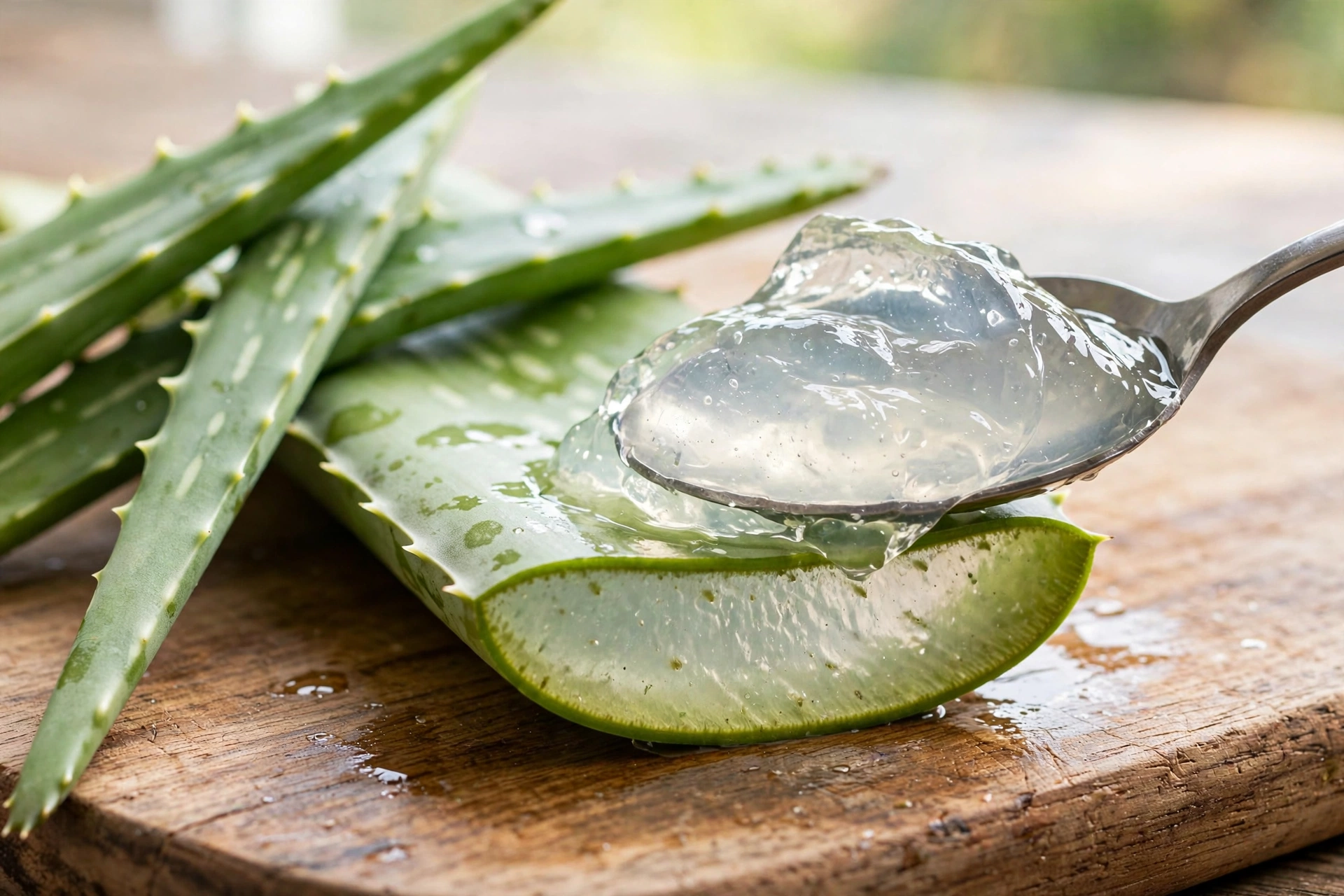
Step 1: Cut a mature outer leaf
Choose a thick leaf from the outer part of the plant and cut it close to the base with a clean, sharp knife. Mature outer leaves hold the most gel.
Step 2: Drain the yellow latex
Stand the cut leaf upright in a glass, cut-side down, for 10–15 minutes. The bitter yellow sap (aloin-rich latex) will drip out. Rinse the leaf afterward. Do not skip this — the latex is what causes the stinging and irritation some people blame on “aloe allergy.”
Step 3: Trim the spiky edges and fillet the leaf
Lay the leaf flat, slice off both spiky edges, then slice the leaf open lengthwise. You will see the clear gel sitting on the lower rind like a fillet.
Step 4: Scoop and blend
Slide a spoon between the gel and the rind to lift the clear fillet out, avoiding any green or yellow bits. Blend for 10–20 seconds for a smooth, pourable consistency, or mash with a fork for a thicker gel. Strain through a fine sieve if you want it completely smooth for spray bottles.
Step 5: Store it cold and use it fast
Transfer to a clean, airtight jar and refrigerate. Use within 7–10 days; discard if it darkens significantly or smells off. A squeeze of vitamin C or a drop of vitamin E oil can slow oxidation slightly, but it will not make fresh gel shelf-stable.
The National Center for Complementary and Integrative Health notes that oral use of aloe latex can cause abdominal pain, cramps, and diarrhea — that fact sheet covers internal use, but it is a useful reminder of why that yellow layer deserves respect even in topical DIY.
4 Ways to Use Aloe Vera Gel for Natural Hair
Aloe is versatile, but it performs very differently depending on where it sits in your routine. Here are the four uses with the best effort-to-result ratio, in the order you would use them on wash day.
1. As a pre-poo treatment
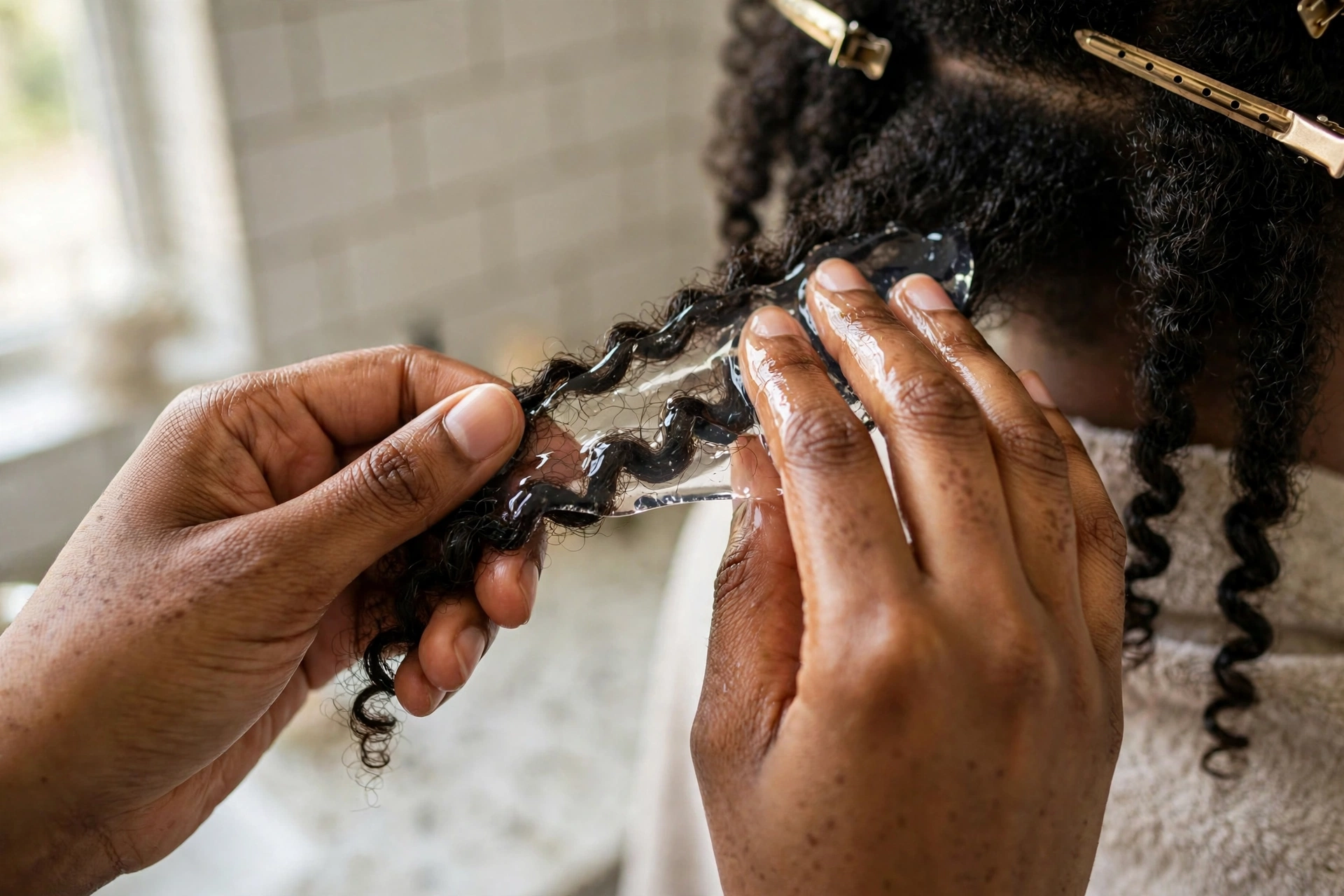
Apply a generous amount of gel to dry or damp hair in sections before shampooing, focusing on the ends. Cover with a plastic cap for 20–30 minutes. The slip makes detangling before shampoo far easier, and the light film buffers strands against the stripping effect of shampoo. This is one of aloe’s best jobs on 4c hair — and if you want the full method, our pre-poo treatment guide walks through timing, sectioning, and how to layer it with oils.
2. Mixed into your deep conditioner (the booster method)
Add 2–3 tablespoons of aloe gel to your regular deep conditioner, apply to clean damp hair, cover with a cap, and add heat for 20–30 minutes. The aloe adds slip and light hydration without diluting the conditioner’s performance the way water would. If you are still shopping for a conditioner worth boosting, start with our roundup of the best deep conditioners for natural hair.
3. As a lightweight leave-in
Smooth a dime- to quarter-sized amount (for medium-density hair) through damp hair after conditioning, ends first. It works as a light leave-in for fine or low-density hair that gets weighed down by creamy leave-ins. For thick, dense 4c hair, treat aloe as the “L” layer under a cream and oil rather than a standalone leave-in — on its own it does not provide enough lasting moisture for wash day to next wash day.
4. As a styling gel for wash-and-gos and twist-outs
Apply to damp, conditioned hair in sections and style as usual. Aloe gives soft, touchable hold without the crunch or flaking of strong-hold gels, and because it is non-drying, second-day hair stays pliable. The trade-off: the hold is light, so in high humidity or on very coily hair it will not define the way a dedicated curl gel does. Curious about the other natural-leaning styler? Our flaxseed gel guide covers the main alternative — flaxseed generally gives stronger hold, aloe gives more slip and scalp comfort.
Aloe Vera for 4C Hair: Porosity Notes
How aloe behaves depends heavily on your hair’s porosity — if you have not tested yours, our natural hair porosity test takes two minutes.
- Low porosity 4c hair: the film-forming side of aloe can work against you. Applied heavily or on dry hair, it can sit on top of the shaft and leave a coated, slightly crunchy feeling that reads as dryness. Use small amounts on damp (not soaking) hair, and favor the pre-poo and rinse-out uses over leave-in layering.
- High porosity 4c hair: aloe’s film is an asset here — it helps slow moisture loss from raised cuticles. Layer it under a cream and seal with an oil or butter, and it pulls its weight in the LOC/LCO method.
- Fine strands (any porosity): aloe is one of the few “natural” stylers that will not smother fine hair. Keep quantities small and you get definition without the stringy, weighed-down look that heavy butters cause.
Safety: The Aloin Warning, Patch Tests, and Who Should Skip It
Aloe has a well-earned reputation as gentle, but “natural” is not the same as “risk-free for everyone.”
- The yellow latex (aloin) is the real irritant. Most “aloe burned my scalp” stories trace back to latex contamination from sloppy home extraction, not the gel itself. Drain the leaf as described above, and when buying bottled gel, choose inner-fillet products that have had aloin removed.
- Patch test first. Apply a small amount to the inside of your forearm or behind your ear, wait 24 hours, and watch for redness, itching, or stinging. This is doubly important if you have eczema or a latex allergy — aloe is in the lily family, and cross-reactivity, while uncommon, is documented.
- Do not ingest your hair gel. Aloe latex is a potent laxative and oral aloe carries real risks (the NIH fact sheet linked above details them). This article is about topical hair use only.
- Keep it away from eyes during scalp application, and rinse thoroughly — dried gel flakes can irritate eyes and look like dandruff on dark hair.
Aloe Vera Gel vs Flaxseed Gel: Quick Comparison
These are the two most popular “natural” gels in the curly community, and they are not interchangeable:
| Aloe Vera Gel | Flaxseed Gel | |
|---|---|---|
| Hold strength | Light, soft, touchable | Medium — better curl definition |
| Slip for detangling | Excellent | Moderate |
| Scalp soothing | Yes — its best-documented benefit | Minimal evidence |
| Shelf life (homemade) | 7–10 days refrigerated | 1–2 weeks refrigerated |
| Low-porosity risk | Can feel filmy/crunchy if overused | Can also build up; use lightly |
| Prep effort | Fillet a leaf or open a bottle | Boil seeds and strain (~20 min) |
| Best for | Pre-poo, scalp comfort, soft hold | Wash-and-go definition |
Many naturals use both: aloe as the pre-poo and scalp soother, flaxseed as the styler. They layer fine together.
Frequently Asked Questions
Can I leave aloe vera gel in my hair overnight?
You can, but there is rarely a reason to. Aloe does its work — slip, light hydration, scalp soothing — within 20–60 minutes. Overnight application mainly risks dried, flaky residue that is annoying to rinse out, and on low-porosity hair it can leave that coated feeling. If you want an overnight treatment, a deep conditioner under a cap is the better tool.
Does aloe vera gel cause hair loss?
There is no evidence that pure aloe gel causes hair shedding. When people report shedding after using aloe, the usual culprits are latex contamination (irritation → scratching → breakage), using it as a sole “moisturizer” on dry hair (friction breakage from under-conditioned hair), or coincidence with a normal shed cycle. Patch test, drain the leaf properly, and do not use aloe as your only conditioner if your hair is very dry.
Can aloe vera regrow edges or bald spots?
No. There are no human studies showing aloe vera regrows hair, fills in edges, or reverses any type of alopecia. Products and influencers claiming this are selling hope, not evidence. Thinning edges need a dermatologist’s diagnosis — common causes include traction alopecia, which improves when the tension stops.
Does aloe vera gel lighten hair color?
Not in any meaningful way. Aloe contains no bleaching agents. Some people report slightly brighter-looking hair after aloe treatments, but that is light reflecting off a smoother cuticle — not a color change. It will not lift dye or lighten dark hair.
Can I mix aloe vera gel with oil?
Yes, but expect separation — gel is water-based and oil is not, so they will not form a stable emulsion without an emulsifier. For application purposes that is fine: mix a spoonful of each in your palm right before applying, or layer them (gel first on damp hair, oil to seal after). Do not batch-mix a big jar of aloe and oil and expect it to stay blended or stay fresh.
How often can I use aloe vera gel on my hair?
For most people, 1–2 times per week as a pre-poo or treatment is plenty. Daily use as a leave-in is fine for fine or low-density hair in small amounts, but on dense 4c hair daily layering can build up into that filmy, dull feeling — clarify with a sulfate-free shampoo when that happens.
Does aloe vera gel expire?
Yes. Fresh homemade gel lasts about 7–10 days refrigerated — discard it if it darkens, smells sour, or gets slimy beyond its normal texture. Bottled gel follows the printed expiry date; once opened, most last 6–12 months. Preservatives slow spoilage but do not stop it.
Aloe vera juice vs gel — which is better for hair?
They are the same plant in different consistencies. Juice (thinner, often with more water added) works well as a spray or final rinse; gel (thicker) works better for pre-poo treatments, masks, and styling hold. For scalp application, either is fine. Do not drink the juice as a “hair growth” tonic — oral aloe latex carries the laxative risks noted above, and drinking it does nothing for your hair.
Is aloe vera good for low porosity 4c hair?
It can be, with restraint. Use it on damp hair in small amounts, favor rinse-out uses (pre-poo, mixed into deep conditioner), and go easy on leave-in layering to avoid the coated, crunchy film that low-porosity hair is prone to. If your hair consistently feels worse after aloe, drop it — humectant-style ingredients like glycerin or honey may suit you better.
Can I use aloe vera gel on my scalp every day?
A light application to an irritated or itchy scalp a few times a week is reasonable and is aloe’s best-supported use. Daily scalp application is unnecessary for most people and can lead to product buildup at the roots. If itching or flaking persists beyond two weeks of consistent care, see a dermatologist — persistent dandruff sometimes needs medicated treatment.
The Honest Bottom Line
Aloe vera gel for natural hair earns its place in a routine as a slip-giving, scalp-soothing, light-hold supporting player — not as a growth miracle or a conditioner replacement. Use it where it shines (pre-poo, deep-conditioner booster, gentle styling), buy inner-fillet gel or extract the leaf carefully, and keep expectations aligned with the evidence. Your hair will thank you for the honesty.
Disclaimer: This article is for informational purposes only and is not medical advice. Aloe vera is generally safe for topical use, but always patch test new treatments, and see a dermatologist for persistent scalp issues, sudden shedding, or signs of alopecia. Product availability and formulations change; check current labels before buying.