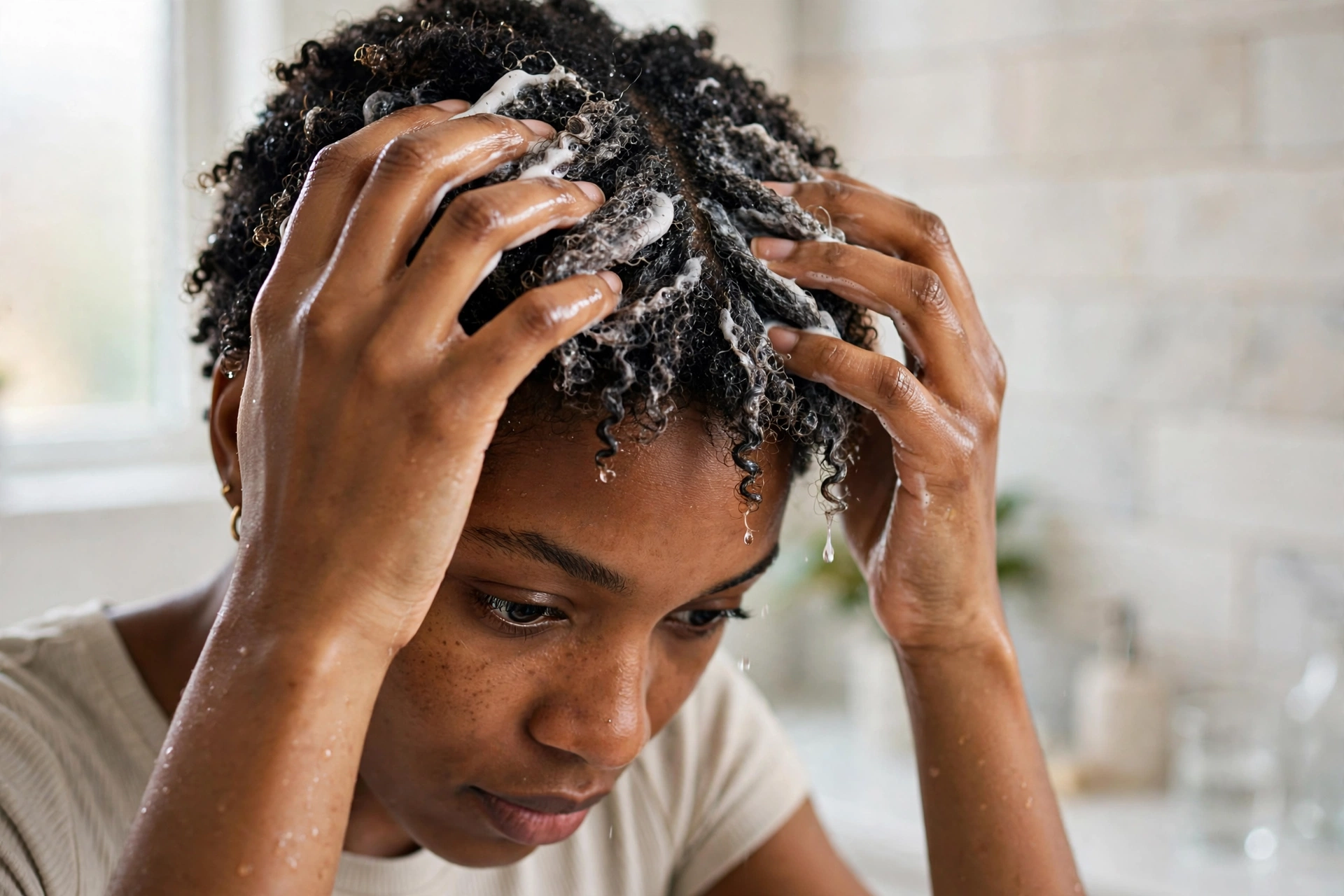
Best Conditioner for 4C Hair: 8 Rinse-Out Picks That Actually Work (2026)
Search Google for the best conditioner for 4c hair and you will mostly find deep-conditioner roundups, leave-in lists, and brand blogs quietly pushing their own products. Almost nobody answers the simple question most people are actually asking: which everyday rinse-out conditioner should I use on wash day?
That is what this guide does. Below are eight rinse-out conditioners matched to different porosity levels and budgets, chosen from what people with 4c hair consistently report in reviews plus a careful look at the ingredient lists. No fake lab-testing claims, no sponsored rankings — just honest, research-based guidance.
If you are building a full routine, this article is part of our 4c series — start with our overview of the best products for 4c hair, then come back here for the wash-day staple.
Our Top Picks at a Glance
| Product | Approx. price* | Best for | Porosity fit |
|---|---|---|---|
| SheaMoisture Manuka Honey & Mafura Oil Intensive Hydration Conditioner | $11–13 | Overall moisture | All, esp. medium–high |
| Mielle Pomegranate & Honey Moisturizing & Detangling Conditioner | $13–15 | Detangling and slip | All |
| tgin Triple Moisture Replenishing Conditioner | $15–17 | Very dry, thirsty hair | High porosity |
| Aunt Jackie’s Knot On My Watch Instant Detangling Therapy | $8–10 | Budget detangling | All |
| Pattern Intensive Conditioner | $25–28 | Premium pick, thick textures | Medium–high |
| Carol’s Daughter Black Vanilla Moisture & Shine Hydrating Conditioner | $12–14 | Lightweight moisture | Low porosity |
| Cantu Shea Butter Hydrating Cream Conditioner | $6–8 | Budget moisture | Medium–high |
| SheaMoisture Low Porosity Weightless Hydrating Conditioner | $11–13 | Low-porosity coils | Low porosity |
*Approximate US retail prices at the time of writing — always check current pricing.
Rinse-Out vs. Deep Conditioner vs. Leave-In vs. Co-Wash: What Do You Actually Need?
Half the confusion around “conditioner” comes from the fact that four different products share the name. Here is the honest breakdown:
| Type | What it does | How long it stays on | When to use it |
|---|---|---|---|
| Rinse-out conditioner | Restores moisture and slip after shampooing; smooths the cuticle | 3–5 minutes | Every wash day |
| Deep conditioner / mask | Intensive moisture or protein treatment that penetrates more deeply | 15–30 minutes, often with heat | Weekly or biweekly |
| Leave-in conditioner | Lightweight moisture that stays in the hair between washes | Not rinsed out | After washing, and for refreshes |
| Co-wash (cleansing conditioner) | Gently cleanses with minimal lather | Rinsed out | Between regular wash days |
A rinse-out conditioner is the everyday workhorse — it is the one product in this list you will use most often. A deep conditioner is a periodic treatment, not a replacement for your regular conditioner. (We will publish a dedicated deep-conditioner roundup for 4c hair next, so this guide stays focused on the wash-day staple.)
The 8 Best Rinse-Out Conditioners for 4C Hair
1. SheaMoisture Manuka Honey & Mafura Oil Intensive Hydration Conditioner — Best Overall Moisture
Built on manuka honey (a natural humectant), mafura oil, and shea butter, this is the rinse-out counterpart to SheaMoisture’s popular masque. Reviewers with 4c hair consistently report that it leaves coils noticeably softer and more pliable after a single wash, with the softness lasting several days when paired with a good leave-in.
Honest limitations: The formula is rich, so low-porosity hair may find it heavy for weekly use — a lighter hand or a less frequent schedule fixes that. The scent is sweet and noticeable; fragrance-sensitive users should patch-sniff first.
2. Mielle Pomegranate & Honey Moisturizing & Detangling Conditioner — Best for Detangling
If wash day means an hour of painful detangling, this is the bottle to reach for. The pomegranate and honey formula is repeatedly praised by reviewers with tight coils for its slip — the hair practically releases tangles with fingers or a wide-tooth comb. It is one of the most consistently recommended rinse-outs in the natural-hair community for a reason.
Honest limitations: It is a detangling-first conditioner, not the richest moisturizer on this list — very dry, high-porosity hair may want to follow it with a heavier leave-in. The fragrance is strong for some noses.
3. tgin Triple Moisture Replenishing Conditioner — Best for Very Dry, High-Porosity Hair
High-porosity 4c hair drinks up moisture and loses it just as fast. This conditioner is formulated for exactly that problem, with shea butter and olive oil in a rich base that reviewers with high-porosity coils describe as genuinely quenching rather than just coating. It is a frequent “holy grail” mention in high-porosity wash-day routines.
Honest limitations: It is one of the pricier bottles here per ounce, and it can be too heavy for low-porosity hair, where it may sit on the surface and cause buildup. Know your hair porosity before buying.
4. Aunt Jackie’s Knot On My Watch Instant Detangling Therapy — Best Budget Detangler
At under $10, this is the cheapest way to make wash day dramatically less painful. Reviewers consistently say it melts through knots on 4c hair in minutes, and the formula is light enough to rinse clean without residue. For anyone new to natural hair care, it is a low-risk first bottle.
Honest limitations: It is a detangler, not a deep moisture treatment — do not expect it to rescue severely dry hair on its own. Think of it as the slip specialist in your routine, not the whole routine.
5. Pattern Intensive Conditioner — Premium Pick for Thick Textures
Tracee Ellis Ross’s Pattern line was designed specifically for tight textures, and the Intensive Conditioner shows it: a thick, buttery formula with shea butter, avocado oil, and safflower that reviewers with dense 4c hair describe as coating every strand evenly. If your hair eats lighter conditioners for breakfast, this is the upgrade.
Honest limitations: The price — roughly double most drugstore options. Low-porosity hair will likely find it too rich for regular use. You are paying for density and slip, not magic.
6. Carol’s Daughter Black Vanilla Moisture & Shine Hydrating Conditioner — Best Lightweight Option
Low-porosity 4c hair has the opposite problem: products sit on top instead of sinking in. This lightweight conditioner is frequently recommended for exactly that hair type — it hydrates without the heavy butters that cause buildup on moisture-resistant coils, and reviewers note it rinses clean while still leaving hair soft.
Honest limitations: Lightweight is the point, so very thick or high-porosity hair may find it insufficient on its own. It is a scalpel, not a sledgehammer — perfect for the right hair, underwhelming for the wrong hair.
7. Cantu Shea Butter Hydrating Cream Conditioner — Best Budget Moisture
The most affordable real moisture on this list. The shea-butter-based cream formula gets consistent praise from reviewers with 4c hair for softening dry coils at a price that makes generous application guilt-free — and generous application matters, because 4c hair needs more product than the bottle suggests.
Honest limitations: It can build up if you never clarify — pair it with a proper shampoo routine, not co-wash-only. Some users find the fragrance strong, and a minority report it feels heavy on fine strands.
8. SheaMoisture Low Porosity Weightless Hydrating Conditioner — Best for Low-Porosity Coils
Formulated specifically for hair that resists moisture, with lighter oils (grapeseed, sunflower) instead of heavy butters. Reviewers with low-porosity 4c hair report that it softens without the weighed-down, filmy feeling richer conditioners leave behind — the exact problem this formula was built to solve.
Honest limitations: “Weightless” cuts both ways: on very dry or high-porosity hair it can feel like it disappears without doing much. Match the product to your porosity and it shines; mismatch it and you will be disappointed.
How to Choose: Match the Conditioner to Your Porosity
Porosity — how easily your hair absorbs and holds moisture — matters more than brand loyalty. A quick recap:
- Low porosity: cuticles lie flat and resist water. Choose lightweight formulas (picks 6 and 8 above); apply to warm, damp hair, since gentle heat helps lift the cuticle slightly. Heavy butters tend to sit on top and cause buildup.
- Medium porosity: the easiest hair to condition — most balanced formulas work. Picks 1, 2, and 4 are safe bets.
- High porosity: cuticles are raised or damaged, so hair absorbs fast and loses moisture fast. Choose richer, heavier formulas (picks 3, 5, and 7) and consider sealing with an oil or butter afterward.
Not sure where you fall? Try the float test described by Healthline’s guide to hair porosity — drop a clean strand in a glass of water and see whether it floats (low), hovers (medium), or sinks (high). One honest caveat, also noted by Healthline: the float test is popular but not scientifically validated, so treat it as a rough guide, not a diagnosis. Our own hair porosity test guide walks through it step by step.
What to Look for on the Label (and What to Skip)
You do not need a chemistry degree, but three ingredient categories tell you most of what matters in a rinse-out conditioner:
- Conditioning agents: look for behentrimonium chloride, cetrimonium chloride, or behentrimonium methosulfate near the top of the list. These positively charged (cationic) surfactants are what make conditioner condition — a peer-reviewed review of hair cosmetics in the International Journal of Trichology explains that conditioners work mainly by coating the hair shaft with agents that reduce friction and static, which is exactly what makes detangling possible.
- Humectants: glycerin, honey, aloe vera, and panthenol (provitamin B5) draw moisture into the hair. Especially valuable for 4c hair in humid climates.
- Emollients and light proteins: shea butter, natural oils, and hydrolyzed proteins (silk, wheat, keratin) smooth and temporarily strengthen the hair shaft.
What to be cautious about: heavy silicones (anything ending in -cone or -xane high on the list) are not evil, but they build up — if you use them, clarify regularly. Drying alcohols (isopropyl alcohol, denatured alcohol — not the fatty alcohols like cetyl alcohol, which are fine) can be rough on already-dry 4c hair.
How to Condition 4C Hair the Right Way
The best conditioner in the world underperforms with bad technique. On wash day:
- Shampoo first, in sections. Work in 4–6 sections to keep tangles from forming in the first place. (A pre-poo treatment beforehand makes this even gentler.)
- Apply generously, mid-lengths to ends. The ends are the oldest and driest part of your hair — they need the most product. Do not be shy; 4c hair needs more conditioner than you think.
- Leave it 3–5 minutes. That is the whole job of a rinse-out conditioner. Longer is not better here — that is what deep conditioners are for.
- Detangle while the conditioner is in. Fingers first, then a wide-tooth comb, working from ends to roots. This single habit prevents more breakage than any product. Our detangling guide covers the technique in detail.
- Rinse thoroughly with cool to lukewarm water. Leftover conditioner equals buildup, dullness, and itchiness by mid-week.
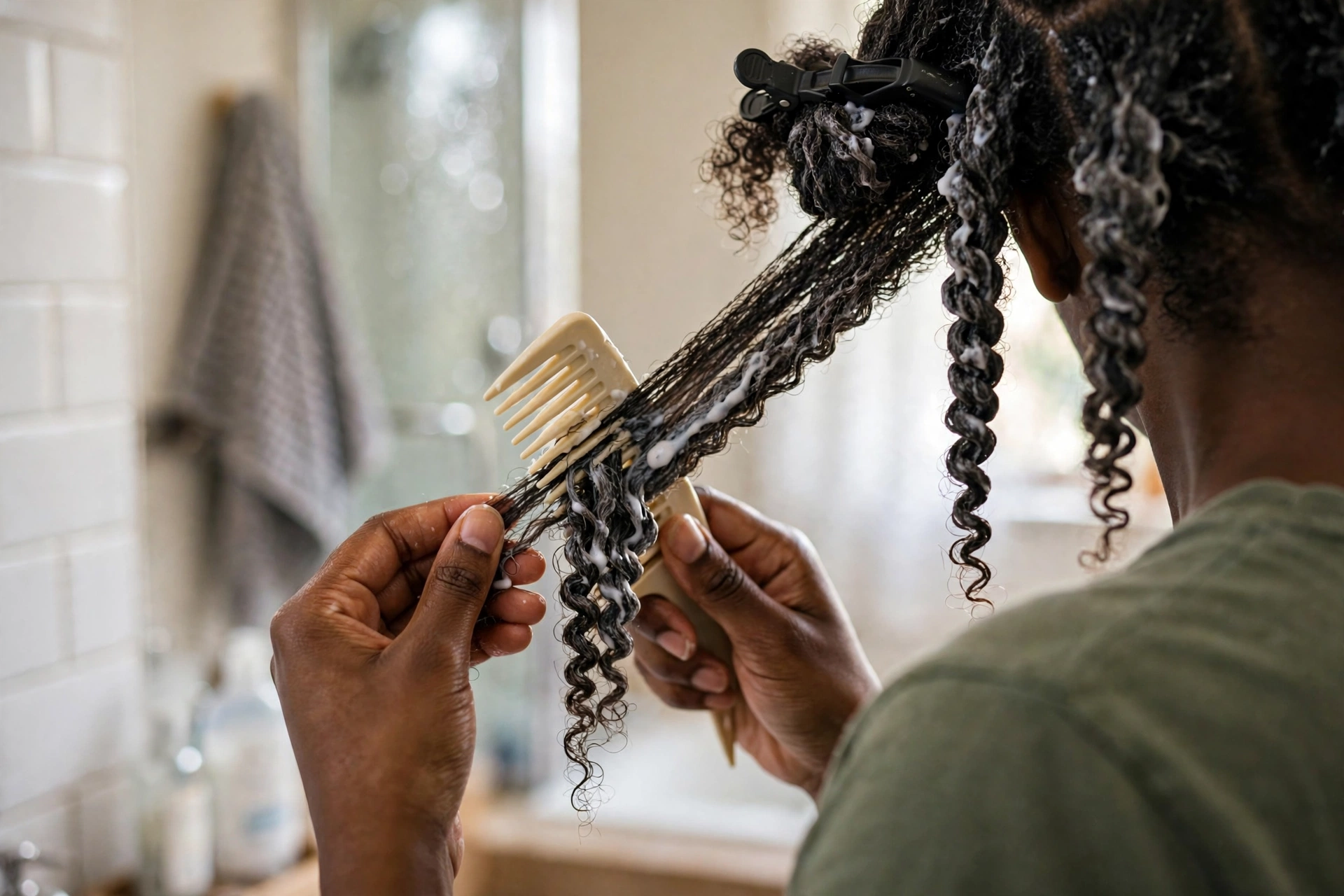
The American Academy of Dermatology’s everyday-care tips for Black hair are worth reading alongside this — gentle handling during washing and conditioning is a recurring theme in their dermatologist-written guidance.
What a Rinse-Out Conditioner Can’t Do
Honesty is the point of this site, so here are the limits:
- It cannot repair split ends. Nothing can — split ends can only be trimmed away. Conditioner can temporarily smooth them and prevent new ones, but “repair” marketing is fiction.
- It cannot change your porosity or curl pattern. It works with your hair’s structure; it does not rewrite it.
- It cannot make your hair grow faster. Conditioner reduces breakage, which helps you retain length — that is genuinely valuable, but it is not growth.
- It cannot replace deep conditioning for very dry or damaged hair. If your hair still feels like straw after a good rinse-out, that is your sign to add a weekly deep treatment, not to buy a more expensive rinse-out.
Frequently Asked Questions
Can I use a deep conditioner instead of a regular conditioner every wash day?
You can, but it is usually overkill — and expensive overkill. Deep conditioners are concentrated treatments meant for 15–30 minutes; using one for 3 minutes every wash wastes product without extra benefit. Use a rinse-out for every wash and save the deep conditioner for its weekly slot.
How long should I leave conditioner in 4c hair?
For a rinse-out conditioner: 3–5 minutes is enough for the conditioning agents to do their work. If you want a longer treatment, switch to an actual deep conditioner rather than leaving a rinse-out on for 30 minutes.
Should I condition my 4c hair every time I wash it?
Yes. Shampoo lifts the cuticle and removes oils; conditioner smooths everything back down and restores slip. Skipping conditioner on 4c hair is one of the fastest routes to tangles and breakage.
Is silicone-free conditioner better for 4c hair?
Not automatically. Silicones provide excellent slip and frizz control; the tradeoff is buildup, which means you need to clarify occasionally. Many people with 4c hair do perfectly well with silicones plus a monthly clarifying wash. “Silicone-free” is a preference, not a rule.
Can I co-wash instead of using shampoo and conditioner?
Co-washing is gentler, but it does not cleanse as thoroughly as shampoo — over time, product buildup can block moisture from reaching the hair. Most 4c routines work best alternating: regular shampoo + conditioner wash days, with co-washes in between if you wash frequently.
Why does my hair still feel dry right after conditioning?
Three usual suspects: the formula is wrong for your porosity (too light for high porosity, too heavy and film-forming for low), you are not using enough product, or you have buildup blocking absorption and need a clarifying wash first. Work through them in that order.
The Bottom Line
For most people with 4c hair, the SheaMoisture Manuka Honey & Mafura Oil Intensive Hydration Conditioner is the safest all-around rinse-out pick, the Mielle Pomegranate & Honey wins if detangling is your main battle, and low-porosity coils should start with the SheaMoisture Low Porosity Weightless Hydrating Conditioner or Carol’s Daughter Black Vanilla. Match the formula to your porosity, use enough of it, detangle while it is in — and let the deep conditioner handle the heavy lifting once a week.
Disclaimer: This article is for informational purposes only and is based on publicly available product information, ingredient analysis, and aggregated user reviews — not on laboratory testing by PickHonestly. Everyone’s hair responds differently; patch-test new products and discontinue use if you experience irritation. If you have persistent hair loss, scalp pain, or breakage that does not improve, see a dermatologist.