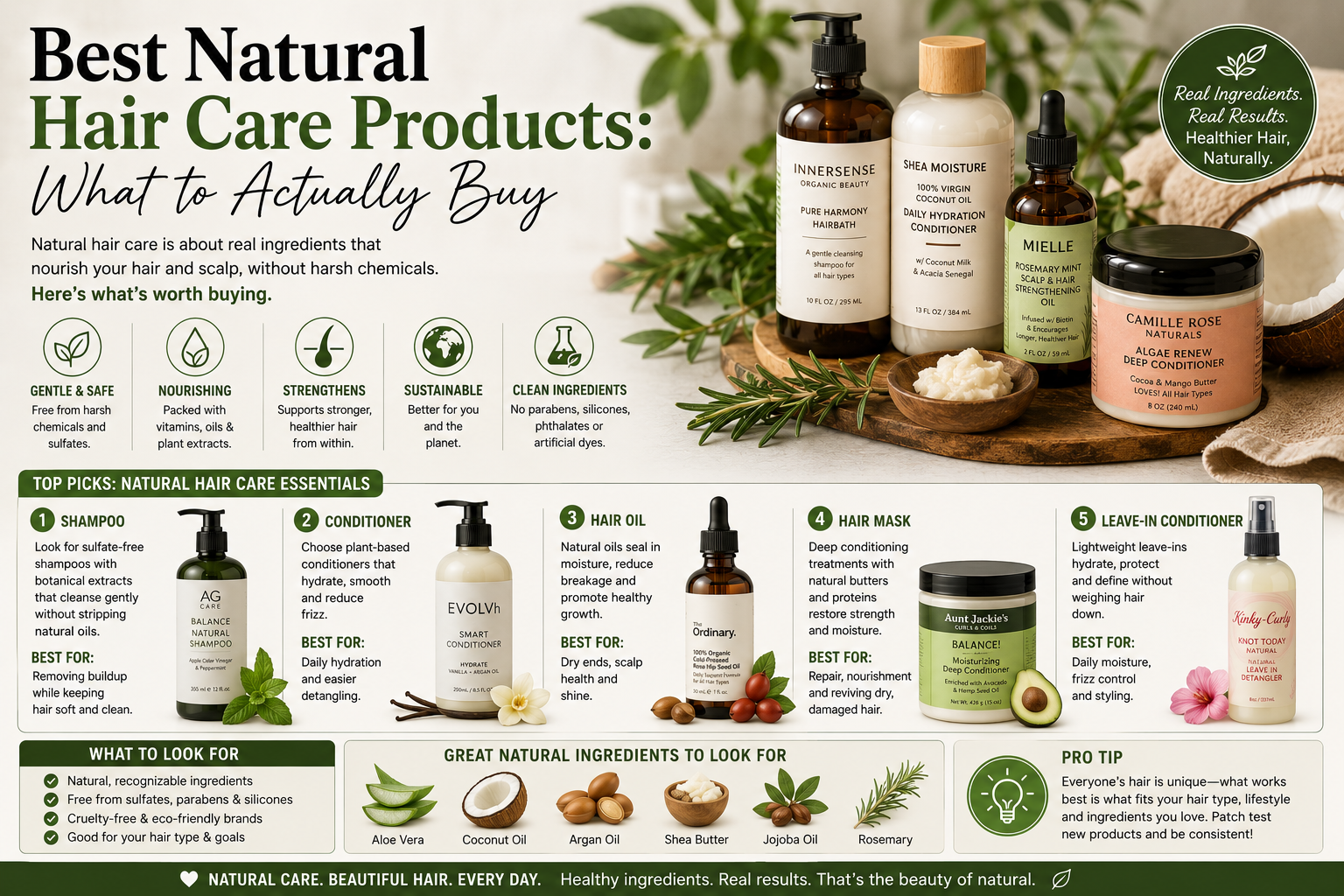
Best Natural Hair Care Products: What’s Actually Worth Buying
What “Natural” Actually Means on a Label
Here’s the annoying truth: “natural” isn’t a regulated word. Any brand can slap it on a bottle with almost nothing backing it up. What actually matters is the ingredient list, not the front-of-bottle marketing.
Ingredients Worth Looking For
Plant oils show up again and again for good reason. Argan oil smooths the outer layer of the hair shaft and cuts down on moisture loss. Jojoba oil behaves a lot like your scalp’s own natural oil, so it tends to absorb without feeling heavy. Coconut and avocado oil round out the usual lineup, both leaning on fatty acids that coat and protect strands.
Ingredients Worth Skipping
Sulfates strip more than dirt, they strip natural oils too, leaving hair drier over time even though it feels squeaky clean right after washing. Silicones aren’t dangerous, exactly, but they build up and coat hair rather than nourish it, and parabens are worth avoiding mainly because gentler preservative options already exist.
Best Natural Hair Care Products by Category
Rather than chasing one miracle bottle, it helps to think in categories. Different products solve different problems, and the best natural hair care products tend to specialize instead of promising everything at once.
Sulfate-Free Shampoo
This is the actual foundation. The Good Trade’s roundup of nontoxic shampoos covers a solid range, most built around gentle surfactants instead of harsh detergents. Don’t be thrown off by less foam, that’s normal for sulfate-free formulas, not a sign it’s not working. If you want to start browsing options directly, Amazon.ca’s sulfate-free shampoo listings are a decent place to compare.
Leave-In Conditioners and Stylers
NBC Select’s breakdown of the best natural styling products points out that the right styler really depends on your goal, curl definition, frizz control, or just detangling, rather than one product doing everything at once. Worth reading before buying three different products you didn’t actually need.
Scalp Serums and Oils
Rosemary oil’s gotten a lot of attention lately, and it’s not pure hype either. Dermatologist Dr. Michelle Henry told Today.com that rosemary oil performs comparably to a low-dose minoxidil treatment in some research, with far fewer side effects. Not a miracle cure, but a genuinely useful natural option worth knowing about.
How to Pick the Right Product for Your Hair Type
Butters and oils don’t work the same for everyone, and that’s the part most generic buying guides skip over entirely. Hair porosity, basically how well your hair absorbs and holds moisture, changes which ingredients actually help.
If Your Hair Is Dry or Coarse
Heavier butters like shea and mango tend to perform better here, since they sit on the hair longer and hold moisture in. A weekly deep conditioning treatment on top of a normal routine makes a noticeable difference for this hair type specifically.
If Your Hair Is Fine or Oily-Prone
Lighter oils like jojoba or a small amount of argan oil work better than heavy butters, which can weigh fine hair down fast. Less is genuinely more here, a few drops goes further than people expect the first time they try it.
Dermatologist-Backed Ingredients Worth Prioritizing
Dove’s dermatologist-reviewed breakdown puts a lot of weight on scalp health specifically, not just the hair strand itself. A healthy scalp barrier tends to produce healthier hair growth over time, which is easy to forget when every product on the shelf is marketed toward the hair itself.
Why Scalp Care Gets Overlooked
Most people treat scalp and hair as the same problem. They’re related, but not identical. A gentle exfoliating scalp scrub once or twice a month clears buildup that regular shampoo alone tends to miss.
Common Mistakes People Make Buying Natural Hair Products
- Trusting the word “natural” on the front label without flipping the bottle over to check the actual ingredients.
- Buying a heavy butter-based product for fine hair, then wondering why it looks greasy by afternoon.
- Expecting results within a week or two. Most natural ingredients need several weeks of consistent use before any real difference shows up.
Worth saying plainly: natural products usually work slower than harsher chemical alternatives. That’s the tradeoff, gentler on hair long-term, less dramatic short-term.
If You Want a Full Routine, Not Just Products
This guide focuses mainly on what to actually buy and why. If you’re looking for a complete step-by-step routine instead, our complete guide to natural hair care walks through the full process in more depth. And if your hair is specifically textured or curly natural hair rather than chemically treated, our breakdown built for natural hair specifically covers that angle a bit more directly.
Curious how these compare to other regional approaches, our look at Korean hair care products covers a different, ingredient-layering philosophy that’s worth knowing about too.
Quick Questions People Ask
What is the best natural hair care product for damaged hair?
A sulfate-free shampoo paired with a weekly deep conditioning treatment using shea or mango butter tends to help the most with damage specifically, since damaged hair usually needs more moisture retention than styling.
What are the best organic natural hair care products?
Look for brands that list specific certified organic ingredients rather than just using the word loosely. Argan oil, jojoba oil, and shea butter are common ingredients across most genuinely organic lines.
Do natural hair products work for all hair types?
Not universally. Hair type, climate, and even water hardness all affect how well a given ingredient performs, which is why matching the product to your specific hair matters more than following trends.
Is it normal for natural shampoo to lather less than regular shampoo?
Yes, completely normal. Sulfate-free formulas produce less foam by design. Lather amount isn’t actually a reliable sign of how well a shampoo cleans.
Can natural products replace dermatologist treatments for hair loss?
For everyday dryness or frizz, often yes. For a real medical condition like significant hair loss, natural products should support treatment, not replace professional care entirely.
Bottom Line on the Best Natural Hair Care Products
The best natural hair care products come down to a short list of ingredients that actually work, matched to your specific hair type, not whatever has the biggest “natural” label on the front. Check the ingredient list, be patient with results, and don’t assume heavier automatically means better.