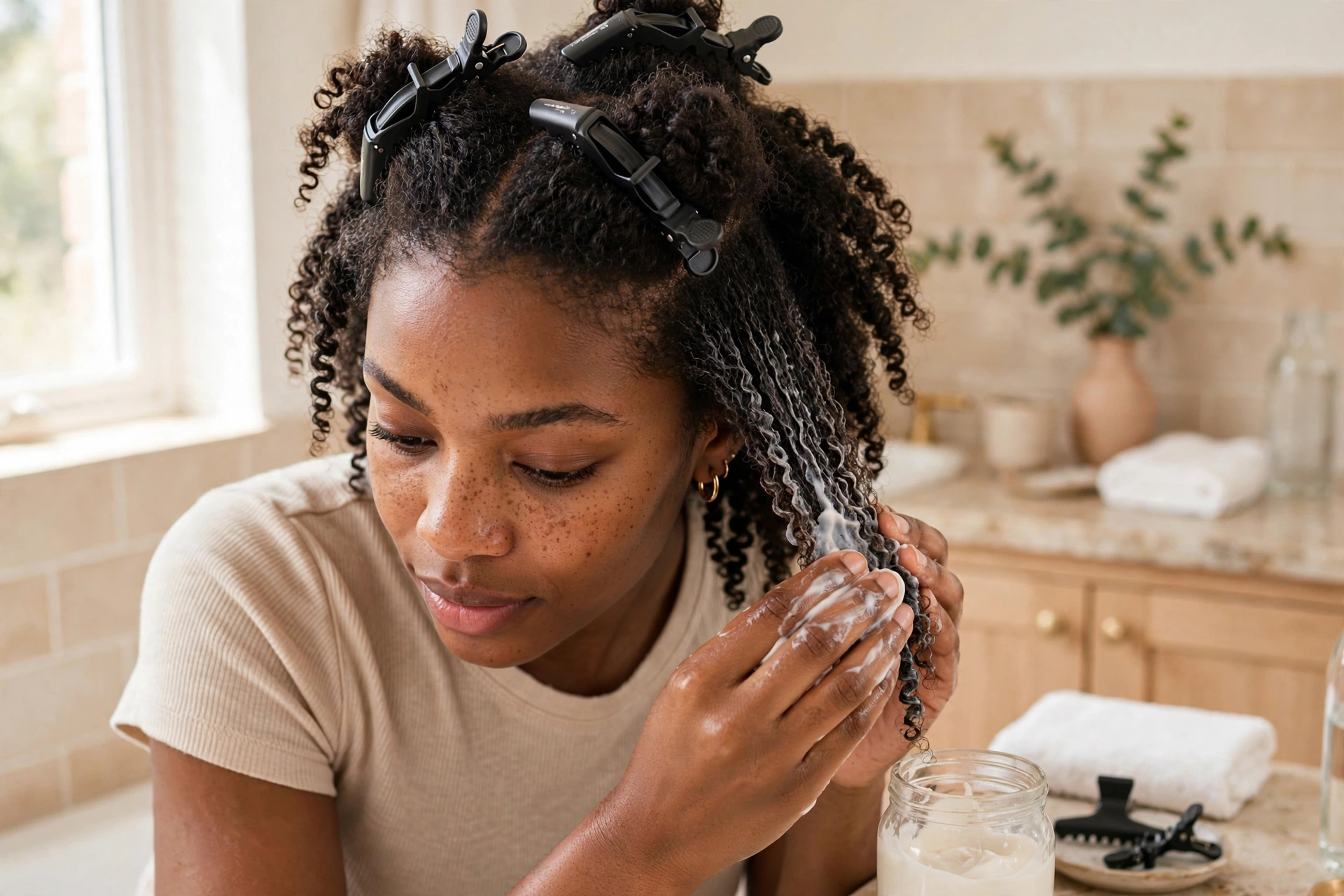
4C Hair Care Routine: The Complete Wash Day & Daily Guide (2026)
There is no shortage of 4C hair care routines on the internet — and that is exactly the problem. Most of them list the same six steps (cleanse, condition, moisturize, protect, repeat) without telling you the things that actually determine whether a routine works: how often to do each step, in what order for your porosity, when to clarify, when to add protein, and when to trim. This guide fills those gaps. It is built from dermatologist guidance, cosmetic science, and what people with 4C hair consistently report actually works — not hype.
Whether you are starting from scratch or fixing a routine that leaves your hair dry by Wednesday, you will leave with a complete, honest 4C hair care routine: a full wash day sequence, a daily and nightly plan, a realistic frequency schedule, and the mistakes to stop making.
Why 4C Hair Needs Its Own Routine
4C hair has the tightest coil pattern of all hair types. Those tight coils mean two mechanical realities no routine can ignore:
- Sebum cannot travel down the strand. The scalp’s natural oils slide easily down straight hair but get stuck in tight coils, so the lengths and ends of 4C hair are chronically under-lubricated. That is why dryness and breakage — not slow growth — are the main enemy.
- Tangles are structural, not carelessness. Neighboring coils wrap around each other, especially when hair shrinks (shrinkage of up to 70% is normal for 4C hair). Every wash day is partly a detangling operation, which is why dry detangling is one of the most damaging habits you can have.
Understanding your porosity matters here too. Low-porosity 4C hair resists water and product; high-porosity 4C hair absorbs fast and loses moisture just as fast. If you have not checked yours, this simple porosity test takes five minutes and changes which order you layer products in (more on that below).
The 4C Hair Care Routine at a Glance
Before the step-by-step detail, here is the whole routine as a schedule. If you only remember one thing from this article, make it this table — none of the top-ranking routine guides publish a complete one.
| When | What to do | Details |
|---|---|---|
| Daily | Moisturize & seal as needed | Light water-based mist, then a small amount of oil or cream on the ends. Skip if hair still feels soft — over-moisturizing causes buildup. |
| Nightly | Protect your hair | Loose twists/braids or a pineapple, then a satin bonnet or satin pillowcase. Never cotton. |
| Weekly (wash day) | Pre-poo → cleanse → condition → deep condition → detangle → moisturize (LOC/LCO) → style | The core of the routine. Most 4C hair thrives on weekly wash days. |
| Every 2 weeks (optional) | Co-wash between shampoos | Useful if your scalp gets sweaty or you use heavy styling products. Skip if your hair feels clean. |
| Monthly | Clarify + protein check | Clarifying shampoo when you feel buildup; a light protein treatment every 4–6 weeks if hair is weak or mushy. |
| Every 8–12 weeks | Inspect ends, trim if needed | Dust split ends or take off up to half an inch. This is length retention insurance. |
Wash Day: The Step-by-Step Routine
Wash day is the backbone of 4C hair care, and the American Academy of Dermatology’s guidance for Black hair supports the cadence used here: washing tightly coiled hair about once a week or every other week, always followed by conditioning. Work in 4–8 sections from start to finish — it cuts detangling time and breakage dramatically.
Step 1: Pre-poo (15–30 minutes)
A pre-poo is a treatment applied before shampoo. Shampoo is designed to lift oil and dirt, and on 4C hair it will happily lift the moisture from your strands too. A pre-poo puts a protective buffer in place first. Apply a light oil (coconut, olive, or avocado) or a cheap conditioner to dry, sectioned hair, cover with a shower cap, and wait 15–30 minutes. If your hair is very dry, leave it on overnight.
Honest note: pre-pooing is not mandatory. If your shampoo is gentle and your hair is healthy, you can skip it. It is most worth the time for dry, fragile, or color-treated 4C hair.
Step 2: Cleanse with a sulfate-free shampoo
Focus shampoo on your scalp, not your lengths. That is where oil, sweat, and product buildup live; the suds running down will clean the strands without you scrubbing them. Use a sulfate-free shampoo for natural hair — harsh sulfates strip 4C hair aggressively and leave it feeling like straw before conditioning even starts. Wash in sections, using warm (not hot) water.
When to clarify instead: once a month — or whenever your hair feels coated, your scalp itches, or products stop absorbing — use a clarifying shampoo. Heavy butters, silicones, and hard water minerals build up over time. Clarifying resets everything; always deep condition immediately afterward, because clarifying shampoos are more drying than regular ones.
Step 3: Deep condition (20–45 minutes)
This is the single most important step for 4C hair, and the one most skipped routines underplay. Apply a rich deep conditioner from roots to ends in sections, cover with a shower cap, and add gentle heat (a hooded dryer or warm towel) for 20–45 minutes — heat lifts the cuticle slightly so moisture penetrates, which matters especially for low-porosity hair. Our roundup of the best deep conditioners for 4C hair is matched to porosity so you can pick the right one.
Step 4: Detangle — wet, slippery, patient
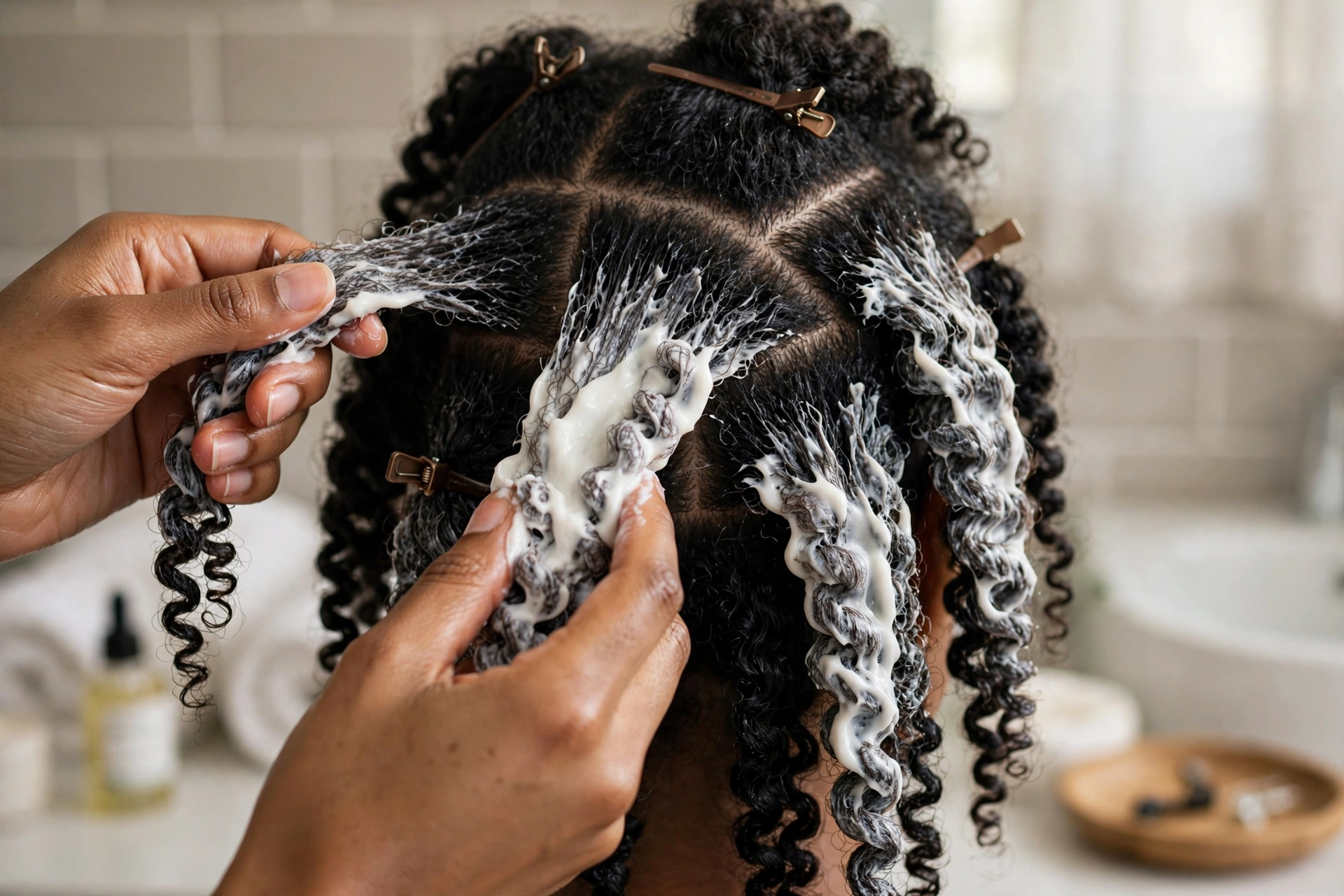
Detangle only on wet, conditioner-coated hair, working from ends to roots, one section at a time. Start with your fingers, then a wide-tooth comb if needed. Dry detangling is the leading cause of 4C breakage — every major routine guide says this, and it is the advice most worth obeying. For the full technique, see our guide on how to detangle natural hair without breakage.
Step 5: Moisturize with LOC or LCO — matched to your porosity
On damp (not dripping) hair, layer products in this order:
- L = Liquid: water or a water-based leave-in conditioner. A good leave-in conditioner for 4C hair does most of the hydrating work here.
- O = Oil, C = Cream — and the order depends on your porosity:
- Low porosity → LCO. Cream first, then a light oil to seal. Oils sit on low-porosity hair, so putting oil first blocks the cream from absorbing.
- High porosity → LOC. Oil first to slow moisture loss, then cream on top to seal it in. High-porosity hair leaks moisture fast and needs the oil layer closest to the strand.
Use small amounts. If your hair feels coated or sticky, you used too much — product buildup is a routine killer, not a sign of extra moisture. For more on keeping moisture levels stable day to day, see how to moisturize natural hair.
Step 6: Style with minimal manipulation
Choose styles that keep your hands out of your hair and your ends tucked away: twists, braids, Bantu knots, or a simple low bun. This is where protective styling earns its reputation — it reduces daily handling, which is where most mechanical breakage happens. Two rules:
- Never install styles that pull at your edges or cause pain. Traction alopecia from tight styles is real and often permanent.
- Rest your hair between installs. Two to four weeks in a protective style, then at least a week out.
Between Wash Days: The Daily and Nightly Routine
Wash day gets the attention, but the days between determine your results.
Daily: Check your ends in the morning. If they feel dry, lightly mist with water and smooth on a pea-sized amount of leave-in or cream, then a drop of oil to seal. If they feel soft, leave them alone — daily re-moisturizing on hair that does not need it causes buildup, which then requires more clarifying, which dries hair out. Let your hair tell you.
Nightly: Friction is the quiet enemy of 4C hair. Before bed, loosely twist or braid your hair (or pineapple it — gather it loosely on top of your head with a satin scrunchie), then cover with a satin bonnet or sleep on a satin pillowcase. Cotton pillowcases absorb moisture and roughen the cuticle overnight. A tiny amount of oil on the ends before covering adds overnight protection.

Exercise and sweat: sweat is salt water — it dries hair out. If you work out often, rinse your scalp with water and re-moisturize after sessions rather than doing full shampoo wash days every time. A co-wash once between shampoo days works well here.
How Often Should You Wash 4C Hair?
This is the most-searched question in the routine cluster, and the honest answer is: it depends on your scalp, but weekly is the right starting point for most people.
- Weekly works for most 4C hair — enough to keep the scalp clean without stripping the lengths.
- Every 2 weeks is fine if your scalp is dry, you use light products, and you are not very active. Stretch further only if your scalp genuinely stays comfortable — an itchy, flaky scalp needs washing, not endurance.
- More than weekly makes sense if you sweat heavily, use a lot of styling product, or have an oily scalp. Just keep the shampoo gentle and never skip deep conditioning.
Signs you are washing too often: hair feels squeaky-dry even after conditioning, frizz increases, ends snap easily. Signs you are washing too little: itchy scalp, visible flakes, products sitting on top of hair instead of absorbing, unpleasant odor.
Protein vs. Moisture: Finding Your Balance
Hair is made of keratin protein, and 4C hair — especially if heat-styled, colored, or chemically treated — loses protein over time. But protein and moisture exist in tension: too much protein makes hair stiff and brittle; too much moisture makes it mushy and stretchy without springing back.
How to read your hair: take a shed strand and stretch it gently when wet. If it stretches a lot and does not bounce back, you need protein. If it snaps immediately with no stretch, you need moisture. Healthy hair stretches a little and returns.
The schedule: a light protein treatment every 4–6 weeks is a sensible default for 4C hair. Damaged or high-porosity hair may need it more often; healthy low-porosity hair may need it rarely. Deep conditioning (moisture) stays weekly regardless. Never do heavy protein and clarifying in the same session unless your hair is severely damaged — that combination is harsh.
Trimming 4C Hair: When and How Often
Trimming does not make hair grow faster — hair grows from the scalp at roughly half an inch per month regardless. Trimming prevents split ends from traveling up the strand and forcing you to cut inches later. It is length-retention insurance, not a growth hack.
- Every 8–12 weeks is the standard recommendation; check your ends under good light for splits, thinning, or single-strand knots.
- Dusting (snipping a quarter inch or less off individual problem ends) between trims keeps damage from spreading.
- Trim on stretched or straightened hair if you want an even cut — trimming shrunken 4C hair blind almost always takes off more than intended.
Length Retention: What Actually Works
Let us be honest about the goal most routines promise. Average hair growth is about half an inch per month for everyone, and no product changes that rate — claims otherwise are marketing. What a routine can change is how much of that growth you keep. For 4C hair, breakage at the ends routinely erases months of growth, which is why length retention — not growth speed — is the real metric.
The retention levers, in order of impact: (1) never detangle dry, (2) deep condition weekly, (3) keep ends moisturized and tucked in protective styles, (4) sleep protected every night, (5) trim on schedule. The published review of hair cosmetics in the International Journal of Trichology documents how formulation choices affect hair fiber integrity — the science backs what consistent routines show: gentle, regular care beats occasional intensive treatments.
Seasonal Adjustments
Winter: indoor heating drops humidity, and 4C hair dries out faster. Seal more heavily (high-porosity hair especially), deep condition with heat every week without fail, and consider protective styles for longer stretches. A humidifier in your bedroom genuinely helps.
Summer: humidity is your friend but sweat is not. Rinse after heavy sweating, protect hair from chlorine and salt water (wet it with clean water and add conditioner before swimming — saturated hair absorbs less pool water), and watch for buildup from heavier summer styling products.
7 Beginner Mistakes That Ruin 4C Routines
- Detangling dry. The number-one breakage habit. Wet + slippery + ends-to-roots, every time.
- Skipping deep conditioning. Regular conditioner is not a substitute. Weekly deep conditioning is the step that keeps 4C hair elastic.
- Using too much product. More product does not equal more moisture. Thin layers absorb; thick layers sit on top and cause buildup.
- Tight protective styles. If your edges hurt, the style is too tight. Pain is damage, full stop.
- Cotton pillowcases. They wick moisture out of your hair all night. Satin or silk costs little and changes a lot.
- Chasing new products instead of consistency. A simple routine done weekly beats a perfect routine done monthly. Give any routine 6–8 weeks before judging it.
- Ignoring the scalp. Healthy hair grows from a healthy scalp. Wash it, massage it, and see a dermatologist — not a product — for persistent itching, flaking, or shedding.
Frequently Asked Questions
What is the best routine for 4C hair?
The best routine for 4C hair is a consistent weekly wash day (pre-poo, sulfate-free cleanse, deep condition with heat, wet detangling, LOC or LCO moisturizing matched to your porosity, protective styling) plus nightly satin protection and daily moisture checks. Consistency matters more than product choice.
How often should you wash 4C hair?
Once a week works for most people with 4C hair. Every two weeks is fine for dry scalps and light product users. Wash more often if you sweat heavily or use heavy styling products. An itchy or flaky scalp is your signal to wash, not to wait.
How often should you deep condition 4C hair?
Weekly. Deep conditioning is the most important recurring step for 4C hair — it restores moisture and elasticity that daily styling and washing remove. Use heat (shower cap + warm towel or hooded dryer) for 20–45 minutes for best penetration.
Can I wash 4C hair every day?
Technically yes, but it is rarely a good idea. Daily shampooing strips the oils 4C hair already lacks. If you need daily rinsing (for example, after workouts), rinse with water and condition rather than shampooing, and keep full wash days weekly.
Should I use the LOC or LCO method?
It depends on your porosity. Use LCO (liquid, cream, oil) if your hair is low porosity, because oil sitting on low-porosity hair blocks cream from absorbing. Use LOC (liquid, oil, cream) if your hair is high porosity, because oil closest to the strand slows the fast moisture loss high-porosity hair suffers from. The Healthline guide to hair porosity explains the science behind these differences.
Does 4C hair need oil?
Oil does not moisturize hair — water does. Oil seals moisture in and lubricates the strand to reduce friction and breakage. So yes, oil has a role in most 4C routines, but as a sealant after water or leave-in, not as a moisturizer on dry hair.
How long does it take to see results from a 4C hair routine?
Moisture and manageability usually improve within 2–4 weeks of consistent wash days. Visible length retention takes 3–6 months because hair grows about half an inch per month and you are measuring kept length, not new growth speed. Give any new routine at least 6–8 weeks before changing it.
How often should 4C hair be trimmed?
Check your ends every 8–12 weeks and trim or dust split ends as needed. Trimming does not speed growth — it stops splits from traveling up and costing you inches later.
The Bottom Line
A 4C hair care routine does not need to be complicated — it needs to be consistent, porosity-aware, and honest about what each step does. Wash weekly, deep condition every time, detangle wet, moisturize in the right order for your porosity, protect your hair at night, and trim on schedule. If you want product picks matched to each step, start with our best products for 4C hair pillar guide, which links to every routine-specific roundup in this series.
Disclaimer: This article is for general information only and is not medical advice. Hair and scalp conditions vary; if you have persistent itching, flaking, unusual shedding, or hair loss, consult a dermatologist.