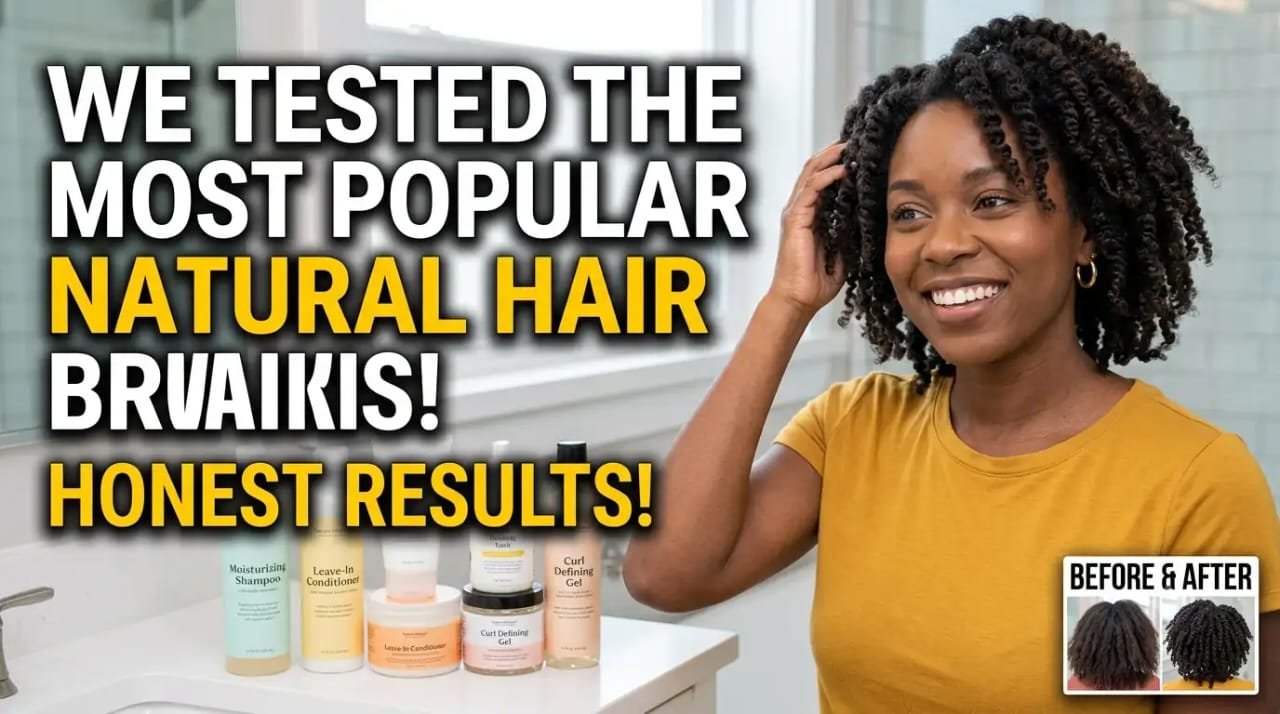
Natural Hair Care Products for Black Hair: We Tested the Most Popular Brands (Honest Results)
We tested natural hair care products for black hair — moisturizing shampoo, leave-in conditioner, and curl defining gel — with real before-and-after results.
Not every product labeled “natural” actually earns that word, and that is the first thing worth knowing before you spend your money. We set out to test natural hair care products for black hair expecting a tidy list of shea-butter miracles. What we got instead was messier and more useful: a few genuinely excellent formulas, some overpriced marketing, and enough surprises to change how we shop. Here is what actually worked, what did not, and how you can tell the difference for yourself.
What to Look for in the Best Natural Hair Care Products for Black Hair
Coily and curly hair has a naturally uneven cuticle, which means moisture escapes faster than it does with straighter hair textures. That is why the best natural hair care products for black hair tend to lean on humectants like glycerin and aloe, paired with sealing oils that lock that moisture in.
Before buying anything, it helps to know your hair’s porosity — low porosity hair resists moisture and does better with lighter, water-based products, while high porosity hair soaks moisture up quickly but loses it just as fast. Reading the first five ingredients on any label tells you more than the marketing on the front of the bottle ever will.
Curl pattern matters too, though it’s often treated as the only variable that counts. A 3B curl and a 4C coil can both be labeled “curly” on a product box, yet need almost opposite approaches — one wants lightweight creams that won’t weigh curls down, the other usually needs thicker butters to counter faster moisture loss. Matching a product to your actual pattern, not just the marketing photo on the bottle, saves both money and disappointment.
Sulfate-Free Hair Care Products for Black Hair Matter More Than You’d Think
Sulfates (SLS and SLES) are the ingredients responsible for that thick, foamy lather in most shampoos — and they are also what strip natural oils fastest from already-dry curls. In our sulfate-free shampoo for black hair honest review, the formulas that skipped harsh sulfates left curls noticeably softer by the second wash, without the tight, squeaky-clean feeling that usually signals over-stripping.
That does not mean every sulfate-free label is automatically better — some replace sulfates with silicones that build up over time. A short, recognizable ingredient list still matters more than any single buzzword on the front of the bottle.
Best Hair Oils for Black Hair Growth
Oils don’t make hair grow faster on their own, but they do reduce breakage, which is often the real reason hair looks like it has “stopped growing.” Jamaican black castor oil remains the most talked-about option in this category, and testing Jamaican black castor oil products for black hair confirmed why: its thicker consistency seals split ends and reduces friction during detangling better than lighter oils like argan or sweet almond.
For daily use, lighter oils such as jojoba absorb faster and work well on the scalp itself, while heavier oils like castor or coconut are best saved for sealing ends after a wash-day routine.
Best Leave-In Conditioners for Natural Black Hair
A good leave-in is arguably more important for coily hair than the shampoo itself, since it is doing the daily work of keeping strands hydrated between wash days. The best leave-in conditioners for natural black hair we tested shared one trait: aloe or glycerin listed near the top of the ingredients, rather than buried after a long list of fragrances and preservatives.
A leave-in that leaves hair feeling coated rather than soft usually means too much silicone and not enough actual moisture — a distinction that is easy to miss until you’ve compared a few side by side.
Brand-by-Brand: What Actually Held Up
In our SheaMoisture products for black hair review, the Raw Shea Butter line performed reliably on thicker, drier hair types, though a couple of formulas felt heavier than expected on finer coils — worth sampling before committing to a full-size bottle.
Our Mielle Organics rosemary mint oil review found the scalp oil genuinely pleasant to use and effective at reducing flaking, though we could not verify the growth claims beyond what healthier, less-broken hair naturally looks like.
Among styling products, one of the better curl cream for natural black hair review results came from a shea-and-cocoa-butter based formula that defined curls without the crunch or flaking some gel-based creams leave behind after a full day.
None of these brands were flawless across every hair type we tested them on, which is worth saying plainly — a formula that worked beautifully on 4A hair sometimes fell flat on tighter 4C coils, and vice versa. That inconsistency is normal, not a sign that you’re doing something wrong; it’s simply a reason to sample smaller sizes before committing to a full bottle.
How These Products Compare on Price and Value
| Product Type | Typical Price Range | What You’re Actually Paying For | Worth It? |
|---|---|---|---|
| Sulfate-free shampoo | $7 – $18 | Gentler surfactants, less stripping | Yes — noticeable difference by wash 2–3 |
| Hair oil (castor, jojoba, argan) | $6 – $25 | Sealing and breakage reduction | Yes, but a little goes far — buy small first |
| Leave-in conditioner | $10 – $28 | Daily hydration between washes | Yes, if aloe/glycerin is near top of ingredients |
| Curl cream / styler | $9 – $30 | Definition and hold | Mixed — price didn’t always match performance |
| Premium “luxury” oils | $35+ | Fragrance, packaging, brand positioning | Optional — results were comparable to $10–15 oils |
The clearest pattern across every category: price climbed sharply past a certain point without a matching jump in actual performance. The mid-range products, roughly $10 to $20, consistently outperformed their cost.
What I Noticed After Switching My Own Routine at Home
I switched my own wash-day routine over two months, testing natural hair care products for black hair at home the same way I’d test any product for review — same wash frequency, same styling method, no other variables changed. The biggest shift wasn’t dramatic shine or overnight growth; it was fewer strands in the shower drain and less snapping during detangling.
That’s a smaller, less exciting result than most marketing promises, but it’s also the kind of change that’s actually measurable and repeatable, rather than something you have to squint to notice.
How to Care for Black Hair Naturally, Day to Day
- Detangle on wet or damp hair with a wide-tooth comb, starting from the ends and working up.
- Wash with a sulfate-free cleanser every 5–10 days, or co-wash more often if your scalp needs it.
- Apply leave-in conditioner immediately after washing, while hair is still damp.
- Seal with a lightweight oil to lock the moisture in before styling.
- Protect hair overnight with a satin or silk bonnet or pillowcase.
A little patience through a full wash cycle, and a habit of checking ingredient lists instead of front-of-bottle claims, tends to matter more than any single “must-have” product.
Related Reads on Natural Hair Care
Best Natural Hair Care Products
Keratin Hair Care Guide
More Natural Hair Care Products
Best Korean Hair Care Products
Hair Care Products for Natural Hair
Frequently Asked Questions
What are the best products for natural black hair?
There isn’t one universal answer, since hair porosity and curl pattern vary widely — but the best-performing categories in our testing were sulfate-free cleansers, a moisture-rich leave-in with aloe or glycerin near the top of the ingredient list, and a sealing oil like jojoba or Jamaican black castor oil.
Which product is best for black hair?
No single product works best for every hair type. Low-porosity hair generally responds better to lighter, water-based leave-ins, while high-porosity or drier hair tends to benefit more from heavier butters and oils that slow moisture loss.
How to care for black hair naturally?
Consistent, gentle handling matters more than any single product: detangle when hair is damp, avoid harsh sulfates, moisturize and seal after every wash, and protect strands overnight with satin or silk to reduce friction-related breakage.
Do natural hair products really work better for black hair?
Not automatically — “natural” isn’t a regulated term, and some naturally-labeled products still contain heavy silicones or fragrances that don’t suit every hair type. What tends to matter more is the actual ingredient list and how well it matches your hair’s specific porosity and needs.
How often should I use natural hair care products for black hair?
Most coily and curly hair does well with washing every 5–10 days, a leave-in applied after every wash, and oil sealing 2–3 times a week — though scalp condition and activity level can shift that schedule in either direction.
The bottom line
The most expensive bottle on the shelf isn’t automatically the one your hair needs. A short ingredient list, a formula matched to your porosity, and a little patience through a full wash cycle told us more than any packaging ever did.
Which part of your current routine do you think is actually working — and which product have you kept buying out of habit rather than results?