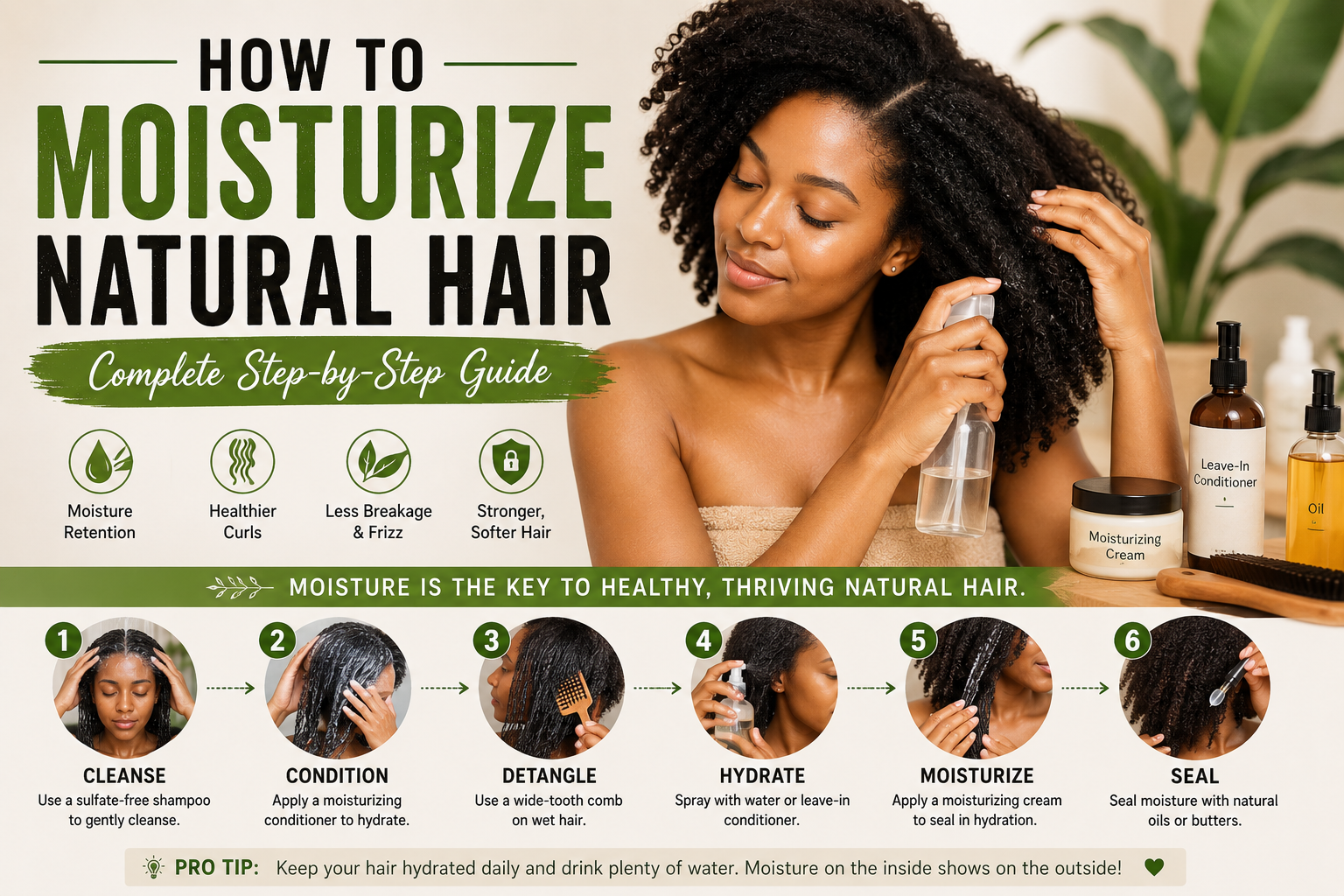
How to Moisturize Natural Hair — Complete Step-by-Step Guide
My natural hair was always dry. I tried every product I could find. I spent way too much money on oils and creams that promised moisture but delivered nothing past the first hour. It took me a long time to figure out that the problem wasn’t the products — it was that I didn’t understand how moisture actually works in natural hair.
Once I understood that, everything changed. This guide covers exactly what I wish someone had told me from the start.
Why Natural Hair Gets Dry So Fast
Natural hair — especially coily and curly textures — has a built-in moisture problem. The tight curl pattern makes it almost impossible for the natural oils your scalp produces to travel down the hair shaft. Straight hair gets coated in those oils automatically. Natural hair doesn’t.
This means natural hair has to get its moisture from somewhere else — water and water-based products. And because the cuticle of natural hair is often raised or uneven, that moisture escapes just as fast as it comes in, unless you seal it.
Understanding this two-part process — moisture in, then seal it — is the foundation of every good natural hair care routine.
The LOC Method — The Most Effective Way to Moisturize Natural Hair
LOC stands for Liquid, Oil, Cream. It’s the most widely used moisturizing method for natural hair, and it works because it follows the logic of how moisture actually stays in hair.
- L — Liquid (Water or Leave-In): Water is the only true moisturizer for hair. Apply water or a water-based leave-in conditioner to your hair first. This is the actual moisture step.
- O — Oil: Apply a natural oil over the water or leave-in. Oil slows down how fast moisture evaporates from the hair shaft. It’s not adding moisture — it’s trapping what’s already there.
- C — Cream: A butter or thick cream goes last to seal everything in and add a layer of protection.
The order matters. If you put oil on dry hair, you’re sealing in dryness. If you skip the cream, moisture evaporates faster. Follow the order every single time.
Step-by-Step Guide to Moisturizing Natural Hair
Step 1 — Start with Damp or Wet Hair
Natural hair absorbs products best when it’s wet, not dry. The best time to moisturize is right after washing, when hair is still soaking wet. The water already in your hair counts as the liquid step of the LOC method.
Between wash days, you can lightly spritz your hair with water or a water-based leave-in spray before applying your oil and cream. Don’t soak it — just enough to feel slightly damp.
Step 2 — Apply Leave-In Conditioner
On wash day, apply your leave-in conditioner to soaking wet hair immediately after rinsing your regular conditioner. Work it through in sections, from mid-shaft to ends. The ends of your hair are the oldest and driest part — they need the most attention.
A lightweight leave-in like Kinky Curly Knot Today works well across most natural hair types. For very dry 4C hair, a thicker cream-based leave-in gives better coverage.
Step 3 — Apply Oil to Seal
While your hair is still damp from the leave-in, apply your oil. Work a small amount through each section, focusing on the ends.
Match the oil to your hair’s porosity:
- Low porosity hair (products sit on top, water beads on surface): Use lighter oils — argan oil, grapeseed oil, or jojoba oil. Heavy oils will just coat the surface without penetrating.
- High porosity hair (absorbs fast, loses moisture fast): Use heavier oils — castor oil, olive oil, or avocado oil. These are thick enough to slow down moisture loss.
Not sure which type you have? Put a strand of clean hair in a glass of water. If it sinks quickly, you have high porosity hair. If it floats for a while, you have low porosity hair.
Step 4 — Seal with Cream or Butter
A thick cream or shea butter goes last. This creates a protective layer that keeps the moisture and oil from evaporating. Focus on the ends — they need the most sealing.
For 4C hair, shea butter works well as a sealant. For looser curl patterns, a lighter cream is enough. Too much cream on low-porosity hair will cause buildup and eventually block moisture from getting in at all — use a small amount.
Step 5 — Repeat Between Wash Days
Moisturizing isn’t just a wash-day activity. Natural hair needs moisture refreshed between washes too — usually every 2-3 days depending on your hair and climate.
Between wash days, lightly spritz dry sections with water, apply a small amount of leave-in or oil to seal, and you’re done. You don’t need to redo the full routine — just a quick refresh on the driest sections, usually the ends.
Best Products for Moisturizing Natural Hair
Best Leave-In Conditioner: Kinky Curly Knot Today
Lightweight, absorbs well, and provides enough slip to help with detangling too. Apply to soaking wet hair right after washing. Works for 3A through 4C hair types.
Best Oil for Sealing: Mielle Organics Rosemary Mint Hair Oil
Lightweight enough for most natural hair types. Rosemary oil in the formula also supports scalp health. Use it as the oil step in your LOC routine.
Best Sealing Cream: TGIN Butter Cream Daily Moisturizer
Shea butter base makes it an effective sealant for 4A through 4C hair. Use as the cream step of LOC — a little goes a long way.
How to Moisturize Natural Hair by Type
How to Moisturize 3A and 3B Hair
Looser curl patterns need lighter products. Heavy creams and butters will weigh down the curl and cause frizz. Use a lightweight leave-in and a light oil like argan or jojoba. Skip the heavy butter step or use a very small amount only on the ends. Moisturize every 3-4 days between washes.
How to Moisturize 3C and 4A Hair
These textures sit in the middle — they need more moisture than looser curls but can handle medium-weight products without being weighed down. Full LOC method works well. Moisturize every 2-3 days.
How to Moisturize 4B and 4C Hair
4B and 4C hair needs the most moisture support. These are the driest natural hair textures because the tight coil makes it hardest for oils to travel from the scalp. Use thicker leave-ins, heavier oils, and shea butter as your sealant. Moisturize every 1-2 days if needed. Deep condition every single wash day — skipping it leads to breakage faster than any other mistake.
For a full guide on 4C hair specifically, see our article on best products for 4C natural hair.
Common Moisturizing Mistakes to Avoid
Applying products to dry hair. Oil on dry hair seals in dryness. Water or leave-in always goes first.
Using too much product. More product does not mean more moisture. Heavy layers of cream and butter block moisture from entering the hair shaft over time. Use less than you think you need.
Skipping deep conditioning. Surface moisturizing between wash days only works if the hair is properly conditioned from inside first. Deep condition every week — it’s the foundation everything else builds on. Our complete natural hair care guide covers deep conditioning in detail.
Using silicone products without clarifying. Silicones create a layer on the hair that looks shiny and feels soft but blocks moisture from getting in over time. If you use products with silicones, clarify monthly to remove the buildup.
Cotton pillowcases. Cotton pulls moisture out of natural hair while you sleep. Six to eight hours on cotton every night undoes a lot of the work your moisturizing routine does. Switch to satin or silk — a satin bonnet works just as well and costs less.
How to Know If Your Natural Hair Is Properly Moisturized
Properly moisturized natural hair has a few clear signs:
- Hair feels soft, not crunchy or rough, when dry
- Curl pattern is defined and consistent
- Hair stretches without breaking when pulled gently
- Minimal breakage when detangling
- Hair retains length over time instead of seeming stuck at the same length
If your hair is brittle, breaks easily, or snaps when you stretch it, it needs more moisture — usually from more frequent deep conditioning and a consistent LOC routine, not from adding more products to the end of the process.
Frequently Asked Questions
How often should I moisturize natural hair?
On wash day every week, always. Between washes, most natural hair types need a moisture refresh every 2-3 days. Very dry 4C hair may need it daily. Looser curl patterns may only need it every 3-4 days. Your hair will tell you — if it feels dry and rough, it needs moisture.
What is the best way to moisturize natural hair overnight?
Apply a small amount of leave-in or a light oil to your hair before bed, cover with a satin bonnet, and your hair will be noticeably softer in the morning. Don’t apply so much that your hair is wet — just enough to refresh dry sections. The satin bonnet does most of the work by stopping moisture from escaping overnight.
Why does my natural hair dry out so fast after moisturizing?
Usually one of two reasons: you’re not sealing properly after applying moisture (oil and cream after water/leave-in), or your hair is high porosity and needs heavier sealants. Try a thicker oil like castor oil or a heavier butter and see if moisture lasts longer. Also check your pillowcase — cotton removes moisture faster than almost anything else.
Can I use water alone to moisturize natural hair?
Water is the moisturizer, but you need to seal it in after. Water alone evaporates fast — without an oil or cream on top to slow that evaporation, your hair will be dry again within an hour. Always follow water with a sealant.
Does deep conditioning count as moisturizing?
Yes — deep conditioning is the most important moisturizing step in a natural hair routine. It adds moisture from inside the hair shaft in a way that surface products can’t match. If you’re only doing surface moisturizing between washes but skipping deep conditioning, your routine has a big gap in it. See our natural hair care products guide for deep conditioner recommendations.
Final Thoughts
Moisturizing natural hair is not about using more products or more expensive ones. It’s about understanding the order — water first, oil to seal, cream to protect — and doing it consistently.
Pick two or three products that work for your hair type and use them every week without skipping. Deep condition on every wash day. Refresh moisture every 2-3 days between washes. Sleep on satin.
That’s the whole routine. Everything else is extra.
More from PickHonestly on natural hair:
- Best Sulfate-Free Shampoos for Natural Hair
- Best Products for 4C Natural Hair
- Complete Natural Hair Care Guide
- Best Natural Hair Care Products — What’s Worth Buying
Prices accurate as of publication. Verify current pricing before purchasing.